Wyoming: A 6-Masted Schooner Defying the Seas

At the top of the list of the biggest wooden ships ever built stands the mighty Wyoming, a 6-masted schooner that once braved the treacherous waters of the American coast. Constructed in 1909 by the esteemed firm of Percy & Small in Bath, Maine, the Wyoming measured an impressive 450 feet (140 meters) in length, making it the largest wooden ship in existence at the time. This magnificent vessel was named after the state of Wyoming, with Governor Bryant Butler Brooks serving as one of its chief investors.
Despite its grandeur, the Wyoming faced challenges due to its sheer size and wooden structure. The ship flexed in heavy seas, causing its planks to twist and buckle, despite being fitted with metal bracing. The crew had to constantly battle water leakage, relying on steam pumps to keep the ship afloat. Even though the Wyoming had a steam engine, it was mostly used for small jobs like reefing sails, pulling lines, and pumping out water. With an 11-member crew, the Wyoming sailed the seas for 15 remarkable years.
The Wyoming sadly lost its life too soon in March 1924. As the ship made its way to Pollock Rip, a waterway between Nantucket and Cape Cod, it was caught in a fierce storm on its way from Norfolk to New Brunswick. Unable to withstand the onslaught of rogue waves and powerful winds, the Wyoming succumbed to the forces of nature, sinking beneath the waves and taking 13 brave sailors with it.
Solano: A Reinforced Paddle Steamer Crossing Boundaries
Another massive wooden ship that made waves in the maritime world was the Solano, a railroad ferry constructed in California. Launched in 1879 in Oakland, the Solano held the title of the largest ferry of its kind for an astounding 35 years, until its sister ship, the Contra Costa, took its place in 1914. The impressively long Solano was 425 feet (129 meters) long and 116 feet (35 meters) wide. It could take either a 23-car passenger train and locomotive or a 49-car freight train and locomotive.
The Solano was an amazing piece of engineering. It was designed by Arthur Brown, who was in charge of building and maintaining bridges for the Central Pacific Railroad. Its reinforced paddle steamer design incorporated wooden pratt trusses, similar to those used in rail bridges, providing strength and stability. The ship’s unique feature was its independently powered side wheels, courtesy of the Central Pacific Railroad. Between Benicia and Port Costa in California, the Solano crossed the Carquinez Strait many times, always with full trains. This happened from 1879 to 1930. It went on this trip every day for 51 years, which is crazy.
Sadly, the Solano’s time came to an end when it was scuttled in 1931. Despite its remarkable service and impressive size, the ship’s fate was sealed, and it now rests in the depths of history.
Bretagne: A French Navy Ship Struggling to Prove Itself
Jules Marielle’s three-deck ship, the Bretagne, holds a unique place among the biggest wooden ships ever launched. Built for the French Navy as an attempt to improve upon previous successful designs, the Bretagne fell short of expectations. Although it was the largest wooden ship of the line ever launched, it failed to match the performance of the Napoleon class two-deckers and was overshadowed by the introduction of ironclads.
Ordered on May 1, 1912, the Bretagne entered service in February 1916, just as the First World War was unfolding. With a length of 393 feet (120 meters), this imposing ship spent its 25-year career with the Mediterranean Squadron, participating in important naval operations during the war. However, its design flaws and inability to keep up with more advanced vessels ultimately led to its demise.
Following the outbreak of World War II, the Bretagne was involved in training maneuvers in the Atlantic and Mediterranean. When Germany invaded France in 1940, the ship found itself in Mers-el-Kebir, French Algeria. Fearing that the Germans would seize the fleet, the British attacked the French ships after France refused to demilitarize. The Bretagne was hit four times and eventually exploded, resulting in the loss of most of its crew. The wreck was salvaged in 1952, broken apart, and sold for scrap.
Dunderberg: A Thundering Mountain that Never Saw Combat
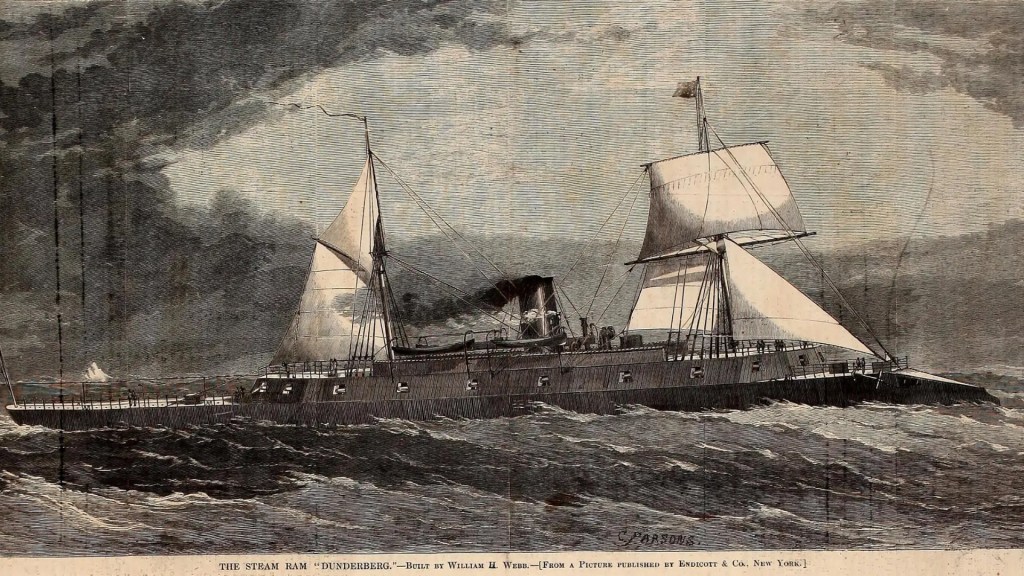
Built for the Union Navy during the American Civil War, the Dunderberg was an ocean-going casemate ironclad of immense size. The ship’s name, derived from the Swedish word for “thundering mountain,” perfectly captured its imposing presence. Construction of the Dunderberg began in 1862, but progress was slow due to shortages of manpower, materials, and funds. It was not until after the end of the Civil War in 1865 that the ship was finally launched.
Despite its impressive size, the Dunderberg was not accepted by the Union Navy and was subsequently offered to other potential buyers. France ultimately acquired the ship, renaming it Rochambeau. Although the Dunderberg was mobilized for war and prepared for the Franco-Prussian War, it never saw any actual combat. The ship’s service under France was uneventful, and it was eventually decommissioned in 1874.
With a length of 377 feet (115 meters), the Dunderberg was a formidable vessel. Its ironclad construction, though delayed, showcased the advancements in naval technology during the Civil War era. Unfortunately, the ship’s short-lived career and lack of combat experience relegated it to the annals of history.
Caligula’s Giant Ship: A Monument to Ancient Engineering
Caligula’s Giant Ship was a huge wooden ship that was known as the Round Ship. It was an important part of history. In the 1950s, the remains of it were found while the Leonardo da Vinci International Airport in Fiumicino, Italy, was being built. This remarkable archaeological find sparked debates about the ship’s purpose and revealed its intricate wooden carvings and elaborate construction.
Measuring approximately 341 feet (104 meters) in length and boasting a beam of 69 feet (21 meters), Caligula’s Giant Ship had a carrying capacity of 1,300 tonnes and could house 700 to 800 crew members. It was utilized for various purposes, including the transportation of the St. Peter’s Square from Egypt. The ship’s origins date back to around 37 AD, and it is believed that parts of its structure were repurposed as the foundation for a lighthouse.
Caligula’s Giant Ship stands as a testament to the ancient world’s engineering prowess and the grandeur of Roman maritime endeavors. Its size and intricate design reflect the ambition and skill of the craftsmen who built it, leaving a lasting legacy in history.
Pretoria: An American Schooner Barge on the Great Lakes
Among the largest wooden ships ever constructed, the Pretoria was an American schooner barge that plied the waters of the Great Lakes region. Built by James Davidson in West Bay, Michigan, the Pretoria served as a testament to the region’s thriving maritime industry. With a length of 338 feet (103 meters), a width of 44 meters, and a depth of 23 meters, this impressive vessel remained in service from 1900 to 1905.
Unfortunately, the Pretoria’s story ended tragically. On September 1, 1905, while docked at a port in Superior, Wisconsin, the ship was being loaded with cargo in preparation for the next day’s journey. However, fate had a different plan. A strong storm swept through the area, causing both the Pretoria and another lake freighter named Sevona to sink near the Apostle Islands in Lake Superior.
The Pretoria and its counterpart met their watery graves, leaving behind a legacy of the once-mighty wooden ships that ruled the Great Lakes. The economic growth of the area was helped by the fact that these ships were very important for moving goods and materials.
Great Republic: The Largest Wooden Ship of its Time
The Great Republic was the world’s biggest wooden ship when it set sail for the first time in 1853, and it was very proud of that title. This magnificent vessel, also known as the largest full rigged ship ever built in the United States, was a testament to the genius of naval architect and shipbuilding engineer Donald McKay.
Measuring 335 feet (102 meters) in length and 53 feet (16 meters) in width, the Great Republic was a sight to behold. Its remarkable speed made it one of the fastest merchant streamers of its time, and it set an impressive record by sailing 413 nautical miles in a single day. Despite its grandeur and achievements, the Great Republic’s journey was not without challenges.
During its maiden commercial voyage, the ship caught fire while being loaded, causing irreparable damage. The insurers salvaged the ship’s hull, which was later rebuilt with three decks instead of four. Although the Great Republic continued to sail on transatlantic and California routes, its massive size posed difficulties in docking at many ports. To overcome this challenge, the ship’s cargo was partially unloaded into lighters, allowing it to access locked basins for complete unloading.
Sadly, the Great Republic’s storied career came to an end on March 5, 1872, when it was abandoned by its crew after being battered by a storm off the Bermuda coast. The ship’s legacy lives on, reminding us of the remarkable achievements and challenges faced by these wooden behemoths of the sea.
HMS Orlando: A British Warship of Remarkable Size
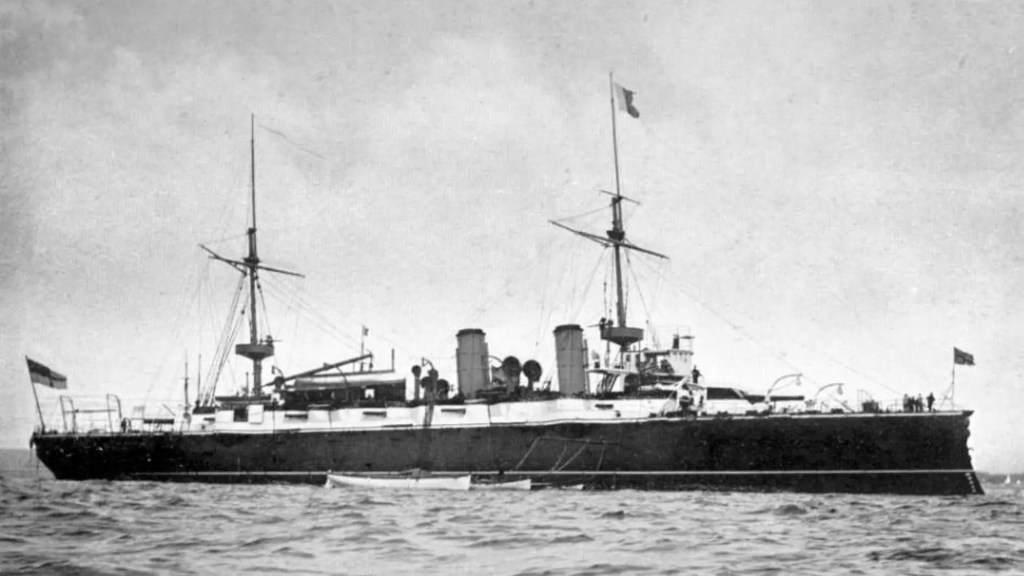
Commissioned in 1858, HMS Orlando was a Mersey Class ship that left a lasting impression on the Royal Navy. With a wooden hull and a steam engine as well as full rigging, this frigate was an impressive sight. Constructed in the years leading up to its commission, the HMS Orlando featured heavy armament and exceptional speed, making it a formidable force on the seas.
Measuring 335 feet (102 meters) in length and weighing approximately 5,643 tonnes, the HMS Orlando stood out among its contemporaries. Its size and capabilities gave it a significant advantage, with a speed of approximately 12½ knots. The ship’s impressive dimensions, particularly its length, posed challenges due to the strain on its wooden hull caused by heavy machinery. This strain ultimately led to the opening of seams, requiring constant maintenance and repairs.
Despite its challenges, the HMS Orlando remained in service from 1858 to 1871. However, due to its size and the difficulties associated with its upkeep, the ship was laid up in 1866 and sold for breaking in 1871. The HMS Orlando’s legacy serves as a reminder of the remarkable vessels that once sailed the seas, leaving an indelible mark on naval history.
Trident: A French Flagship and Training Ship
The Trident, built for the French Navy in the 1870s, holds a special place among the largest wooden ships ever constructed. As the flagship of the deputy leader of the Mediterranean Squadron, this ship was very important to France’s takeover of Tunisia. With a length of 335 feet (102 meters), the Trident commanded attention and respect.
After being used as a battleship in the 1870s and 1880s, the Trident was changed to a teaching ship. This shift in its purpose allowed future generations of sailors to learn the intricacies of naval operations aboard this grand vessel. Despite its storied history, the Trident’s fate eventually led to its demise. In 1909, the ship was sold for scrap, marking the end of an era.
The Trident’s legacy serves as a reminder of the important role played by wooden ships in the development of naval forces. From flagship to training vessel, this remarkable ship showcased the versatility and resilience of wooden constructions.
William D Lawrence: A Canadian Ship Carving its Path
The William D Lawrence, a four-masted barque constructed in 1874, holds a special place among the largest wooden ships ever built. This impressive vessel, crafted by Charles Woord in Quebec, Canada, boasted a gross register tonnage of 5,294 and held the distinction of being one of the largest sailing ships ever constructed in the country.
Measuring 92.65 meters in length, 18 meters in width, and 10.3 meters in height, the William D Lawrence embarked on a unique journey. Originally intended as a one-way trip to transport timber from the New World to England, the ship was designed to be disassembled after unloading its cargo. The ship’s timber, exempt from excessive taxes on imported timber, could then be sold at favorable prices.
Unfortunately, the William D Lawrence’s journey took a tragic turn. After departing Quebec with 25 crew members and carrying 9,000 tonnes of timber, the ship was seen in the English Channel but ultimately stranded on Goodwin Sands near Long Sound Head. The ship broke into three parts, leaving behind scattered remnants of its structure and cargo along the coast near Dunkirk.
In its quest for trade and travel, the William D. Lawrence story shows how dangerous and difficult it can be for wooden ships. Although its intended purpose was short-lived, the ship’s memory lives on as a reminder of the maritime history of Canada.
Roanoke: A Barque with a Fiery End
The Roanoke, a four-masted barque, takes its place among the largest wooden ships ever constructed in an American shipyard. Built by Messrs. A. Sewall and Co. in 1892 on the Kennebec River in Bath, Maine, the Roanoke boasted a gross tonnage of 3,347 and showcased the craftsmanship of the era.
Constructed using yellow pine, oak, treenails, hackmatack knees, and white oak, the Roanoke was a fine example of wooden shipbuilding. With a length of 95 meters, a width of 15 meters, and a hold depth of 8.8 meters, this vessel navigated the seas with grace and power.
However, the Roanoke’s journey was not without mishaps. While sailing along the South American coast in 1904, it struck the steamship Llangibby, resulting in damage that required extensive repairs in Brazil. Following the incident, the Roanoke resumed its operations, shipping cargo to Australia.
Tragically, another accident ended the Roanoke’s voyage. While loading chromium ore near Noumea, New Caledonia, in 1905, the ship was engulfed in a devastating fire that spread rapidly. With no hope of salvaging the vessel, the crew abandoned ship, leaving behind the charred remains of a once-mighty wooden giant.
SS Appomattox: The Great Lakes’ Steam-Powered Bulk Carrier
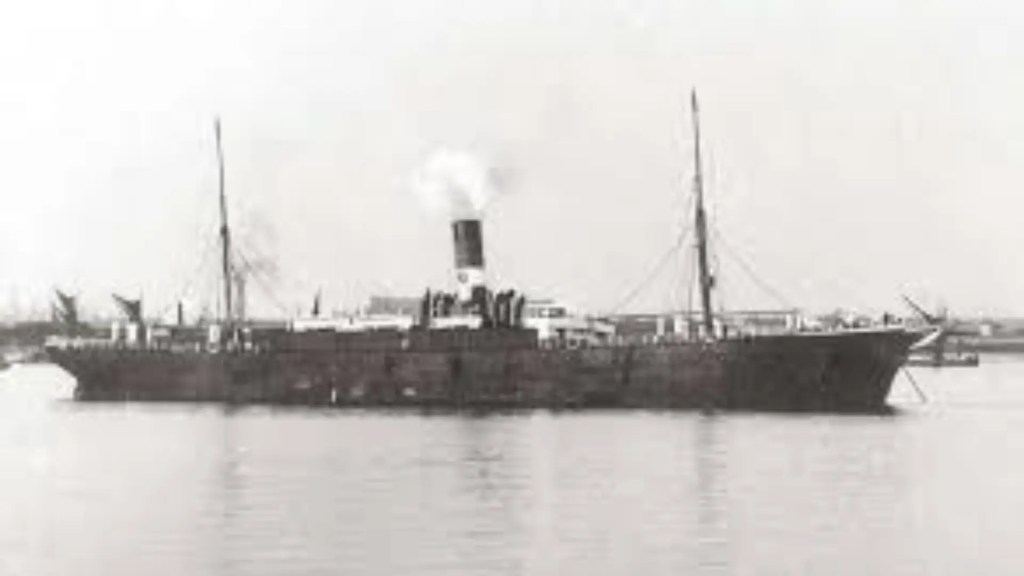
Among the largest steam-powered bulk carriers to sail the Great Lakes was the SS Appomattox. With a wooden hull reinforced with metallic cross bracing, including metallic plates and arches, this vessel pushed the boundaries of engineering. The SS Appomattox was built in 1896 for the Davidson Steamship Company in a port in Michigan that was owned by James Davidson. It was a great example of how far shipbuilding had come during that time.
With a length of 100 meters and a draft of 13 meters, the SS Appomattox was a formidable presence on the Great Lakes. Powered by an 1,100-horsepower steam engine fueled by two boilers, the ship primarily carried iron ore eastward and returned with coal. To increase its cargo capacity, the SS Appomattox often towed a steamer barge called the Santiago.
Unfortunately, the SS Appomattox’s fate was sealed on November 2, 1905. Loaded with coal and sailing along the western shore of Lake Michigan, the ship encountered thick fog that impaired visibility. The vessel eventually grounded off the coast of Shorewood in Milwaukee County, Wisconsin. As the weather worsened and waves battered the ship, its bottom cracked, allowing water to rush in. Abandoned by its crew, the SS Appomattox succumbed to the forces of nature and became another casualty of the Great Lakes.
The history of wooden ships is a testament to the skill, ingenuity, and perseverance of maritime engineers and craftsmen. From the mighty Wyoming to the innovative Solano, these vessels pushed the boundaries of what was believed possible and contributed to the growth and development of nations. Each ship had its own story, etched in its planks and remembered in the annals of maritime history.
As we marvel at the achievements of these wooden giants, we must remember the challenges they faced. Flexing in heavy seas, battling leaks, and struggling to keep up with advancements in naval technology, these ships embodied the triumphs and tribulations of the maritime world. While many of these vessels met tragic ends, their legacies live on, inspiring future generations to explore new frontiers and reach new heights.