
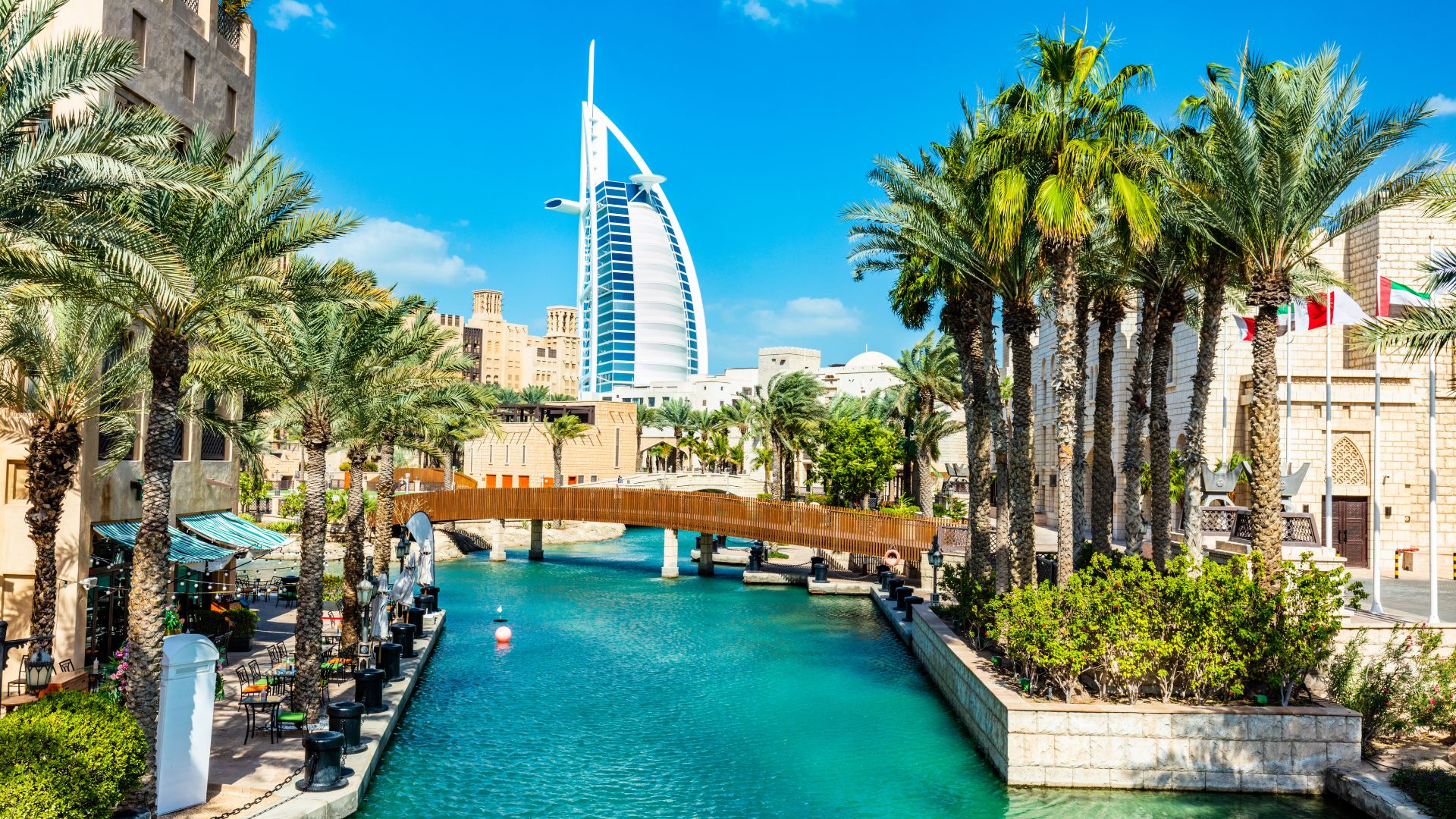
1. Burj Al Arab Hotel, Dubai
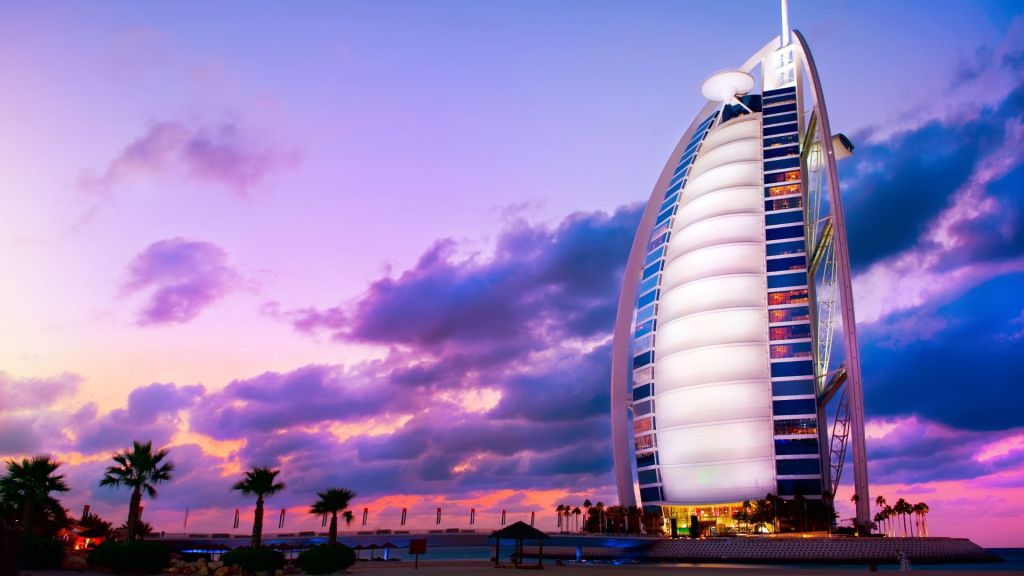
One of the most iconic buildings in Dubai is the Burj Al Arab, which rises impressively above the shoreline with its distinctive sail-shaped appearance. The 60-story high luxury hotel features a steel structure and curtain wall of glass skin designed to mimic an enormous dhow sail. It took over 3 years to develop the complex structural system that allows the Burj Al Arab to cantilever more than 250 feet into the air. Sweeping in a graceful arc surrounded by the sea, the hotel has had an indelible impact on Dubai’s identity. The Burj Al Arab design pays tribute to Dubai’s Islamic maritime heritage in an uber-modern architectural statement.
2. Stone Sails Sculpture, Australia
Sydney’s Stone Sails sculpture is an abstract interpretation of billowing sails through art rather than architecture. The massive red steel artwork was created by acclaimed indigenous artist Brian Robinson and erected in 2020 near the city’s main train station. Its curved triangular forms resemble hoisted sails in motion, with shapes creating various optical illusions. The Sails invites multiple associations around ships, opera houses, the outback or shields. The flowing steel allows viewers to project their own imaginings, provoking cultural connections through its ambiguous form. Despite lacking function, Stone Sails demonstrates architecture’s artistic possibilities.
3. Detroit Marriott Hotel, USA
Unlike the extravagance of Dubai, Detroit might seem an unexpected locale for a sail-inspired structure. But the city’s Marriott Hotel at the Renaissance Center incorporates sails as representative of Detroit’s identification with transportation innovation. The hotel entrance features an enormous glass atrium pointed up to resemble the tapering form of a hoisted sail. The wing-like transparent façade captures a sense of movement, maritime associations and modern technology. Architect Gino Rossetti emphasized the hotel’s connection to nearby waterways, with the kinetic sail form perhaps suggesting hopeful new directions for the city. The Marriott’s juxtaposition of nautical shape in an urban setting prompts examination of Detroit’s past and future.

4. Vision Office Building, Panama
Panama City’s Vision Office Building leverages the immediately adjacent maritime context of the Panama Canal as the setting for its eye-catching silhouette. The 10-story white office building houses shops and restaurants behind sweeping curved walls reminiscent of sails angling into the wind. Its bright façade contrasted with the blue canal waters evokes billowing canvas. As modern ships pass by, the building directly references Panama’s sailing legacy and key global shipping transit point. Located at the Pacific entrance to the canal, Vision both mirrors the climate and history that shaped its environs and functions as a symbolic contemporary sentinel marking Panama’s sailing prominence.
5. NBF Osaka Building, Japan
Boasting over two thousand miles of coastline, it is unsurprising that Japan has embraced nautical architecture. The elliptical Osaka building of nursing care provider NBF utilizes vast crisscrossing arcs stretching across its entire white façade to simulate sails in motion. The ultra-modern design represents the dynamism of ships navigating across oceans, aligning with Japan’s rich naval history. Yet while visually compelling, the show-stealing building also facilitates natural light and ventilation. The NBF Osaka building exemplifies singular international architecture grounded in cultural storytelling.
6. Universidade de Coimbra, Portugal
The University of Coimbra campus reveals sail interpretation through a less expected building function — two towering concrete student housing blocks. The fourteen-story Pedro Nunes Hall and sixteen-story Galileo Galilei Hall feature dramatically angled facades architecturally expressing the billowing and flapping of sails. The elongated white blocks impose an avant-garde contrast within the thousand-year-old university grounds. While jarring in their modernist form, the halls poetic movement intimates winds of innovation and exploration blowing through academic life. The Coimbra sail residences almost launch off amidst history, boldly signifying intellectual currents carrying us into the future.

More Inspiring Examples
Other compelling buildings globally are equally sailing the seas of architectural exploration. The glass LVMH building in New York splays six stories outward as to appear windblown. Lithuania’s National Concert Hall echoes hoisting sails through offset walls, concerted with their coastal setting. Even landlocked Zurich has the HafenCity University structure undulating like cloth in the breeze. The Swiss building nods to sails not only as aesthetic inspiration but environmental strategy, manipulating shapes for heating, cooling and sunlight control. As diverse as ships traversing the globe, sail architecture continuously unfurls innovative design interpretations.
Significance of the Sail Aesthetic
What explains the allure of sail symbolism translated into ambitious architecture? Buildings emulating the arrested movement of billowing sails encapsulate notions of freedom, exploration and mobility. Sails suggest adaptive responsiveness to transport ships powered only by air currents across oceans. In concrete and glass edifices, they retain embodiment of human transcendence over the physical world driven by elements out of our control. Sails convey pioneering spirit — whether journeying across seas or pushing conceptual frontiers, forever venturing toward new horizons. Absolute function need not confine architectural design if following inspiration’s currents.
Sail motifs in built forms reveal architecture’s capacity for expressiveness beyond practical considerations through metaphor and illusion. Captivating structures worldwide give figurative shape to ideas of motion, innovation and expanding human capability. buildings unfurl possibilities beyond boxes merely used versus artistry felt. Whatever uncharted oceans architecture navigates next in manifesting human imagination, billowing sails of inspiring edifices will continue guiding ways forward.


Comment(01)