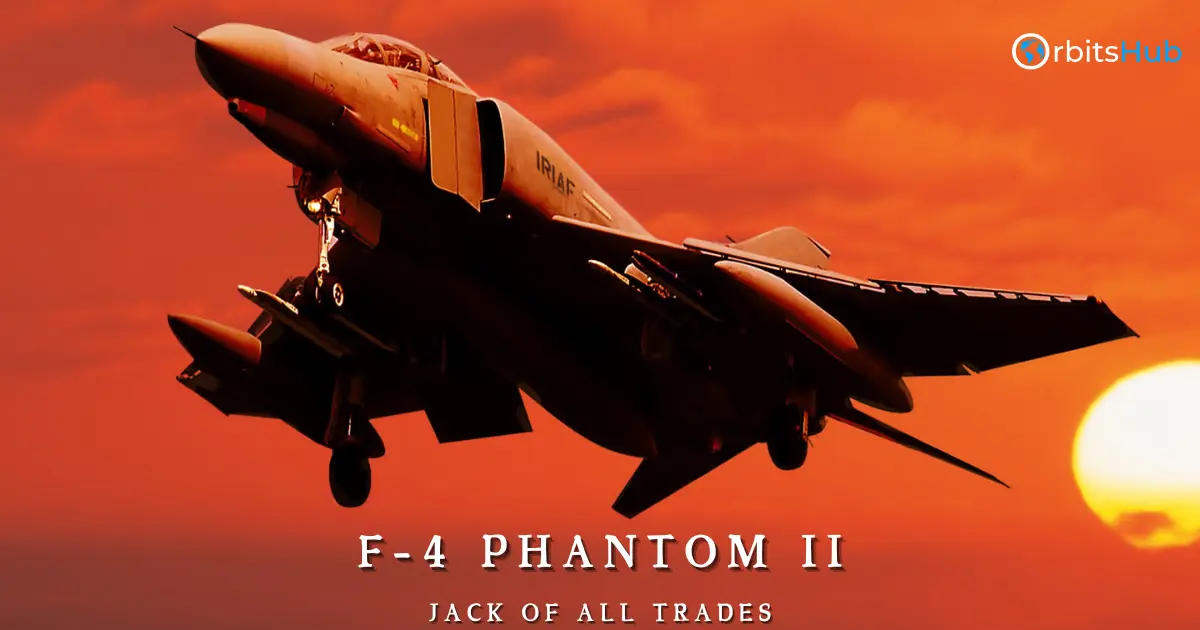
The F-4 Phantom II is one of the most versatile and successful military aircraft in history. Designed by McDonnell Douglas, this multi-role fighter jet has served in various capacities across multiple countries, making it a true “jack of all trades” in aerial warfare. The F-4 Phantom II’s adaptability and robust design have allowed it to excel in air superiority, ground attack, reconnaissance, and more. This delves into the F-4 Phantom II’s capabilities, highlighting its significance in modern military history.
Versatility in Combat Roles: F-4 Phantom II
The F-4 Phantom II was initially design as a fleet defense interceptor for the United States Navy. However, its capabilities quickly expanded, making it a pivotal aircraft in several military roles. One of its most notable features is its ability to carry various weapons, from air-to-air missiles to bombs and rockets. This flexibility allowed the F-4 to transition seamlessly from an air superiority role to a ground attack mission.
Air Superiority
The F-4 Phantom II was a formidable adversary in the air superiority role. Its powerful engines enabled it to reach speeds exceeding Mach 2, making it one of the fastest jets of its time. Equipped with advanced radar systems and a large payload of missiles, the F-4 excelled in dogfights and long-range engagements. The aircraft’s ability to carry up to eight air-to-air missiles, including the AIM-7 Sparrow and AIM-9 Sidewinder, ensured it could dominate the skies in any conflict.
Ground Attack and Close Air Support
Beyond air superiority, the F-4 Phantom II was highly influential in ground attack and close air support missions. Its payload capacity of over 18,000 pounds allowed it to carry a diverse array of artillery, including bombs, rockets, and napalm. The aircraft was vital to ground operations during battles like the Vietnam War due to its precise attack capability. A further redundancy feature of the F-4’s twin-engine design was that it could keep flying even if one of its engines failed.
Technological Advancements and Reconnaissance
The F-4 Phantom II was more than just a fighter jet; it was a platform for technological innovation. Throughout its service, the aircraft underwent numerous upgrades that enhanced its capabilities, particularly in surveillance.
Advanced Avionics and Radar Systems
One of the most significant advancements in the F-4 Phantom II was its integration of advanced avionics and radar systems. For example, the AN/APQ-120 radar provided the aircraft with enhanced targeting capabilities, allowing it to engage multiple targets simultaneously. These technological upgrades improved the F-4’s combat effectiveness and adaptability in various missions.
Reconnaissance Capabilities
The F-4 Phantom II also played a vital role in reconnaissance missions. Specialize aircraft variants like the RF-4C were equipped with sophisticate cameras and sensors to gather intelligence from high altitudes. These reconnaissance versions of the F-4 were instrumental in providing real-time battlefield information, helping to shape the strategies of military commanders.
Global Impact and Legacy: F-4 Phantom II
The F-4 Phantom II’s impact was not limit to the United States; it became a cornerstone of many air forces worldwide. The aircraft was export to over a dozen countries, including the United Kingdom, Germany, Israel, and Japan, where it serve in various capacities. Its adaptability to different environments and mission profiles made it a valuable asset to any Air Force.
Service Across the Globe
In the United Kingdom, the F-4 was known as the Phantom FG.1 and was a carrier-based aircraft for the Royal Navy. The F-4’s efficacy in air-to-air combat and ground attack missions was demonstrate during the Yom Kippur War, one of numerous conflicts in which it played an important part in Israel. Thanks to its adaptability, the plane was used by different air forces until the new millennium.
Enduring Legacy
The F-4 Phantom II’s legacy is one of adaptability and success. Even after it retires from front-line service, the aircraft continues to serve in roles such as target drones and research platforms. The lessons learned from the F-4’s design and operational history have influenced the development of modern fighter jets, making it a lasting symbol of military aviation excellence.
Evolution of the F-4 Phantom II
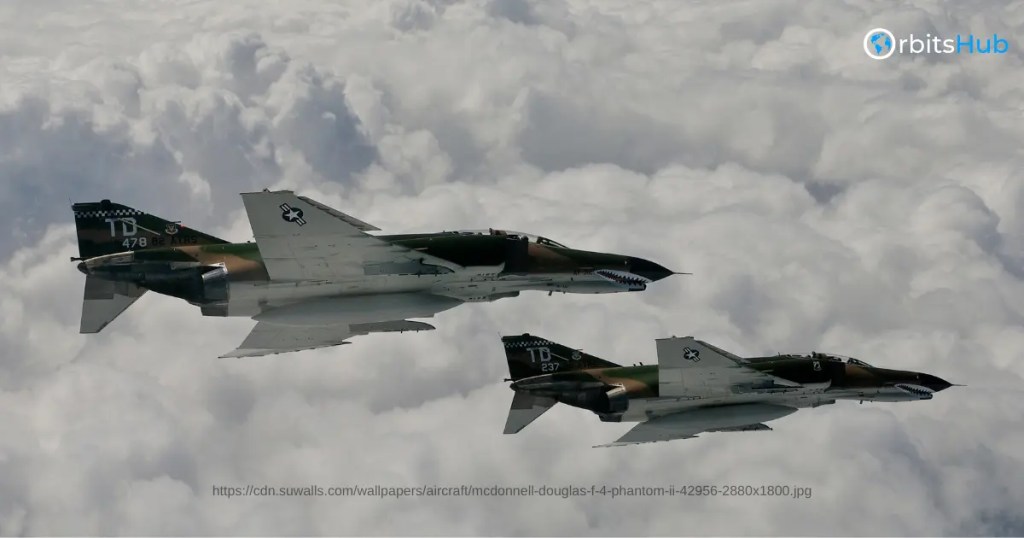
- Development Milestones: The F-4 Phantom II’s journey began in the 1950s, evolving from an interceptor into a multi-role aircraft. The initial design focused on high-speed interception, but as military needs changed, the F-4 underwent numerous upgrades to enhance its capabilities.
- Adaptation to New Roles: The aircraft’s design allowed for significant modifications, enabling it to take on new roles such as ground attack, surveillance, and electronic warfare. This adaptability was crucial in extending the F-4’s service life across various military branches.
- Integration of New Technologies: Over time, the Phantom II integrated cutting-edge technologies such as radar advancements, improved avionics, and missile systems, making it a formidable force in multiple combat scenarios.
Combat Experience and Tactical Versatility
- Proven in Battle: The Phantom II was a highly effective fighter plane, and it was essential in the Vietnam War for ground attack missions and maintaining air superiority.
- Adaptability in Various Conflicts: The aircraft demonstrated its tactical versatility by performing well in different conflicts, from high-altitude dogfights to low-level bombing runs. Its ability to carry many munitions made it suitable for diverse mission profiles.
- Role in Joint Operations: The F-4 was frequently used in joint operations with other military branches and allied forces, showcasing its ability to integrate into complex tactical scenarios and contribute to mission success.
Improvements in Survivability and Defense Systems
- Enhanced Armor and Countermeasures: As threats to aircraft evolved, the Phantom II was equip with improved armor and defensive systems. These enhancements included chaff and flare dispensers, electronic countermeasures, and self-sealing fuel tanks to increase survivability.
- Adaptation to Modern Warfare: The F-4’s defense systems were continuously updated to counter emerging threats, such as surface-to-air missiles and advance enemy fighters. This allowed the aircraft to remain relevant in modern combat environments.
- Crew Protection Features: The plane was design with the safety of its crew in mind, incorporating features such as an ejection seat system and reinforced cockpit armor to protect pilots during combat.
Training and Simulation for Pilots: F-4 Phantom II
- Pilot Training Programs: The F-4 Phantom II was used extensively in pilot training programs, where its demanding flight characteristics helped to prepare aviators for a wide range of combat scenarios.
- Introduction of Flight Simulators: Advanced flight simulators were develop to complement live training, allowing pilots to practice complex maneuvers and emergency procedures in a controlled environment. These simulators were crucial in reducing training costs and risks.
- Focus on Multi-Role Proficiency: To prepare pilots for air-to-air combat and ground attack missions, training programs highlighted the F-4’s multi-role capability. This all-encompassing training method allowed the planes to perform at their peak during combat.
The F-4 Phantom II in Popular Culture
- Representation in Media: Many films, TV shows, and documentaries have include the F-4 Phantom II, which is usually shown as a symbol of technological and military strength. The media has paid close attention to it due to its distinctive appearance and impressive track record in battle.
- Legacy in Aviation History: The aircraft’s impact on aviation is widely recognize, with many museums and airshows showcasing restore F-4 Phantom IIs in their collections. These exhibits highlight the aircraft’s contributions to military aviation and its enduring legacy.
- Cultural Significance: Beyond its military role, the F-4 Phantom II has become a cultural icon, representing the Cold War’s technological achievements and military strength. Its influence extends beyond the battlefield, shaping public perceptions of air power and innovation.
The F-4 Phantom II is a testament to the power of adaptability in military aviation. Its ability to excel in multiple roles, from air superiority to ground attack and reconnaissance, made it a crucial asset to the air forces that operated it. The aircraft’s global impact and enduring legacy highlight its significance in military aviation history. As we look back on the F-4 Phantom II, it is clear that this “jack of all trades” was much more than just a fighter jet—it was a game-changer.
Explore want to learn more about iconic military aircraft and their impact, explore Orbitshub. These maritime services delve into the fascinating world of aviation and naval history.