History of the Admiralty Anchor
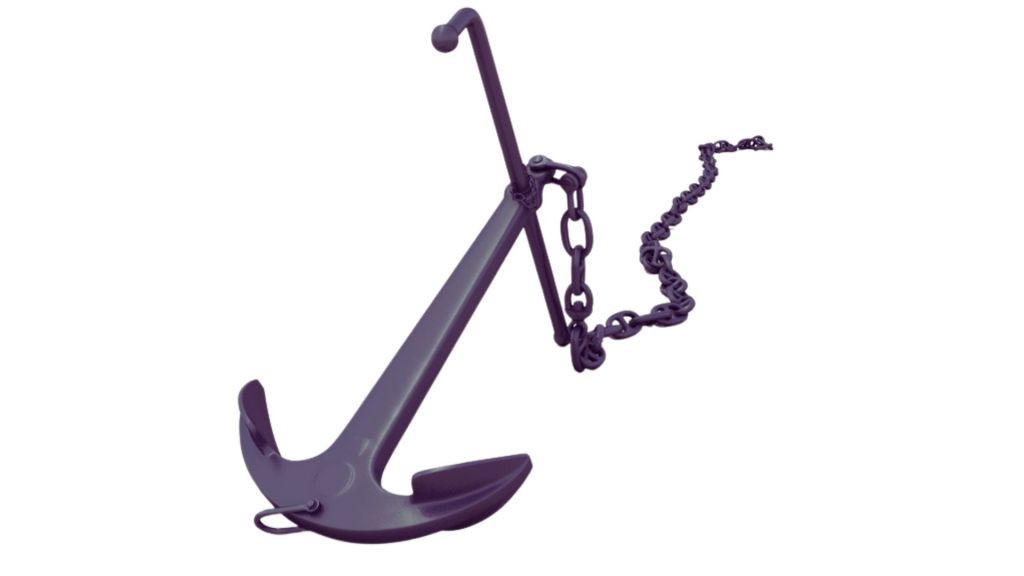
The genesis of the Admiralty Anchor can be traced back to the late 19th century, a period marked by rapid advancements in naval technology. Its precursor, the Admiralty Pattern anchor, had been the standard issue for the British Royal Navy since the 1840s. However, the need for a more efficient and versatile anchor became increasingly apparent as ships grew larger and voyages more ambitious.
The evolution of this maritime stalwart was a gradual process, influenced by the cumulative wisdom of seafarers and the ingenuity of naval architects. The stockless design, which would become the hallmark of the Admiralty Anchor, was patented in 1821 by Richard Pering. This revolutionary concept eliminated the cumbersome wooden stock, significantly enhancing the anchor’s stowability and ease of handling.
Design and Construction
Key Components: The Admiralty Anchor’s anatomy comprises several crucial elements. The shank, a robust central beam, forms the anchor’s backbone. At one end, it connects to the crown, from which two pivoting flukes extend. These flukes, resembling arrowheads, are designed to penetrate the seabed effectively. The other end of the shank terminates in a ring or shackle for attaching the anchor chain.
Materials Used: Traditionally, Admiralty Anchors were forged from high-grade wrought iron, prized for its durability and resistance to corrosion in saltwater environments. Modern iterations often employ galvanized or stainless steel, offering superior strength-to-weight ratios and enhanced longevity. Some manufacturers have experimented with advanced alloys, pushing the boundaries of anchor metallurgy to new frontiers.
How Admiralty Anchors Work
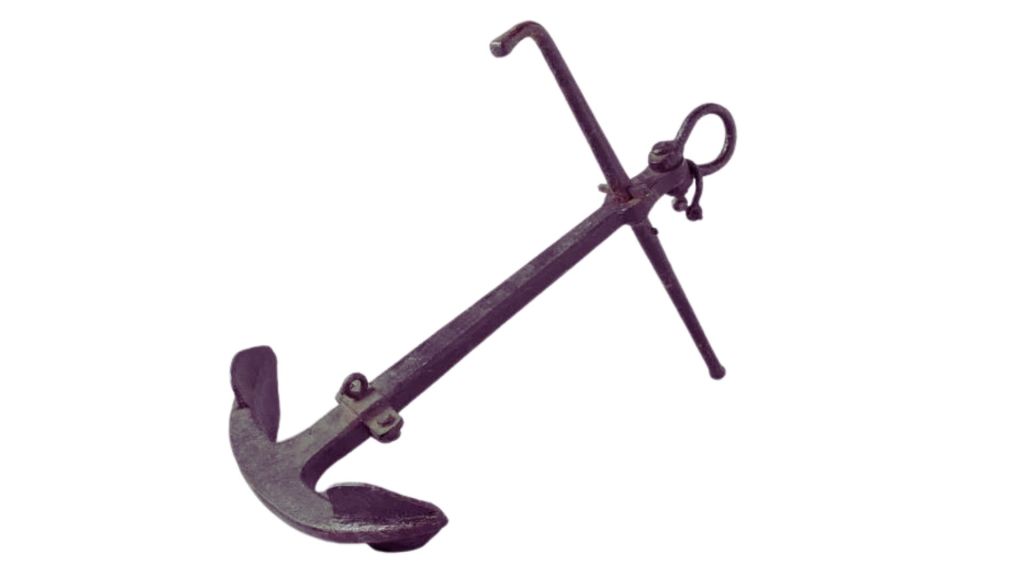
Mechanics of Holding Power: The efficacy of an Admiralty Anchor lies in its ability to exploit the properties of the seabed. When deployed, the anchor’s flukes pivot downward, driven by the weight of the shank. As the vessel drifts or is pulled by currents, the flukes dig into the seafloor, creating a tenacious hold. The more tension applied to the anchor chain, the deeper the flukes burrow, increasing the anchor’s grip exponentially.
Situations Suited for Use: Admiralty Anchors excel in a variety of maritime scenarios. They are particularly effective in sandy or muddy bottoms, where their sharp flukes can easily penetrate and secure a firm hold. These anchors also perform admirably in mixed bottoms, adapting to variations in seabed composition. However, their effectiveness may be diminished in rocky or heavily vegetated areas, where the flukes struggle to find purchase.
Advantages of Admiralty Anchors
Strengths and Benefits: There are many benefits to using the Admiralty Anchor, which is why it has remained popular for so long. Its stockless design facilitates easy stowage, a crucial factor for vessels with limited deck space. The pivoting flukes ensure a rapid and reliable set, minimizing drift and enhancing safety during anchoring maneuvers. Furthermore, the anchor’s symmetrical structure allows it to reset efficiently if the vessel swings due to changing winds or tides.
Comparison with Other Types: When juxtaposed with its contemporaries, the Admiralty Anchor often emerges as a paragon of versatility. Unlike the claw-type anchors, which may struggle in certain bottom conditions, the Admiralty Anchor demonstrates remarkable adaptability. It outperforms traditional grapnel anchors in holding power and surpasses the Danforth anchor in ease of handling and stowage.
Disadvantages of Admiralty Anchors
Potential Drawbacks: Despite its myriad merits, the Admiralty Anchor is not without its limitations. Its effectiveness can be compromised in extremely soft or viscous bottoms, where the flukes may fail to achieve sufficient penetration. In rocky terrain, the anchor risks becoming lodged between boulders, complicating retrieval efforts. Additionally, the anchor’s substantial weight can pose handling challenges, particularly on smaller vessels with limited mechanical assistance.
Applications in Modern Maritime Industry
Current Uses: In contemporary maritime operations, the Admiralty Anchor continues to play a vital role. It remains the anchor of choice for many commercial vessels, including cargo ships, tankers, and cruise liners. Naval forces worldwide rely on Admiralty Anchors for their warships and support vessels. The oil and gas industry favors this anchor for its offshore platforms and FPSO units because to its dependability and history of success.
Case Studies: The efficacy of Admiralty Anchors is exemplified by numerous real-world scenarios. In 2018, during Hurricane Michael, a cargo vessel anchored off the coast of Florida successfully weathered the Category 5 storm, thanks to its robust Admiralty Anchor system. Similarly, the anchors proved instrumental in securing a fleet of decommissioned naval vessels in Suisun Bay, California, withstanding years of exposure to strong tidal currents and varying weather conditions.
Maintenance and Care
Routine Inspections: Preserving the integrity of an Admiralty Anchor necessitates regular scrutiny. Periodic examinations should focus on identifying signs of wear, corrosion, or structural damage. Particular attention must be paid to the crown and flukes, as these components bear the brunt of the anchor’s workload. The shackle and chain connection points should be meticulously inspected for any indications of metal fatigue or deformation.
Best Practices: Several maintenance methods should be followed to guarantee optimal performance and lifetime. Rinse the anchor well with fresh water after each use to remove marine vegetation and salt deposits. Applying a protective coating of marine-grade lubricant to moving parts can prevent seizing and reduce wear. For anchors used in saltwater environments, sacrificial anodes may be employed to mitigate galvanic corrosion.
Choosing the Right Admiralty Anchor
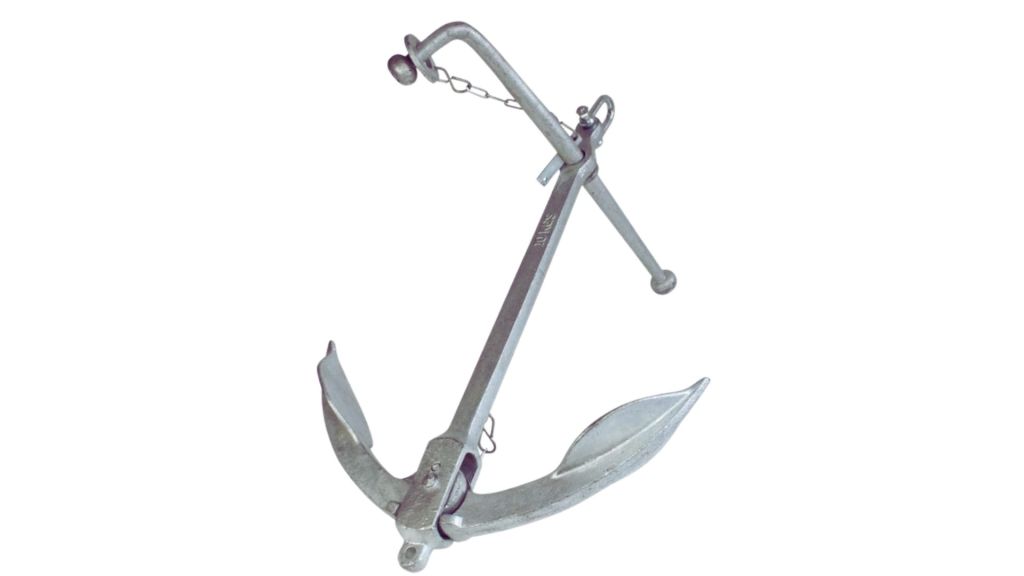
Factors to Consider: Selecting an appropriate Admiralty Anchor requires careful consideration of various parameters. The vessel’s size, weight, and intended use are paramount factors. The typical sea conditions and bottom types encountered in the vessel’s operational area must also be taken into account. Additionally, regulatory requirements and classification society guidelines may influence the choice of anchor.
Sizing Guidelines: Determining the correct anchor size involves complex calculations. As a general rule, the anchor weight should be approximately 1/300th of the vessel’s displacement. However, this ratio may vary depending on the ship’s characteristics and operational profile. Many maritime authorities provide detailed sizing tables that consider factors such as wind speed, current velocity, and water depth to ensure adequate holding power.
Innovations and Future Trends
Technological Advancements: The venerable Admiralty Anchor continues to evolve, benefiting from cutting-edge technologies. Recent innovations include the development of high-strength, lightweight alloys that reduce anchor weight without compromising holding power. Advanced computer modeling and finite element analysis are being employed to optimize fluke design, enhancing performance across a broader range of seabed conditions.
Emerging Uses: As maritime industries expand into new frontiers, novel applications for Admiralty Anchors are emerging. In the burgeoning field of renewable energy, modified Admiralty Anchors are being utilized to secure floating wind turbines and tidal energy devices. The anchors are also finding use in environmental conservation efforts, serving as attachment points for artificial reef structures and marine habitat restoration projects.
The Admiralty Anchor, with its rich history and proven efficacy, remains an indispensable tool in the maritime world. Its elegant design, marrying simplicity with functionality, has stood the test of time. From ensuring the safety of massive ocean liners to playing a role in cutting-edge marine technologies, the Admiralty Anchor continues to demonstrate its versatility and relevance. As we navigate the challenges of an ever-changing maritime landscape, this stalwart of the seas stands ready to anchor our progress, quite literally, for generations to come.