Air combat technology is constantly changing. Each generation of fighter jets improves speed, manoeuvrability, and stealth. China’s J-20 fighter jet, the “Mighty Dragon,” is famous among these advances. This fifth-generation fighter marvel could revolutionize aerial combat. What makes the J-20 special? Let’s examine this stealthy predator’s design, capabilities, and possible impact on air combat. As we present the J-20, we’ll study its development, compare it against established players, and discuss the exciting yet ethically problematic potential of AI inclusion in future fighter jets. The J-20 will lead us into the future of air combat.
Unveiling the J-20: A Stealthy Predator
The J-20 is a fifth-generation, single-seat, twin-engine stealth fighter designed for air superiority and long-range strike missions. Like the United States’ F-22 Raptor, Fifth-generation fighters prioritize stealth capabilities alongside advanced avionics and powerful engines. The J-20’s sleek, angular design minimizes its radar signature, making it difficult for enemy radars to detect. This allows the J-20 Fighter Jet to penetrate enemy airspace undetected, delivering surprise attacks or gathering crucial intelligence.
The Power Within Engines and Avionics
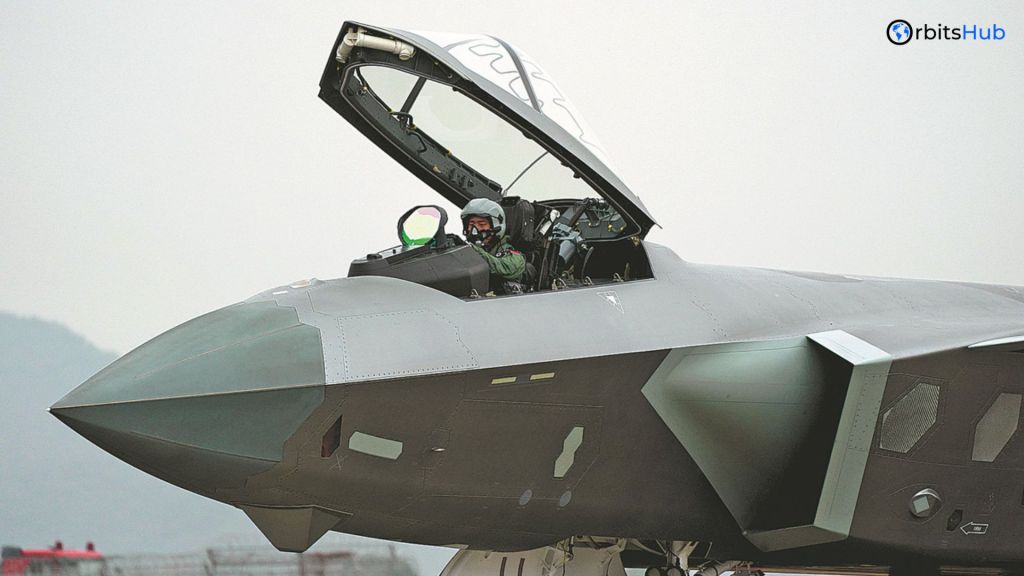
The J-20 has powerful turbofan engines that provide exceptional speed and manoeuvrability. While the exact specifications remain classified, reports suggest the J-20 can reach supersonic speeds exceeding Mach 1.8. These engines, coupled with an advanced thrust vectoring system, allow for sharp turns and rapid climbs, giving the J-20 an edge in close-quarters dogfights.
The J-20’s cockpit is a marvel of modern technology. It provides pilots with a real-time, 360-degree view of the battlefield, integrated with advanced avionics and sensor fusion systems. Information from radars, infrared sensors, and data links is consolidated and presented on high-resolution displays, enabling pilots to make quick decisions in dynamic combat situations.
The Evolving Threat: J-20’s Potential and Upgrades
Military analysts believe the J-20 poses a significant challenge to existing fighter jets. Its stealth, speed, and advanced avionics make it a formidable opponent. Additionally, China is constantly upgrading the J-20. Recent reports suggest the development of variants capable of carrying more air-to-air missiles and longer-range weaponry, further extending its reach and firepower.
However, the J-20’s capabilities are still being evaluated. While some experts believe it rivals the F-22 Raptor, others point out that the J-20’s engine technology might lag behind its American counterpart. The extent of the J-20’s capabilities will become more apparent as China continues developing and deploying this advanced fighter jet.
Challenges and Considerations: The J-20’s Development Journey
This section can delve into China’s challenges while developing the J-20. You can explore aspects like:
- Engine limitations: Discuss speculations around the J-20’s engine technology potentially lagging behind competitors.
- Integration of advanced systems: The complexity of integrating stealth features, avionics, and robust engines can be a hurdle.
- Combat experience: New fighter jets need real-world experience to identify areas for improvement.
Beyond the J-20: China’s Future Fighter Jet Ambitions
This section explores China’s potential plans for fighter jet development. Here are some interesting talking points:
- Next-generation variants of the J-20: Discuss speculations on future J-20 variants with increased capabilities.
- Sixth-generation fighter jets: China’s potential development of even more advanced fighter jets with next-generation technologies.
- The impact on global airpower balance: How China’s fighter jet advancements might influence the global military landscape.
J-20 vs. Established Players: A Comparative Analysis

This section can offer a side-by-side comparison of the J-20 with established fifth-generation fighter jets like the F-22 Raptor and F-35 Lightning II. Here are some critical areas for comparison:
- Stealth capabilities: Analyze the radar signature reduction technologies employed by each aircraft.
- Engine performance: Compare each jet’s engine’s speed, manoeuvrability, and potential limitations.
- Avionics and sensor fusion: Discuss the level of information integration and pilot situational awareness offered by their respective systems.
- Weaponry and combat roles: Explore the types of missiles and munitions each fighter is equipped with and their intended roles in air combat.
The J-20 and Artificial Intelligence: A Look at Future Integration
This section can delve into the potential future integration of Artificial Intelligence (AI) into the J-20 and fighter jets in general. Explore these aspects:
- Decision-making support: Discuss how AI could assist pilots in analyzing data and making real-time tactical decisions.
- Enhanced situational awareness: Explore how AI could fuse sensor data to create a comprehensive battlefield picture for the pilot.
- Autonomous flight capabilities: Briefly discuss the ethical considerations surrounding future autonomous combat drones.
The J-20’s development signifies a significant shift in the balance of air power. As other countries develop their fifth-generation fighters, the future of air combat promises to be a complex dance between stealth, manoeuvrability, and long-range strike capabilities.
OrbitsHub, a leading maritime and aviation consultancy, can be your partner. Visit Orbitshub today and explore how our services can help you navigate the evolving skies and ensure air superiority in the coming years. Let OrbitsHub be your guide as we navigate the exciting yet challenging future of air warfare.