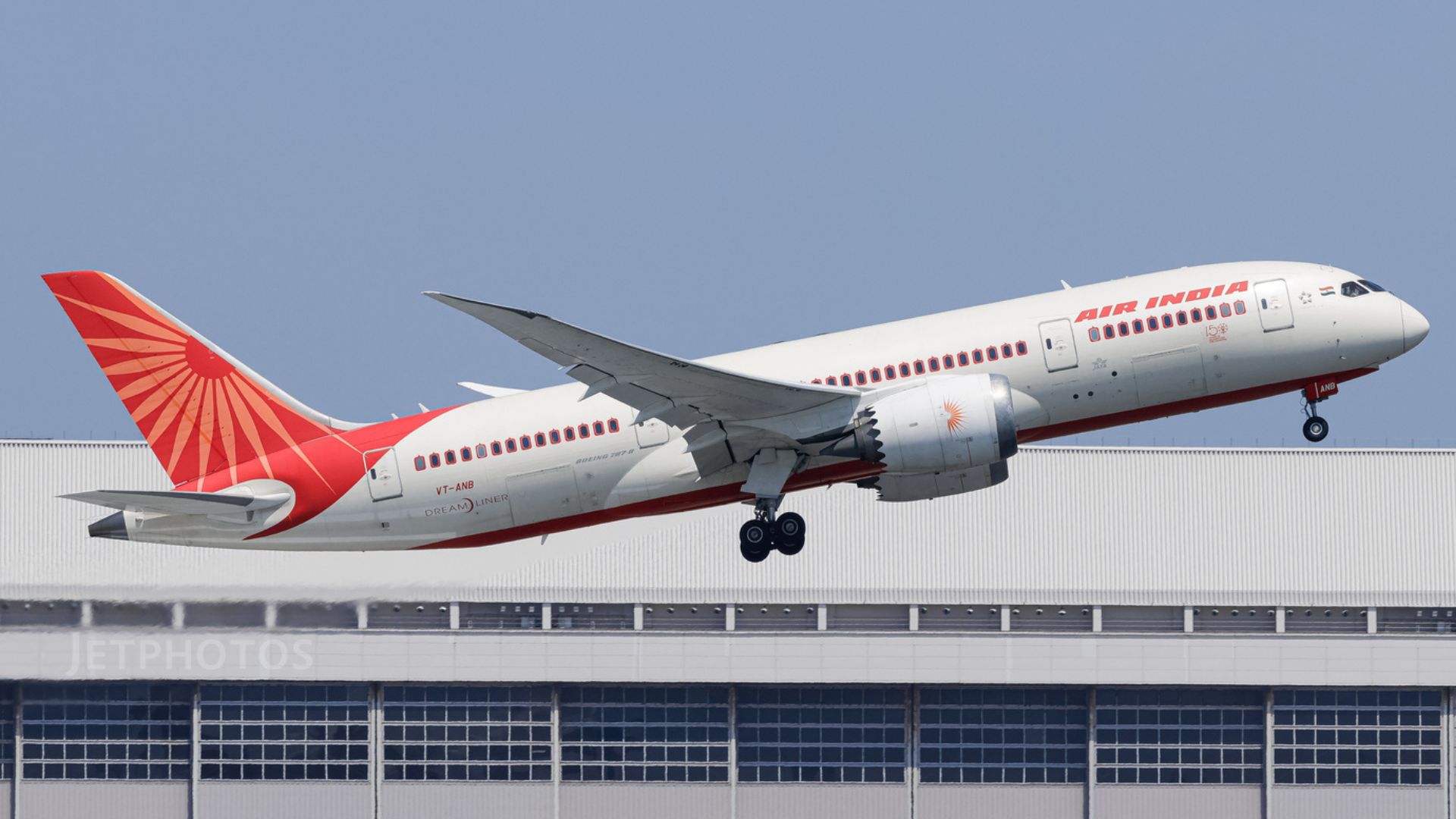
The Boeing 787 Dreamliner has transported over one billion passengers during its 15-year history, yet questions about its safety record continue to surface. Despite being hailed as a revolutionary aircraft when it first entered service in 2011, the Dreamliner has weathered significant storms – from battery fires leading to a fleet-wide grounding in 2013 to recent structural defects prompting delivery halts.
However, beneath these headline-grabbing incidents lies a more nuanced safety profile. The Boeing 787 Dreamliner features groundbreaking composite materials, advanced electrical systems, and innovative design elements that were intended to enhance safety. Still, these same innovations have sometimes created unexpected challenges. Furthermore, while the aircraft boasts zero fatalities from accidents throughout most of its operational history, the recent Air India Flight 171 crash has reignited concerns about the aircraft’s overall safety record.
This article examines the complete safety history of the Boeing 787, analysing fifteen years of flight data, major incidents, design features, and regulatory responses. By looking at both technical specifications and real-world performance, we’ll provide a comprehensive assessment of whether the Dreamliner deserves its place among the safest aircraft in modern aviation.
Timeline of Boeing 787 Major Safety Events (2009 – 2025)
Since its commercial debut in 2011, the Boeing 787 Dreamliner has faced several significant safety challenges that have tested both the aircraft’s design and Boeing’s manufacturing processes.
Lithium-ion Battery Fires and 2013 Grounding
The first major challenge to the 787’s safety record emerged in early 2013 with two separate lithium-ion battery incidents. On January 7, 2013, a battery caught fire on a Japan Airlines 787 parked at Boston’s Logan Airport 1. Just nine days later, an All Nippon Airways 787 made an emergency landing in Japan after battery smoke appeared in the cabin 2. These events prompted the U.S. Federal Aviation Administration to take unprecedented action—grounding the entire global 787 fleet, marking the first such action since the McDonnell Douglas DC-10 grounding in 1979 3.
The National Transportation Safety Board investigation determined that an internal short circuit in a battery cell triggered a cascading thermal runaway effect 1. Rather than identifying the precise root cause, Boeing redesigned the battery system with a reinforced steel containment and venting system to mitigate failure consequences 1. After these modifications, the FAA lifted the grounding in April 2013, allowing the fleet to return to service 3.
Quality Control Issues and Delivery Halts (2019–2022)
Starting in 2019, a series of manufacturing defects led to significant production disruptions. KLM reported discovering loose seats, missing pins, improperly tightened nuts and bolts, and fuel-line clamp issues in their 787s 4. Additionally, non-conformances were found in the assembly of fuselage sections, specifically regarding shims used to fill gaps that could potentially compromise structural integrity 2.
Perhaps most concerning was the scandal involving Italian supplier MPS, which for years had supplied structural titanium parts made from an incorrect, lower-strength alloy, affecting nearly 500 in-service Dreamliners 2. These persistent quality control issues resulted in an almost complete cessation of deliveries from January 2021 until August 2022 4.
Forward Pressure Bulkhead Defect (2023)
In February 2023, Boeing again halted 787 deliveries after discovering what it termed “an analysis error by our supplier related to the 787 forward pressure bulkhead” 5. Spirit AeroSystems, which manufactures this component, disputed Boeing’s characterisation, stating it was “too early to assert there was an ‘analysis error'” 5.
Although Boeing maintained there was “no immediate safety or flight concern for the in-service fleet,” the FAA insisted deliveries would not resume until the issue was adequately addressed 5. Notably, this problem was unrelated to previous quality concerns involving gaps around the forward pressure bulkhead discovered in 2021 5.
Whistleblower Allegations and FAA Response (2024)
The 787’s safety record faced renewed scrutiny in April 2024 when Boeing engineer Sam Salehpour publicly alleged serious manufacturing shortcuts. Salehpour claimed he witnessed workers “jumping on the pieces of the aeroplane to get them to align” during assembly 6. He asserted these practises placed “excessive stress on major aeroplane joints” affecting more than 1,000 787s in service 6.
In May 2024, the FAA launched another investigation after Boeing voluntarily reported that required inspections for adequate bonding and grounding where the wings join the carbon fibre fuselage “may not have been completed” 7. Boeing acknowledged that several employees had been “violating Company policies by not performing a required test, but recording the work as having been completed” 7.
Air India Flight 171 Crash (2025)
On June 12, 2025, Air India Flight 171, a Boeing 787-8 Dreamliner bound for London’s Gatwick Airport, crashed minutes after taking off from Ahmedabad, India 8. The aircraft carried 242 people, including 217 adults, 11 children, and 14 crew members 8. Among the passengers were 169 Indian nationals, 53 British citizens, 7 Portuguese, and 1 Canadian 8.
This tragic event marked the first crash of a Boeing 787 aircraft since the model’s introduction in 2011, ending what had been a fatality-free operational history spanning nearly 14 years 9.
Design Features That Influence Safety
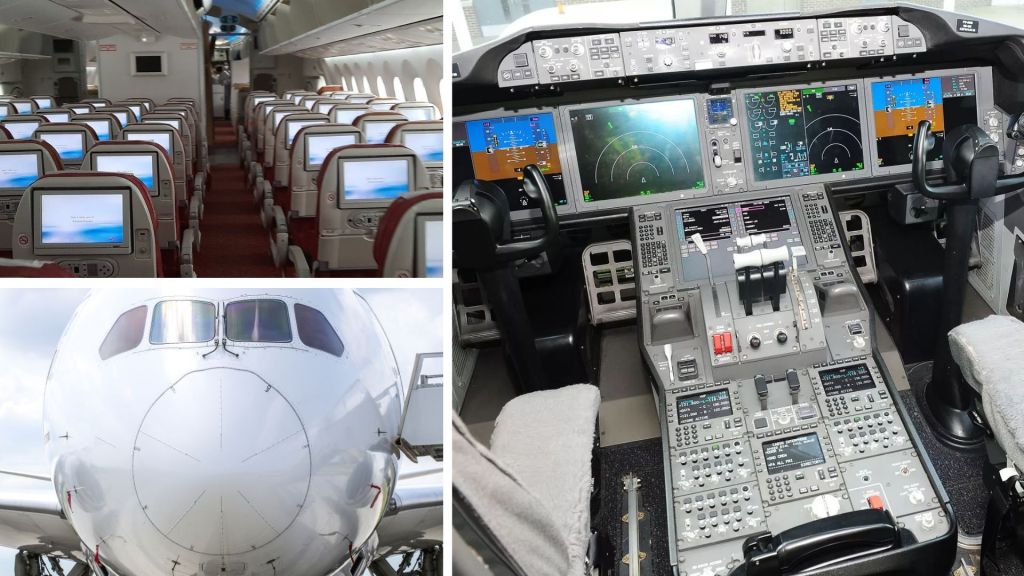
The innovative design features of the Boeing 787 Dreamliner represent both its greatest strengths and potential vulnerabilities from a safety perspective. The aircraft incorporates numerous novel technologies that directly impact passenger safety.
Composite Fuselage and Crashworthiness
At the core of the 787’s design is its carbon fibre reinforced plastic (CFRP) semi-monocoque construction—a significant departure from traditional aluminium airframes 10. This novel approach prompted special FAA certification requirements to ensure crashworthiness comparable to metal-constructed aircraft. The FAA mandated Boeing to evaluate impact response characteristics across vertical descent speeds up to 30 ft/sec 10.
Critics, including former Boeing engineer Vince Weldon, raised concerns that the composite structure might shatter rather than crumple in a crash, potentially transferring more impact force to passengers 11. Nevertheless, NASA-sponsored tests demonstrated that “composites can be designed for essentially any purpose… If I want to crush it I can tailor it that way to make it crushable” 11. Boeing subsequently performed three crash tests, with results matching their computational analysis showing the 787 to be crashworthy under test conditions 12.
Electrical Systems and Fire Risk Mitigation
The 787 minimises pneumatic systems in favour of extensive electrical architecture 13. This approach created challenges, most notably with the lithium-ion batteries that prompted the 2013 fleet grounding. NTSB investigations identified that thermal runaway in a single cell could propagate to other cells, potentially causing fire and releasing flammable electrolyte 14.
The original battery design underestimated these risks; Boeing’s safety assessment incorrectly assumed that cell venting would be limited to a single cell without fire 15. Consequently, Boeing redesigned the battery system with a stainless steel enclosure and external venting 15. Furthermore, some engineers criticised power distribution panels as using components that are “cheap, plastic and prone to failure” 1.
Engine Redundancy: GEnx vs Trent 1000
The 787 offers two engine options: General Electric GEnx and Rolls-Royce Trent 1000, with reliability differences emerging over time. As of June 2024, GEnx-powered Dreamliners experience approximately 11% non-flying days—better than pre-pandemic levels 3. Conversely, Trent 1000 engines have faced durability issues, with aircraft spending about 20% of each month grounded 3.
This disparity became evident post-pandemic, as GEnx-powered 787s returned to service faster 3. The dual-engine option provides airlines flexibility but necessitates maintaining separate parts inventories 16.
Cabin Pressure and Passenger Health
Unlike conventional aircraft typically pressurised to 8,000 feet altitude, the 787’s composite structure enables pressurisation to 6,000 feet 17. This represents a 7.5% increase in cabin pressure compared to traditional aircraft, translating to a 25% lower feeling altitude 17.
Such lower altitude equivalence reduces hypoxia risk and altitude sickness symptoms, particularly beneficial for passengers with respiratory conditions 18. Moreover, the 787 utilises electrically driven air compressors rather than engine bleed air for pressurisation—unique among Boeing’s commercial fleet 19.
Fly-by-Wire and Active Gust Alleviation
The 787 employs an advanced fly-by-wire system with active gust alleviation technology similar to that used on the B-2 bomber 7. This system uses trailing edge flaps to counteract lift changes caused by turbulence 7. Beyond enhancing passenger comfort, the technology primarily reduces structural fatigue by lowering collective cyclic loads 7.
The system integrates gyroscopic sensors detecting yaw, pitch, and roll changes with accelerometers measuring vertical and horizontal forces 20. A network of microcontrollers processes this data to automatically actuate control surfaces, counteracting the effects of wind gusts 20. This technology not only improves the passenger experience but extends the aircraft’s structural lifespan through reduced stress on components.
Operational Safety Record Across Airlines
Throughout its operational history, the Boeing 787 Dreamliner’s safety record stands as a testament to its design and engineering integrity, presenting a stark contrast to the challenges faced during its development and production phases.
Zero Fatalities and Hull Losses (2011–2023)
From its entry into service with All Nippon Airways in 2011 until June 2025, the 787 Dreamliner maintained an impeccable safety record with zero fatal accidents 21. This 14-year period without fatalities is remarkable for a modern commercial aircraft, especially one that introduced numerous technological innovations 22. Before the Air India Flight 171 incident, the Aviation Safety Network database reported zero hull losses 23 among the operational fleet of 787s.
Despite facing technical difficulties—including the 2013 battery incidents and subsequent grounding—the aircraft demonstrated exceptional resilience in maintaining passenger safety. The most serious incident prior to 2025 was a fire aboard an Ethiopian Airlines Dreamliner parked at London Heathrow in 2013, traced to a fault in an emergency locator transmitter 22. Importantly, this and other operational issues were addressed through maintenance bulletins and fleet-wide inspections without causing loss of life.
Global Fleet Utilisation: Over 1 Billion Passengers
In less than 14 years of service, the Boeing 787 Dreamliner fleet achieved a remarkable milestone by carrying over one billion passengers—faster than any widebody commercial aircraft in history 5. This achievement underscores the aircraft’s widespread adoption and consistent utilisation across global airlines.
The operational scale of the Dreamliner fleet is substantial, with nearly 5 million flights completed and more than 30 million flight hours logged 21. As of May 2025, the programme had received 2,137 orders and delivered 1,189 aircraft 4. The global fleet now comprises more than 1,175 aircraft operating across 85+ countries at 520+ airports 24.
Daily operations likewise demonstrate the aircraft’s central role in global aviation, with approximately 2,100 flights each day carrying about 480,000 passengers daily 24. On average, each 787 remains in the air more than 12 hours per day—a strong indicator of reliability and airline confidence 24.
ETOPS Certification and Long-Haul Reliability
The 787’s Extended-range Twin-engine Operations Performance Standards (ETOPS) certification has been crucial to its success on long-haul routes. The aircraft was designed and certified for 180-minute ETOPS operations initially, with the 787-8 and 787-9 variants intended to achieve 330-minute ETOPS capability 4.
During flight testing, the 787 demonstrated its ETOPS compliance through rigorous trials, including multiple safe flights of 345-minutes with only a single-engine operating and with numerous systems intentionally failed 25. These tests verified the aircraft’s ability to fly safely on a single engine for extended periods—a critical safety requirement.
The 787 has enabled airlines to open more than 425 new nonstop routes around the world 5, many previously unserviceable due to economics or aircraft range limitations. This route expansion capability stems directly from the aircraft’s ETOPS certification, allowing it to fly over empty stretches of ocean and polar regions.
Boeing’s Operations Control Centre provides additional safety assurance by monitoring the fleet 24 hours a day and automatically receiving performance data from 787s in flight, in real time 25. This advanced monitoring capability exceeds what is available for other aircraft models, thereby enhancing safety through proactive issue detection.
Regulatory Oversight and Manufacturer Response
The regulatory relationship between Boeing and the Federal Aviation Administration (FAA) has undergone significant evolution throughout the 787 Dreamliner’s lifecycle, marked by periods of tightened oversight following safety incidents.
FAA Certification and Recertification Cycles
The original certification process for the Boeing 787 spanned eight years, requiring extensive FAA involvement that included 150 issue papers and over 900 hours of flight testing 6. Given the aircraft’s novel technologies, the FAA developed special conditions for certification, most notably for the lithium-ion batteries which later became problematic 6. Following the 2013 battery incidents, the FAA mandated a comprehensive redesign of the battery systems before allowing the fleet to return to service 6. Throughout 2021-2022, the agency fundamentally altered its approach to 787 certification by taking the extraordinary step of retaining airworthiness certification authority rather than delegating it to Boeing 26. This marked the first time since 1979 that the FAA had grounded an entire fleet without any fatalities or injuries having occurred 6.
Boeing’s Internal Quality Audits and Fixes
Boeing’s internal quality management system uncovered 19 nonconformances and five noncompliances in the 787 programme, with the aft body assembly containing the majority of issues 27. In response to ongoing quality concerns, Boeing implemented “no-notification” audits at five commercial sites beginning January 2024, involving surprise inspections with less than 24-hours notice 28. Additionally, the company developed detailed plans addressing each recommendation from the FAA’s Expert Review Panel, including strengthening its Safety Management System (SMS) implementation 29. Boeing also completed the reorganisation of its ODA unit members, giving them an independent reporting structure and adding dozens of new senior managers 29.
Delegated Authority and Its Limitations
The Organisation Designation Authorisation (ODA) programme, implemented in 2009, allowed Boeing employees to perform certain certification tasks on behalf of the FAA 30. Nevertheless, a Department of Transportation inspector general report identified this as a “failing system” for oversight 28. Boeing has reported gradual improvements in this area, with approximately 9% of ODA employees reporting perceived interference in 2024, down from 14% in 2022 28. First Article Inspections (FAIs), which verify production processes can yield conforming parts, represented another oversight gap; neither Boeing nor the FAA consistently reviewed these critical quality assurance documents 8.
Public Perception and Airline Trust
Recent safety concerns surrounding the Boeing 787 Dreamliner have significantly impacted public confidence in the aircraft manufacturer. Data reveals a profound shift in consumer sentiment that extends beyond mere statistics to affecting travel choices.
Statista Trust Index Drop (Q4 2023–Q1 2024)
Public trust in Boeing has declined dramatically according to Morning Consult survey data. Between Q4 2023 and February 2024, net trust—defined as the percentage of respondents who trust the brand minus those who distrust it—fell by 14 percentage points 9. This decline was even more pronounced among business travellers, who showed a 26 percentage point decrease 9. Frequent flyers similarly demonstrated waning confidence with a 17 percentage point drop 31. Interestingly, this erosion of trust appears contained to Boeing rather than spreading across the aviation industry; net trust in airlines actually increased during this period 9.
Airline Reactions: Vistara, United, ANA
All Nippon Airways (ANA), with its fleet of 17 Dreamliners, took decisive action following battery malfunctions by voluntarily halting flights before official grounding orders 32. This proactive stance reflected the airline’s safety-first approach, though it resulted in 176 additional flight cancellations 33. United Airlines’ CEO addressed mounting concerns in a customer letter, acknowledging that recent incidents “have our attention and have sharpened our focus” 34. Meanwhile, other carriers maintained their confidence in the aircraft’s integrity, emphasising that despite turbulence incidents, the 787 “managed to safely land in one piece” 35.
Media Coverage and Passenger Sentiment
Social media platforms have become forums for travellers expressing anxiety about flying on Boeing aircraft. Videos with captions like “when you’re scared of flying and find out you’ll be on a Boeing 737” have proliferated 2. Beyond mere expressions of concern, travellers are actively changing their flight arrangements—sometimes at additional cost—to avoid Boeing aircraft. One passenger reported paying approximately £70 extra to switch from a Boeing to an Airbus flight, stating it was “worth it for my safety” 34. Travel search engine Kayak reported usage of its aircraft philtre feature increased 15 times in January 2024 compared to December 2023 34. Even Boeing engineer-turned-whistleblower Sam Salehpour publicly stated he would not put his own family on a 787 Dreamliner 36, further damaging consumer confidence in what was once considered among the most advanced passenger aircraft in service.
The Complex Reality of the 787 Dreamliner’s Safety Record
The Boeing 787 Dreamliner presents a nuanced safety profile that defies simple characterisation. Despite recent challenges, factual data demonstrates the aircraft’s remarkable operational record—carrying over one billion passengers across nearly 5 million flights with only one fatal accident in fifteen years of service. This safety achievement stands as a testament to the fundamental soundness of its revolutionary design.
Nevertheless, the recent Air India Flight 171 crash undeniably marks a watershed moment, ending what had previously been a fatality-free operational history spanning almost fourteen years. Though investigations continue, this tragic event forces a reassessment of the aircraft’s safety record.
Manufacturing quality issues have plagued the 787 programme throughout its history. Loose seats, improperly tightened components, structural gaps, and falsified inspection reports certainly raise legitimate concerns about Boeing’s quality control processes. The company has responded with enhanced auditing procedures and organisational changes, although questions persist about their effectiveness.
Design innovations represent both strengths and vulnerabilities. The composite fuselage enables higher cabin pressure levels beneficial to passenger health while potentially introducing new crashworthiness challenges. Similarly, advanced electrical systems reduce weight but created unforeseen fire risks with lithium-ion batteries. Boeing addressed these issues through significant redesigns, proving the aircraft’s adaptability but also highlighting initial certification shortcomings.
Regulatory oversight has evolved considerably since the 787’s introduction. The FAA’s unprecedented decision to retain airworthiness certification authority rather than delegating it to Boeing signifies a fundamental shift in the regulator-manufacturer relationship. This change, coupled with surprise inspections and enhanced monitoring, demonstrates heightened scrutiny of Boeing’s processes.
Public perception ultimately may prove as important as technical realities. The dramatic decline in consumer trust suggests broader implications beyond the 787 itself. Passengers actively avoiding Boeing aircraft and airlines issuing reassurance statements indicate damage to the brand that extends across the manufacturer’s entire fleet.
The Boeing 787 Dreamliner thus exemplifies the complex intersection of innovative engineering, manufacturing challenges, regulatory oversight, and public confidence. While its overall safety record remains statistically impressive compared to aviation history, recent events demand continued vigilance from manufacturers, regulators, and airlines alike. The true measure of the Dreamliner’s safety legacy will depend not only on its past performance but also on how effectively Boeing addresses current concerns to restore both operational excellence and passenger trust.
References
[1] – https://www.kansas.com/news/business/aviation/article1107956.html[2] – https://www.independent.co.uk/travel/news-and-advice/social-media-users-scared-fly-boeing-planes-b2542770.html
[3] – https://aviationweek.com/awin-knowledge-centre/flight-friday-boeing-787-engine-utiization-trent-versus-genx
[4] – https://en.wikipedia.org/wiki/Boeing_787_Dreamliner
[5] – https://www.boeing.com/commercial/787
[6] – https://www.transportation.gov/testimony/certification-boeing-787-aircraft-and-lessons-learned
[7] – https://aviation.stackexchange.com/questions/19414/does-the-787-gust-alleviation-system-make-a-more-comfortable-ride-or-for-a-more
[8] – https://www.oig.dot.gov/sites/default/files/library-items/FAA%20Oversight%20of%20Boeing%20737%20and%20787%20Production_Final%20Report-10-09-24_0.pdf
[9] – https://www.statista.com/chart/31928/net-trust-among-us-familiar-with-boeing-brand/
[10] – https://www.federalregister.gov/documents/2007/09/26/E7-18942/special-conditions-boeing-model-787-8-aeroplane-crashworthiness
[11] – https://www.flightglobal.com/former-boeing-engineer-draws-industry-fire-over-787-composite-fuselage-crashworthiness-alarm/76325.article
[12] – https://www.manufacturing.net/aerospace/news/13062520/boeing-performs-key-787-dreamliner-crash-test
[13] – https://www.faa.gov/sites/faa.gov/files/about/plans_reports/787_Report_Final.pdf
[14] – https://www.ntsb.gov/safety/safety-recs/recletters/A-14-032-036.pdf
[15] – https://www.ntsb.gov/investigations/AccidentReports/Reports/AIR1401.pdf
[16] – https://simpleflying.com/thread/which-boeing-787-engine-option-is-better/
[17] – https://simpleflying.com/how-cabin-pressurisation-impacts-passenger-comfort/
[18] – https://en.wikipedia.org/wiki/Cabin_pressurization
[19] – https://pmc.ncbi.nlm.nih.gov/articles/PMC7152029/
[20] – https://www.airliners.net/forum/viewtopic.php?t=753955
[21] – https://www.airdatanews.com/worlds-most-advanced-commercial-aircraft-boeing-787-had-no-fatal-accidents-since-its-debut/
[22] – https://www.firstpost.com/india/air-india-ai-171-crash-ends-dreamliners-untarnished-safety-record-13896432.html
[23] – https://asn.flightsafety.org/database/types/Boeing-787/statistics
[24] – https://investors.boeing.com/investors/news/press-release-details/2025/Boeing-787-Dreamliner-Fleet-Eclipses-1-Billion-Passengers/default.aspx
[25] – http://787updates.newairplane.com/Boeing787Updates/media/Boeing787Updates/ETOPS-Presentation.pdf
[26] – https://www.npr.org/2022/02/15/1080930976/faa-toughens-oversight-of-boeings-787-dreamliner
[27] – https://aviationweek.com/air-transport/new-boeing-787-fix-details-reveal-extent-gap-check-challenge
[28] – https://www.seattletimes.com/business/boeing-aerospace/boeing-sticks-to-safety-strategy-with-new-audits-officers-and-data/
[29] – https://www.boeing.com/strengthening-safety-and-quality
[30] – https://www.oig.dot.gov/sites/default/files/library-items/FAA%20Oversight%20of%20Boeing%20737%20and%20787%20Production_Final%20Report-10-09-24%20-%20508%20Compliant_0.pdf
[31] – https://ktvz.com/stacker-news/2024/05/09/dreamliner-nightmare-boeing-787-safety-concerns-raised/
[32] – https://worldcrunch.com/world-affairs/boeing-787-flights-grounded-worldwide-amidst-growing-safety-worries/
[33] – https://samchui.com/2018/07/09/ana-cancel-additional-boeing-787-flights/
[34] – https://www.nbcnews.com/news/us-news/travellers-changing-flights-avoid-boeing-aeroplanes-rcna144158
[35] – https://www.marketing-interactive.com/boeing-brand-sentiments-qatar-airways-turbulence-incident
[36] – https://www.nbcnews.com/news/us-news/whistleblower-outlines-safety-concern-boeing-787-dreamliner-rcna148063