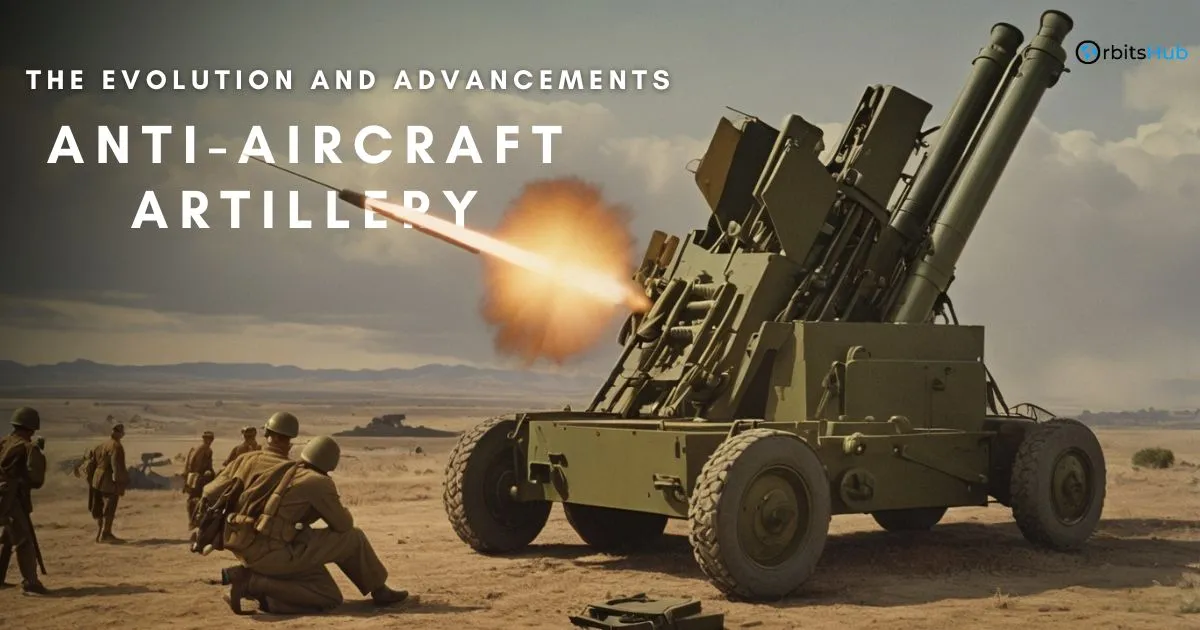
Anti-aircraft artillery (AAA) has played a crucial role in military history, critical in defending against aerial threats. From the early days of World War I to the sophisticated missile systems of today, anti-aircraft artillery has evolved significantly. This evolution reflects the changing nature of warfare, technological advancements, and the continuous need to protect ground forces and critical infrastructure from aerial attacks.
The Early Days of Anti-Aircraft Artillery
The Birth of Anti-Aircraft Defense
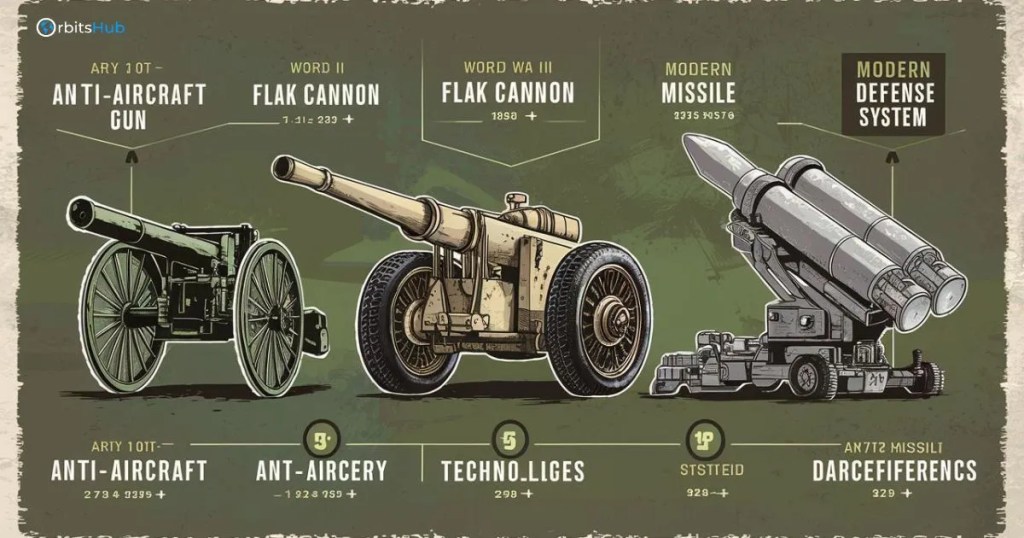
The concept of anti-aircraft defense can be traced back to World War I when aircraft first became a significant threat on the battlefield. Initially, no specialized anti-aircraft weapons were used; instead, existing artillery was adopted. Soldiers used standard field guns, aiming them at enemy aircraft with rudimentary sighting techniques. However, the lack of precision and the slow rate of fire made these early attempts largely ineffective.
The need for a dedicated anti-aircraft solution became evident as air raids and reconnaissance missions grew in frequency and effectiveness. This led to the development of the first purpose-built anti-aircraft guns, such as the German Flak (Flugabwehrkanone), designed to engage high-flying reconnaissance planes and bombers.
World War II: The Golden Age of Anti-Aircraft Artillery
An important turning point in developing anti-aircraft artillery occurred during World War II. The war saw the widespread use of aircraft, including bombers, fighters, and dive bombers, making air defense a critical priority for all major combatants. Anti-aircraft guns became more sophisticated, with improvements in accuracy, rate of fire, and the ability to track fast-moving targets.
One of the most iconic anti-aircraft guns of this era was the German 88mm Flak gun. Initially designed as an anti-tank weapon, it proved highly effective against high-altitude bombers. The 88mm Flak gun became a symbol of German air defense, capable of engaging aircraft at various altitudes and ranges. Its versatility and effectiveness made it one of the most feared weapons of the war.
Technological Advancements in Anti-Aircraft Artillery
The Transition to Missiles
After World War II, jet aircraft and their higher speeds and altitudes made anti-aircraft guns less effective. This led to the developing of surface-to-air missiles (SAMs) as the primary air defense. Missiles offered more extraordinary range, accuracy, and the ability to engage targets at higher altitudes and speeds than traditional guns.
The introduction of the Soviet S-75 Dvina (NATO reporting name: SA-2 Guideline) in the 1950s marked a new era in anti-aircraft warfare. The S-75 was one of the first effective SAM systems capable of shooting down high-flying reconnaissance planes and bombers. The 1960 downing of an American U-2 espionage plane over the Soviet Union was the most famous example of missile-based air defense.
In the West, the development of SAM systems, such as the American MIM-23 Hawk and the British Bloodhound, followed suit. These systems provided a multi-layered defense, with short–, medium, and long-range missiles capable of engaging a variety of aerial threats.
The Role of Automated Systems
As technology advanced, so did the automation of anti-aircraft artillery—integrating computers, radar, and advanced fire-control systems allowed for faster and more accurate targeting. Automated systems could calculate the trajectory of incoming aircraft and direct the guns or missiles with precision, reducing human error and increasing the effectiveness of air defense.
The development of the Phalanx Close-In Weapon System (CIWS) by the United States Navy is a prime example of this automation. The Phalanx CIWS is an automated, rapid-fire gun system that protects naval vessels from anti-ship missiles and aircraft. It uses radar to detect and track targets, automatically adjusting its aim to ensure a high probability of interception.
Similarly, land-based systems like the Russian Pantsir-S1 combine short-range missiles and anti-aircraft guns with automated targeting systems, providing a robust defense against various aerial threats, including aircraft, helicopters, and drones.
The Modern Landscape of Anti-Aircraft Artillery
The Integration of Anti-Aircraft Artillery and Missile Defense
In today’s military landscape, anti-aircraft artillery is often integrated with missile defense systems to provide comprehensive air defense coverage. This integration allows for a layered defense strategy, where different systems work together to protect against various types of aerial threats, from low-flying cruise missiles to high-altitude bombers.
For example, the American Patriot missile system combines long-range missiles with advanced radar and command systems to defend against ballistic missiles, aircraft, and drones. The Patriot system’s success in intercepting Iraqi Scud missiles during the Gulf War highlighted the importance of integrated air defense systems in modern warfare.
Similarly, the Russian S-400 Triumf system is considered one of the world’s most advanced integrated air defense systems. It has a range of up to 400 kilometers and can engage many targets, including hypersonic missiles and stealth aircraft. The S-400’s versatility and effectiveness have made it a key component of Russia’s air defense strategy.
The Rise of Drone Warfare and Its Impact on Anti-Aircraft Artillery
The proliferation of uncrewed aerial vehicles (UAVs), or drones, has introduced new challenges for anti-aircraft artillery. Drones are often smaller, faster, and more maneuverable than traditional aircraft, making them challenging targets for conventional anti-aircraft systems. As a result, militaries around the world are developing new technologies and tactics to counter the threat posed by drones.
One approach is the development of directed-energy weapons, such as lasers, which can disable or destroy drones with pinpoint accuracy. These weapons offer the advantage of unlimited ammunition and can engage multiple targets quickly. The United States and other countries are actively testing and deploying these systems as part of their air defense strategies.
Another approach is the use of electronic warfare to jam or disrupt the communication links between drones and their operators. By interfering with the drone’s navigation and control systems, electronic warfare can render the drone ineffective or force it to crash.
The Future of Anti-Aircraft Artillery
Advancements in Hypersonic Defense
As hypersonic weapons—missiles that travel at speeds greater than Mach 5—become more prevalent, anti-aircraft artillery must evolve to meet this new challenge. Due to their incredible speed and maneuverability, traditional anti-aircraft systems may struggle to intercept hypersonic threats. This has led to increased research and development in hypersonic defense systems.
One potential solution is the development of new missile systems specifically designed to intercept hypersonic targets. These systems combine advanced radar, high-speed interceptors, and possibly even artificial intelligence (AI) to predict the flight path of hypersonic weapons and ensure a successful interception.
Another area of interest is the use of space-based sensors and interceptors. By deploying assets in space, militaries could gain a significant advantage in detecting and tracking hypersonic threats early in their flight. This would provide more time for ground-based defenses to react and engage the target.
The Role of AI in Future Anti-Aircraft Artillery
Artificial intelligence (AI) in anti-aircraft artillery is anticipated to grow significantly in the next few years. Artificial intelligence can improve targeting speed and accuracy, enabling anti-aircraft systems to react faster to new threats. By processing vast amounts of data generated by radar and sensors, AI systems can identify potential threats and determine the optimal response in real time.
AI could also manage complex, multi-layered air defense systems, ensuring that each system component works seamlessly. This would allow for more efficient use of resources and increase the overall effectiveness of the defense.
In addition, AI-powered autonomous drones could be deployed as part of an integrated air defense network. These drones could patrol the skies, detecting and engaging enemy aircraft or missiles before they reach their targets. By leveraging AI, militaries could create more resilient and adaptable air defense systems capable of countering various threats.
Anti-aircraft artillery has come a long way since its humble beginnings in World War I. From manually operated guns to sophisticated missile systems, the evolution of anti-aircraft technology reflects the changing nature of warfare and the continuous need to protect against aerial threats. As new challenges emerge, such as hypersonic weapons and drone warfare, anti-aircraft systems will need to continue evolving, incorporating the latest advancements in technology and AI to stay ahead of potential adversaries.
Contacting Orbitshub, a top marine services provider, is a good idea for anyone curious about the most recent developments in anti-aircraft technology and maritime defense. Orbitshub offers expert consultation and cutting-edge solutions to ensure your defense strategies are up-to-date and effective in the ever-changing landscape of modern warfare.