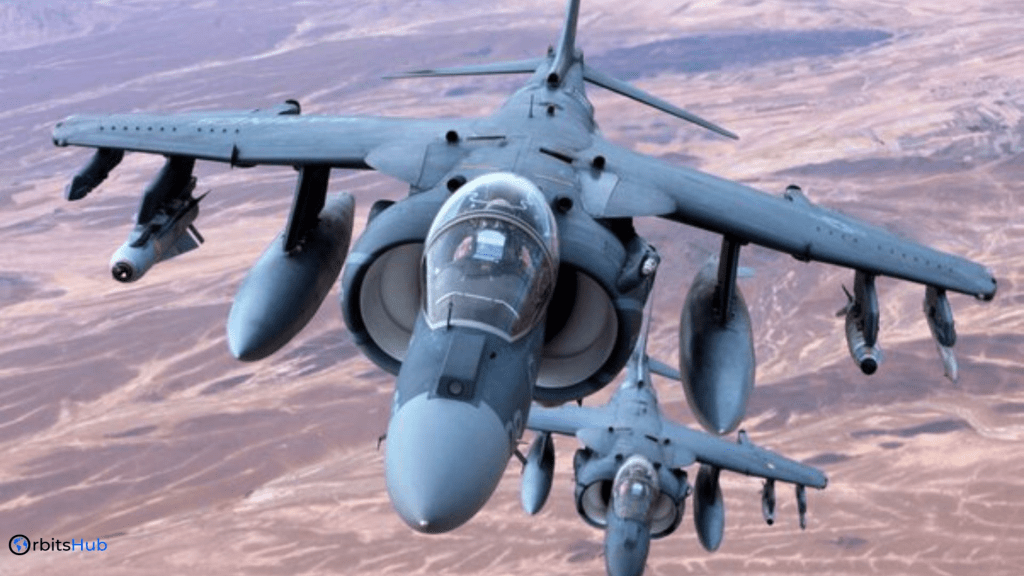
The AV-8 Harrier II has earned its place as one of the most iconic aircraft in modern warfare. Known for its ability to take off and land vertically, this remarkable jump jet has transformed naval aviation and played a critical role in various conflicts. From its early design to its operational use today, the AV-8 Harrier II has become synonymous with versatility and power in aerial combat.
The Rise of the AV-8 Harrier II
A Revolutionary Design
The development of the AV-8 Harrier II was groundbreaking in aviation history. Building upon the success of the original Harrier, the AV-8 Harrier II was designed to offer improved performance, greater combat capabilities, and enhanced operational flexibility. The most striking feature of this aircraft is its vertical and short takeoff and landing (VSTOL) capability, which allows it to take off and land from small, confined spaces, such as ships and remote airfields.
The Harrier’s unique ability to hover like a helicopter but fly like a conventional jet revolutionized air combat, giving military forces a significant advantage. This VSTOL capability allowed the AV-8 Harrier II to be used in a variety of environments, particularly on aircraft carriers, where space is limited.
The Evolution of the Harrier
The AV-8 Harrier II was a product of continuous innovation. It was an upgrade over the earlier Harrier models, offering improvements in speed, payload, and avionics. The incorporation of modern technology allowed the AV-8 Harrier II to perform more advanced missions and carry out longer more sustained operations. Its increased range and enhanced weapon systems made it a potent tool for both ground attack and air defence roles.
The aircraft was initially designed for the Royal Navy but quickly became popular among several nations, including the United States Marine Corps, Spain, and Italy. This aircraft became a symbol of naval air power thanks to its adaptability and reliability in a range of combat scenarios.
Key Features and Capabilities of the AV-8 Harrier II

Vertical and Short Takeoff and Landing
The standout feature of the AV-8 Harrier II is its VSTOL capability, which allows the aircraft to take off and land in tight spaces with minimal runway. This feature is especially helpful when there aren’t any normal landings around, like on ships or in rough, war-torn areas. The AV 8 Harrier II can operate from amphibious assault ships or land bases with limited infrastructure, making it an ideal choice for expeditionary forces.
This ability to operate from smaller platforms has made the AV8 Harrier II a key asset in naval operations, providing air support for ground troops, conducting reconnaissance, and engaging in air-to-air combat.
Enhanced Combat Performance
The AV-8 Harrier II boasts remarkable combat capabilities, featuring an array of weapons such as bombs, missiles, and an inbuilt cannon. These weapons allow the Harrier to carry out a variety of missions, from precision strikes on enemy positions to defending against aerial threats. The aircraft’s ability to hover also gives it a unique advantage, enabling it to perform attack runs with greater accuracy.
The AV-8 Harrier II in Action
The Falklands War: Proving Its Worth
The AV8 Harrier II gained widespread attention during the Falklands War in 1982. When Argentina invaded the Falkland Islands, the British Navy deployed Harriers from their aircraft carriers, which were crucial in launching air strikes against the Argentine forces. The AV8 Harrier II’s ability to operate from the limited space of the British aircraft carriers, such as the HMS Hermes, was vital to the success of the British operations.
Throughout the conflict, the Harriers demonstrated their versatility, providing both offensive and defensive air support for ground troops. The aircraft’s ability to perform air strikes without the need for traditional airfields was a game-changer, enabling the British to respond swiftly and decisively.
Continued Service in Modern Warfare
The AV8 Harrier II has continued to play an important role in modern conflicts. In the Gulf War, the Harrier was used to provide air support for ground troops and engage in combat with Iraqi forces. Its ability to operate from small bases and carriers made it an invaluable asset for coalition forces, particularly during the early stages of the conflict when larger aircraft were unable to operate from forward positions.
Even today, the AV8 Harrier II remains an essential part of many air forces. Although newer aircraft have since emerged, the Harrier still serves as a valuable tool for expeditionary and naval operations. Its unique capabilities continue to make it a preferred choice for military forces that require versatility and flexibility in the air.
Challenges and Limitations of the AV-8 Harrier II
Maintenance and Operational Costs
While this aircraft offers unparalleled flexibility and capabilities, it comes with its own set of challenges. One of the major concerns with operating the Harrier is the high cost of maintenance and operation. The complexity of its design, particularly the vertical takeoff and landing systems, makes it more expensive to maintain compared to traditional fighter jets.
Additionally, the operational costs of flying and maintaining a fleet of this aircraft are higher than those of conventional fixed-wing aircraft. The unique systems required for vertical flight and hovering add to the overall complexity, which can be a limiting factor for some military forces.
The Need for Upgrades
The AV8 Harrier II is an ageing aircraft, and while it has been upgraded over the years, it faces competition from newer technologies. The advancement of stealth technology, more powerful engines, and enhanced avionics means that the Harrier’s performance may be outpaced by next-generation aircraft. To keep the AV8 Harrier II relevant in modern warfare, constant upgrades and modifications are necessary, which can be costly and time-consuming.
The Legacy of the AV-8 Harrier II
A Symbol of Innovation and Versatility
The AV-8 Harrier II has left an indelible mark on military aviation. Its innovative design, capable of performing vertical and short takeoffs, has revolutionized the way military forces approach air combat. The Harrier’s legacy continues to influence the development of future VSTOL aircraft, including newer models like the F-35B.
This aircraft has proven its worth in combat, and its continued service in various air forces worldwide demonstrates its enduring value. Despite facing challenges, it remains a symbol of versatility, adaptability, and innovation in modern warfare.
Frequently Asked Questions
1. What makes the AV-8 Harrier II unique in military aviation?
The AV-8 Harrier II is unique due to its vertical and short takeoff and landing (VSTOL) capabilities, allowing it to operate from confined spaces like ships or small airfields, making it ideal for naval operations.
2. How has the AV-8 Harrier II performed in modern conflicts?
This aircraft II has been used effectively in various modern conflicts, including the Falklands War and the Gulf War, providing crucial air support for ground troops and conducting airstrikes with precision.