The English Electric Canberra, a post-World War II British jet bomber, set benchmarks in aviation with its advanced twin-engine design and high-altitude performance. Its specifications continue to captivate Aviation Industry Professionals, Technology Innovators, Corporate Decision-Makers, Government Officials, and Sustainability Advocates. This will explore Canberra’s enduring engineering legacy and influence on modern aircraft design. Discover what made it iconic.
The Canberra’s Origins: A Revolutionary Design
A Response to Post-War Needs
In 1944, the British Air Ministry sought a successor to the de Havilland Mosquito, demanding a high-altitude, high-speed bomber with no defensive armament. English Electric, a company then new to military aircraft design, answered the call.
Led by designer W.E.W. Petter, the team crafted the Canberra, which flew on May 13, 1949. Its debut marked a leap forward, blending simplicity with cutting-edge aerodynamics. This blueprint still resonates with Technology Innovators in Aviation today.
Why It Stood Out
Unlike its piston-engine predecessors, the Canberra relied on jet propulsion, offering unmatched speed and altitude capabilities. Its sleek, semi-monocoque fuselage and cantilevered wings allowed it to evade early jet interceptors, making it a strategic asset for defense forces. For Government and Defense Officials, Canberra’s versatility across bombing, reconnaissance, and electronic warfare roles cemented its value in Cold War operations.
Technical Specifications: The Heart of the Canberra
Airframe and Dimensions
The Canberra’s design prioritized efficiency and performance. Its all-metal construction featured a fuselage stretching 65 feet 6 inches long, with a wingspan of 64 feet. The aircraft stood 15 feet 6 inches tall, balancing agility with stability.
Weighing approximately 27,950 pounds empty and up to 55,000 pounds fully loaded, the Canberra was robust yet nimble, a quality Corporate Decision-Makers appreciate when evaluating operational costs versus capability.
The cantilevered wings, free of external bracing, enhanced lift and reduced drag, enabling the aircraft to reach altitudes exceeding 48,000 feet. This high-altitude prowess made it a favorite for reconnaissance missions, a fact not lost on Aviation Industry Experts analyzing its multi-role potential.
Powerplant: Rolls-Royce Avon Engines
Its twin Rolls-Royce Avon turbojet engines were at the core of the Canberra’s performance. Early models, like the B.2 variant, used Avon R.A.3 engines, each delivering 6,500 pounds of thrust. Later versions, such as the B.6, upgraded to Avon 109 engines, boosting thrust to 7,500 pounds per engine. This power allowed a maximum speed of 570 mph (Mach 0.74) at 40,000 feet and a cruising speed of 517 mph at sea level.
For Technology Innovators, the Avon engines represented a milestone in jet propulsion, offering reliability and efficiency that influenced future designs. The engines’ nine-stage axial compressor and single-stage turbine ensured consistent performance, even under demanding conditions.
Payload and Armament
The Canberra’s internal bomb bay could carry up to 8,000 pounds of ordnance, including 4 x 750-pound M1117 bombs or a mix of smaller munitions. External hardpoints added flexibility, accommodating additional bombs or rockets. Reconnaissance variants, like the PR.9, swapped bombs for advanced cameras, capturing high-resolution imagery at altitudes beyond enemy reach.
This adaptability appealed to Government and Defense Officials, who valued the aircraft’s ability to switch roles without significant modifications. Sustainability Advocates in Transport might note Canberra’s efficient payload-to-weight ratio, which maximized emission output while minimizing fuel demands for its era.
Avionics and Crew Systems
Designed for a crew of two (pilot and navigator/bomb-aimer), the Canberra featured a fighter-style canopy for optimal visibility. Early models relied on manual navigation, but later variants incorporated radar bombing systems and basic electronic countermeasures. The PR.9 introduced an offset canopy and ejection seats for the navigator, enhancing crew safety, a critical consideration for Corporate Decision-Makers prioritizing personnel welfare.
While rudimentary by today’s standards, Canberra’s avionics laid the groundwork for modern systems, a point of interest for Aviation Industry Experts studying the evolution of flight technology.
Performance Highlights: Breaking Records

Altitude and Range
Canberra’s ability to climb to 70,310 feet, set as a world record in 1957, made it untouchable by most contemporary fighters. Its service ceiling of 48,000 feet for operational missions ensured strategic dominance.
With a range of 2,630 miles (extendable with wingtip fuel tanks), the aircraft could conduct long-range strikes or reconnaissance, a capability that Government and Defense Officials leveraged in conflicts like the Suez Crisis and Vietnam War.
Speed and Maneuverability
Capable of 570 mph at high altitude, the Canberra balanced speed with stability. Its low-level performance, particularly in RAAF operations during Vietnam, demonstrated precision bombing at reduced altitudes. For Aviation Industry Professionals, this versatility underscores the aircraft’s engineering, blending speed with tactical flexibility.
Variants and Global Impact
Key Variants
Over its lifespan, the Canberra evolved into 27 variants, from the B.2 bomber to the PR.9 reconnaissance platform and T.4 trainer. The B(I).8 introduced a stretched fuselage and offset canopy, enhancing crew ergonomics. The U.S.-built Martin B-57 Canberra, with 403 units produced, adapted the design for American needs, incorporating J65 engines and modified cockpits.
Each variant addressed specific mission profiles, a factor Corporate Decision-Makers consider when assessing fleet adaptability. Sustainability Advocates might appreciate how variants extended the aircraft’s service life, reducing the need for new builds.
Global Reach
Exported to 15 countries, including Australia, India, and Argentina, the Canberra equipped 65 RAF squadrons and saw action in multiple conflicts. Australia’s Government Aircraft Factory built 48 B.20 models tailored for local conditions. The aircraft’s global footprint highlights its reliability, a key metric for Technology Innovators evaluating long-term platform viability.
Legacy and Modern Relevance
Influence on Aviation Design
The Canberra’s high-altitude, jet-powered design influenced subsequent bombers and reconnaissance aircraft, from the U-2 to modern UAVs. Its emphasis on simplicity and performance offers lessons for Technology Innovators developing next-generation platforms. Aviation Industry Experts often cite the Canberra as a case study in balancing cost, capability, and longevity.
Sustainability Lessons
While not designed with today’s environmental standards, Canberra’s efficient fuel consumption for its time and extended service life (RAF retirement in 2006) aligns with sustainability goals. Sustainability Advocates in Transport can draw parallels to modern efforts to maximize aircraft lifecycles, reducing waste and resource demands.
Preserving the Legacy
Today, a handful of Canberras remain airworthy, flown at airshows, or used by NASA for research. Museums worldwide, from Australia’s Temora Aviation Museum to the UK’s RAF Museum, preserve these aircraft, allowing Aviation Industry Professionals to study their design firsthand. For Government and Defense Officials, these artifacts remind of strategic innovation in aviation history.
The Enduring Legacy of the Canberra Aircraft
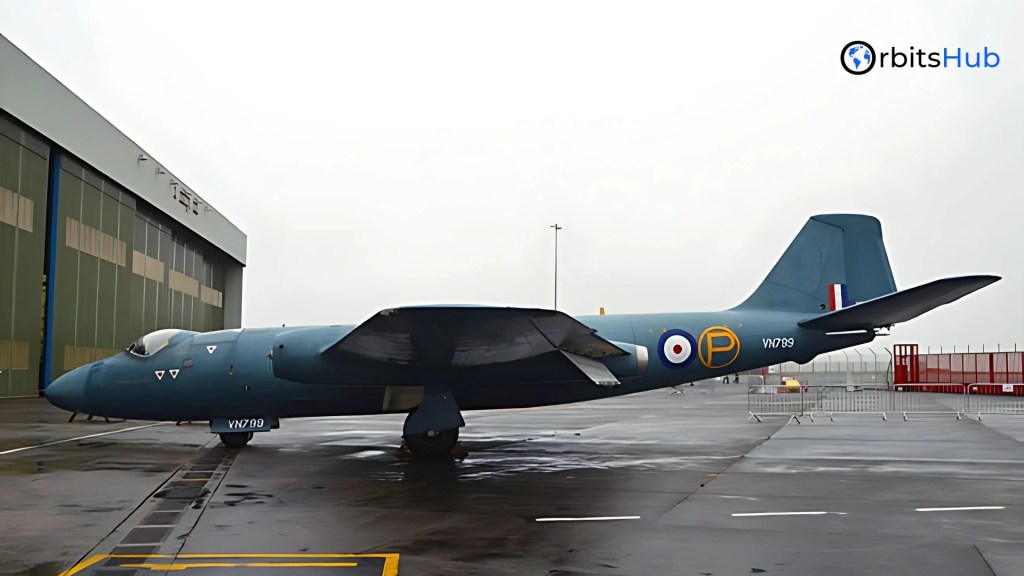
The English Electric Canberra revolutionized jet-powered flight with its Rolls-Royce Avon engines and 8,000-pound payload. Its high-altitude performance and versatility inform modern aviation design. Professionals, innovators, decision-makers, and sustainability advocates value its efficiency and adaptability. The Canberra’s specifications met its era’s needs and shaped future aircraft, offering lasting insights for the aviation industry.
FAQs
1. What was the Canberra aircraft’s top speed?
About 570 mph at 40,000 feet, making it one of the fastest bombers of its era.
2. How high could the Canberra fly?
It reached a record altitude of 70,310 feet, with a typical ceiling of 48,000 feet.