Our world is a web of instant connections, but have you ever wondered how that magic happens? The answer is orbiting high above us – telecommunication satellites. These incredible machines act as celestial relay stations, bouncing our calls, texts, and internet data across vast distances. We’ll unveil the inner workings of these technological marvels, explore the different types that power our connected world, and peer into the exciting future of satellite communication. So, buckle up and prepare for a journey showing you how telecommunication satellites truly connect the world!
What are Telecommunication Satellites?
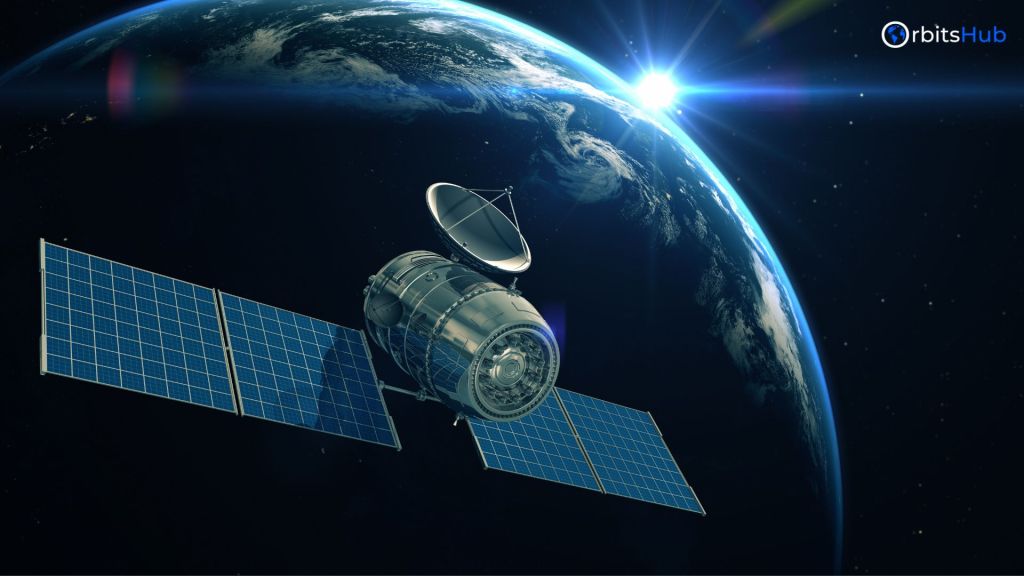
Telecommunication satellites are artificial moons orbiting Earth that act as giant relay stations in the sky. Imagine a giant walkie-talkie floating in space; that’s what a telecommunication satellite does – it receives signals from one point on Earth and transmits them to another.
How Telecommunication Satellites Work: A Three-Step Journey
The magic of telecommunication satellites lies in a three-step process:
Uplink: Earth to Space
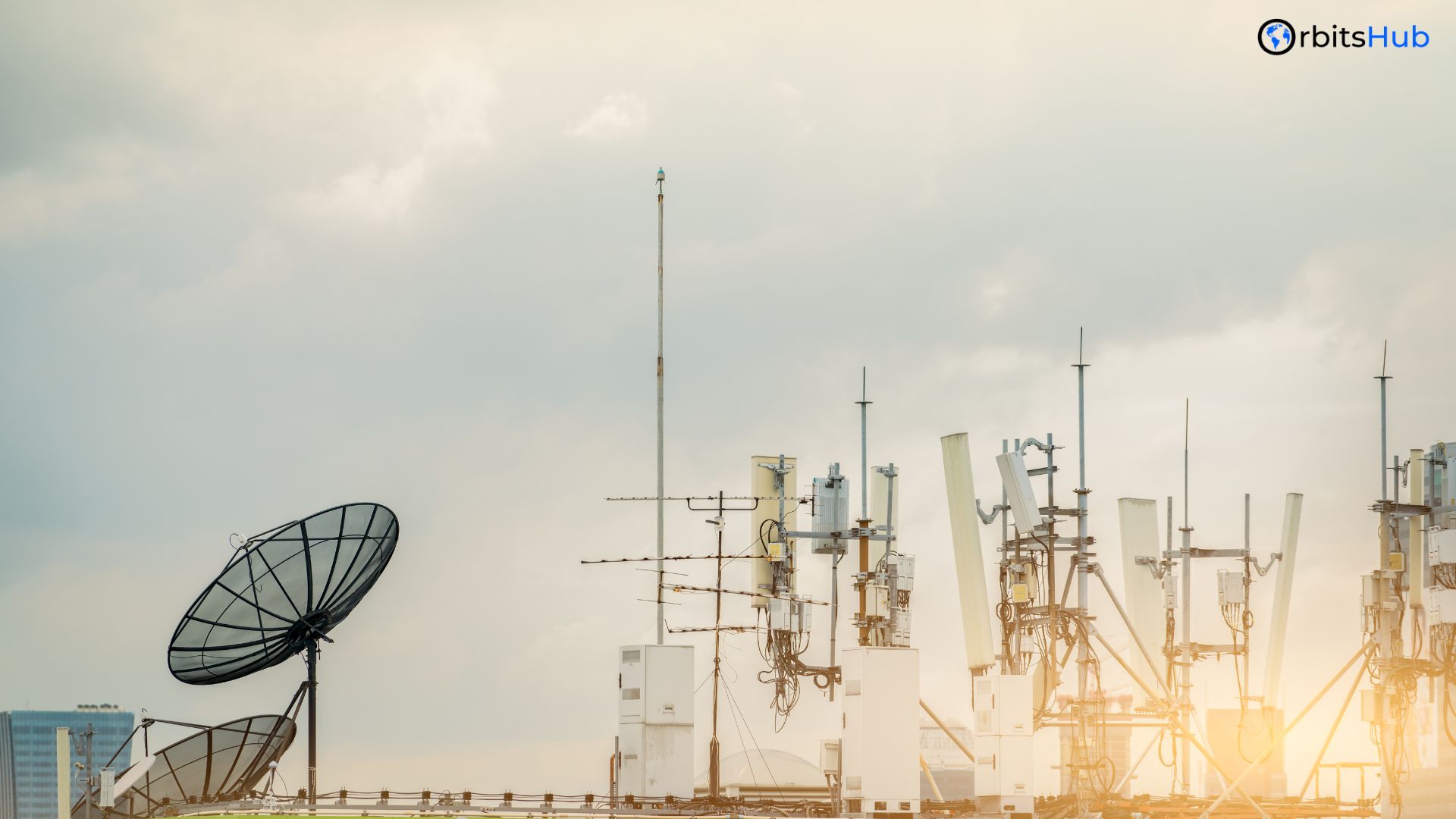
Our journey begins on Earth. Imagine you’re making a satellite phone call. A large dish antenna at a ground station transmits the signal (your voice) to the satellite through radio waves. These radio waves travel in a straight line and cannot bend around the curvature of the Earth to reach distant locations. That’s where the satellite comes in!
The Busy Bee: The Transponder
The satellite receives the signal at one frequency. Inside the satellite’s belly lies a critical component called a transponder. This nifty device acts like a signal booster and translator. It amplifies the weak incoming signal and converts it to a different frequency to avoid interference with the outgoing signal.
Downlink: Space to Earth
Finally, the satellite steals the amplified and translated signal back down to Earth. Here, another dish antenna at a receiving station picks up the signal and transmits it to its final destination. This could be another satellite phone or a landline network in our phone call example.
The Invisible Symphony: Different Types of Telecommunication Satellites
The world of telecommunication satellites is quite diverse, with each type catering to specific needs. Here’s a glimpse into two main categories:
- Geostationary Earth Orbit (GEO) Satellites: Imagine a satellite fixed in the sky, always appearing at the same spot. That’s a GEO satellite! These satellites orbit Earth at a specific altitude (around 35,786 kilometres) and match Earth’s rotation, making them appear stationary. This “fixed” position makes them ideal for satellite TV, radio, and high-bandwidth internet applications.
- Low Earth Orbit (LEO) Satellites: Unlike their geostationary cousins, LEO satellites zoom around Earth at much lower altitudes (between 200 and 2,000 kilometres). While an individual LEO satellite might not be visible for long as it zips across the sky, constellations of LEO satellites working together provide constant coverage. These constellations are becoming increasingly important for mobile internet and navigation services.
The Impact of Telecommunication Satellites: A Connected World
Telecommunication satellites have revolutionized the way we connect and access information. Here are some of their key benefits:
- Bridging the Gap: Satellites enable communication in remote areas where laying down cables or building traditional infrastructure might be impractical or expensive.
- Global Reach: They provide seamless connectivity across vast distances, facilitating international communication and business.
- Disaster Relief: During natural disasters, satellites play a crucial role in coordinating relief efforts and maintaining communication channels when terrestrial infrastructure is damaged.
- Broadcast Revolution: Satellite technology has transformed how we access information and entertainment, enabling television and radio signals to reach a wider audience.
Overcoming Challenges: Limitations of Telecommunication Satellites

While telecommunication satellites offer immense benefits, it’s essential to acknowledge some limitations:
- Latency: Signals travelling long distances to and from satellites can experience a slight delay, which might be noticeable in applications requiring real-time interaction like video conferencing.
- Weather Dependence: Heavy rain or snowfall can disrupt the signal transmission between the ground station and the satellite.
- Space Debris: The growing presence of debris in space poses a risk of collisions that could damage or destroy satellites.
The Future of Telecommunication Satellites: A Look Ahead
The future of telecommunication satellites is brimming with exciting possibilities:
- Mega-Constellations: Companies like SpaceX are launching massive constellations of LEO satellites to provide ubiquitous internet access.
- Satellite-based Navigation Advancements: Expect continued improvements in GPS technology and the emergence of new global navigation satellite systems.
- Integration with Other Technologies: Telecommunication satellites will likely work with advancements like artificial intelligence and autonomous vehicles.
The foundation of our interdependent world is the network of telecommunications satellites. New and exciting advancements in this subject are on the horizon, thanks to the rapid pace of technological change. Even the most inaccessible parts of the world will be able to access the internet at lightning speeds in the future, thanks to satellite technology.
Are you considering a project that leverages the power of satellite technology? OrbitsHub, a leading maritime and aviation consultancy services company, can be your partner in navigating the complexities of this ever-evolving domain. Contact OrbitsHub today to explore how their expertise can help you reach new horizons.