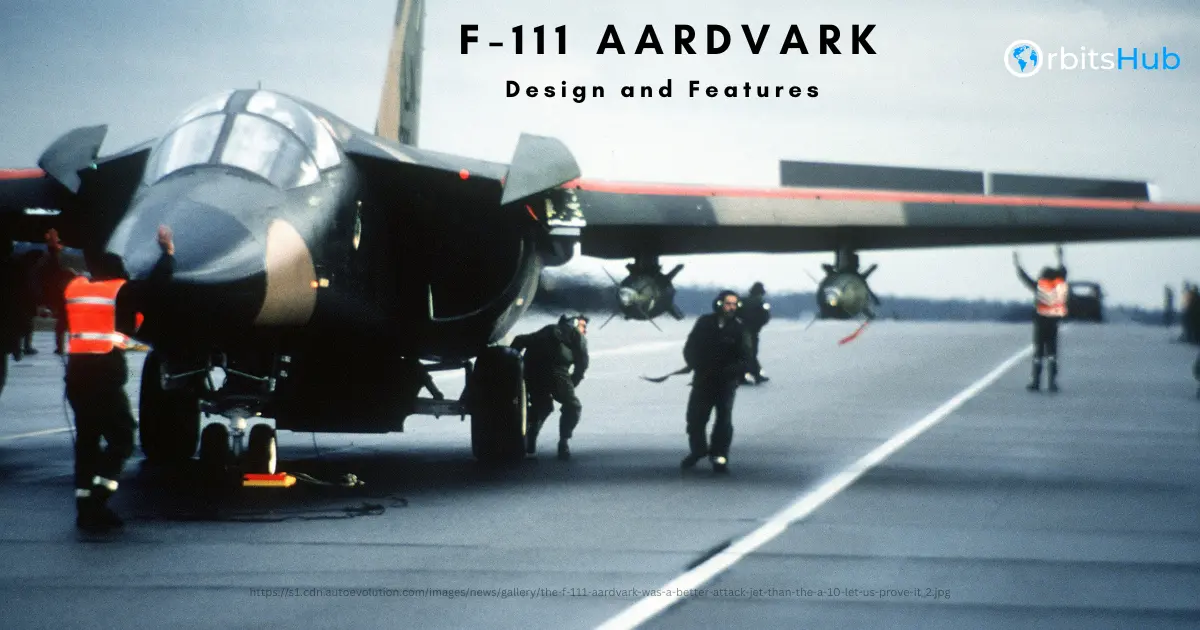
Military aviation took a giant leap forward by introducing the groundbreaking F-111 Aardvark in the 1960s. After more than 30 years of service, the F-111 Aardvark had earned a reputation for adaptability and technological prowess among ally forces and the U.S. Air Force. Tactical bombing, electronic warfare, and surveillance were all intended functions of this aircraft. We will delve into the design and characteristics, illuminating the reasons behind this plane’s distinction in aviation history.
The Revolutionary Design of the F-111 Aardvark
The F-111 Aardvark was a product of innovative thinking and advanced engineering. Its design broke away from traditional aircraft models, incorporating a blend of speed, range, and payload capacity that was unmatched at the time.
Variable-Sweep Wings
One of the most distinctive features of the F-111 Aardvark was its variable-sweep wings. This design allowed the wings to adjust their angle mid-flight, optimizing performance across different speeds and altitudes. The wings could be extended for low-speed, low-altitude missions to provide better lift and control. Conversely, the wings could be swept back for high-speed operations to reduce drag and increase speed. This adaptability made the F-111 Aardvark a versatile aircraft capable of handling a variety of missions.
Advanced Avionics
The F-111 Aardvark was among its era’s most technologically sophisticate planes thanks to its cutting-edge avionics equipment. The aircraft featured an automated terrain-following radar system, allowing it to fly at very low altitudes while avoiding obstacles. This capability was handy for penetrating enemy defenses during bombing missions. Additionally, the aircraft was equipped with an advanced navigation system, enhancing its accuracy and effectiveness in various operational scenarios.
The Multifaceted Features
Beyond its design, the F-111 Aardvark boasted several features contributing to its long service life and operational success. These features were integral to the aircraft’s ability to perform various missions, from tactical bombing to electronic warfare.
Powerful Engines
The F-111 Aardvark’s remarkable speed and torque were supplied by its two after-burning turbofan engines, the Pratt & Whitney TF30. Thanks to its supersonic propulsion system, the F-111 quickly became one of the most formidable fighters of its day. The ability to accelerate rapidly with the help of the afterburners was vital in combat, where every second counts. The aircraft’s capacity to transport massive payloads over great distances was crucial to its function as a tactical bomber, and the strong engines played a part in this capability.
Versatile Payload Capacity
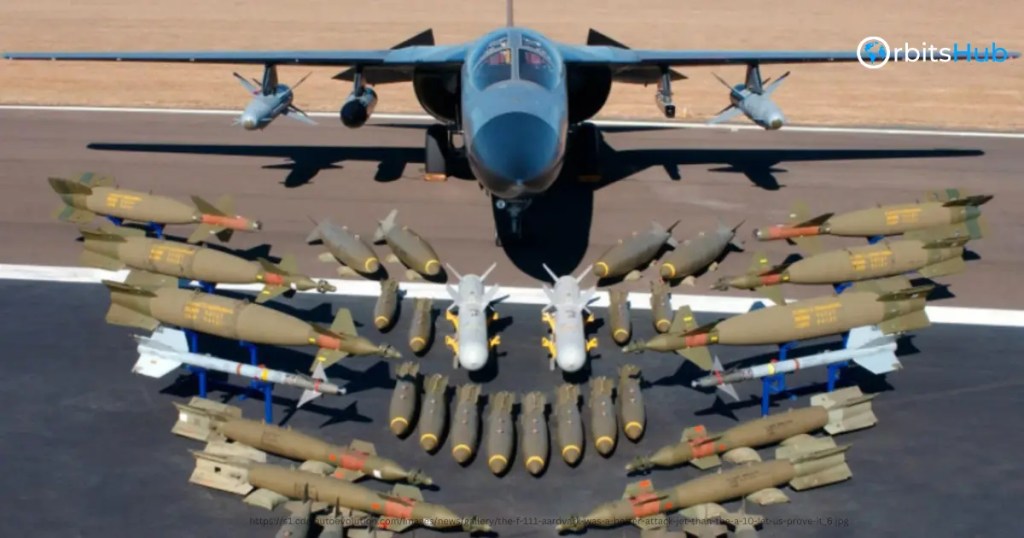
Another significant feature of the aircraft was its versatile payload capacity. A nuclear weapon, along with conventional weapons like bombs and missiles, can be carried by the aircraft. This versatility allowed the F-111 Aardvark to be deployed in different combat scenarios, from precision bombing missions to strategic atomic strikes. The internal weapons bay and multiple external hardpoints provided ample space for carrying various types of artillery, making the Aardvark a formidable force on the battlefield.
The Legacy of the F-111 Aardvark
The F-111 Aardvark’s legacy extends beyond its operational capabilities. It set new standards in aircraft design and performance, influencing the development of future military aircraft. The Aardvark’s speed, range, and versatility were ahead of its time, and its innovative features are still studied by aviation enthusiasts and professionals today.
Operational Success
Throughout its service life, the F-111 Aardvark participated in numerous military operations, proving its worth in various combat scenarios. From the Vietnam War to the Gulf War, the aircraft demonstrated its ability to perform under challenging conditions. Its success in these operations cemented its reputation as one of its era’s most capable and reliable aircraft. The Aardvark’s ability to perform various missions made it an indispensable asset to the United States Air Force and other allied forces.
Influence on Modern Aircraft
The design and features of the F-111 Aardvark have had a lasting impact on modern aircraft development. For example, the concept of variable-sweep wings has been incorporate into other aircraft designs, such as the F-14 Tomcat. The F-111’s advanced avionics and terrain-following radar systems also paved the way for developing more sophisticated systems in future aircraft. The lessons learned from the F-111 Aardvark’s design and operational use continue to inform the development of military aviation technology.
Evolution of the F-111 Aardvark’s Development
- Early Prototypes: In the early 1960s, the F-111 Aardvark was born from the Tactical Fighter Experimental (TFX) program. The objective was to design a multipurpose plane to carry out low-level strike missions and high-speed interception.
- Design Challenges: The dual-role requirement presented significant design challenges, leading to the developing of a variable-sweep wing to accommodate different mission profiles.
- Initial Testing: Early prototypes faced numerous issues, particularly with the engines and avionics systems. These challenges led to extensive testing and iterative design improvements.
- Final Production Model: After several redesigns and extensive testing, the final production model of the aircraft was roll out in 1967. It incorporated advanced avionics, a terrain-following radar, and robust engines, setting a new standard for multi-role aircraft.
Technological Innovations in the F-111 Aardvark
- Variable-Sweep Wings: One of the most notable innovations was the variable-sweep wing, which allowed the aircraft to adapt its wing configuration for optimal performance at various speeds and altitudes.
- Terrain-Following Radar: The F-111 Aardvark was equip with a pioneering terrain-following radar system, enabling it to fly at very low altitudes while maintaining high speeds, a crucial advantage in evading enemy radar detection.
- Advanced Avionics: The package included a state-of-the-art navigation system and automated systems that reduced pilot workload, allowing for more precise and efficient missions.
- Afterburning Turbofan Engines: The Pratt & Whitney TF30 engines were powerful and incorporated afterburners, providing the thrust necessary for supersonic speeds and rapid acceleration.
Operational Versatility of the F-111 Aardvark
- Multi-role Capabilities: The F-111 was design to perform various missions, from tactical bombing and reconnaissance to electronic warfare and nuclear strike missions.
- Adaptability in Combat: Its variable-sweep wings and powerful engines allowed it to perform in both high-speed, high-altitude environments and low-speed, low-altitude scenarios, making it highly adaptable in combat situations.
- Payload Flexibility: The Aardvark could carry various munitions, including conventional bombs, guided missiles, and nuclear weapons, making it a versatile tool in the U.S. Air Force arsenal.
- Global Reach: With its long-range capabilities and in-flight refueling options, the F-111 Aardvark could be deploy in various global theaters, demonstrating its operational versatility.
Maintenance and Upgrades of the F-111 Aardvark
- Routine Maintenance: The Aardvark required regular maintenance due to its complex systems, particularly the variable-sweep wings and advanced avionics. This ensured its reliability and performance during missions.
- Upgrades Over Time: Throughout its service life, the F-111 Aardvark underwent several upgrades to its avionics, radar systems, and weapons capabilities. These upgrades extended its operational life and maintained relevance in evolving combat scenarios.
- Logistical Support: A robust logistical support network was essential for maintaining the F-111 Aardvark, particularly given its global deployment. This included specialized maintenance crews and spare parts distribution.
- Retirement and Legacy: As newer aircraft were developed, the Aardvark was gradually release from active service. However, its legacy of innovation and multi-role capability continues to influence modern aircraft design.
Impact of the F-111 Aardvark on Modern Military Tactics
- Shaping Tactical Bombing Strategies: The F-111’s ability to deliver precision strikes at low altitudes revolutionized tactical bombing strategies, making it a key asset in strategic planning.
- Influence on Aircraft Design: The success of the F-111 Aardvark’s variable-sweep wing and terrain-following radar influenced the design of subsequent aircraft, including the F-14 Tomcat.
- Role in Cold War Deterrence: During the Cold War, the F-111 played a crucial role in nuclear deterrence, capable of delivering strategic strikes deep into enemy territory.
- Legacy in Multi-role Aircraft: The F-111 Aardvark set a precedent for multi-role combat aircraft, proving that a single platform could effectively perform a variety of missions. This concept continues to shape modern military aviation tactics.
The F-111 Aardvark remains a significant milestone in the history of military aviation. Its revolutionary design, powerful features, and operational success have left an indelible mark on the aviation industry. The Aardvark was not just an aircraft but a symbol of innovation and technological advancement. As we reflect on its legacy, it is clear that the Aardvark set a high standard for future generations of aircraft.
To learn more about aviation history and the impact of aircraft, explore our website at Orbitshub – a maritime and aviation consultancy. Visit us today to delve deeper into the fascinating aviation and marine expertise world.