Imagine colossal vessels, floating cities teeming with military might, traversing vast oceans – these mighty US aircraft carriers. These titans of the seas are the cornerstones of American naval power, projecting influence and safeguarding global security interests. But where exactly are these behemoths currently deploy? This blog unveils the latest on US aircraft carrier locations, providing a glimpse into how these formidable naval assets are strategically position worldwide.
US Aircraft Carrier Locations: Maintaining Global Presence
The United States Navy maintains a strategically dispersed fleet of aircraft carriers, enabling them to respond to potential threats and emergencies across the globe. Here’s a breakdown of how these carriers typically operate:
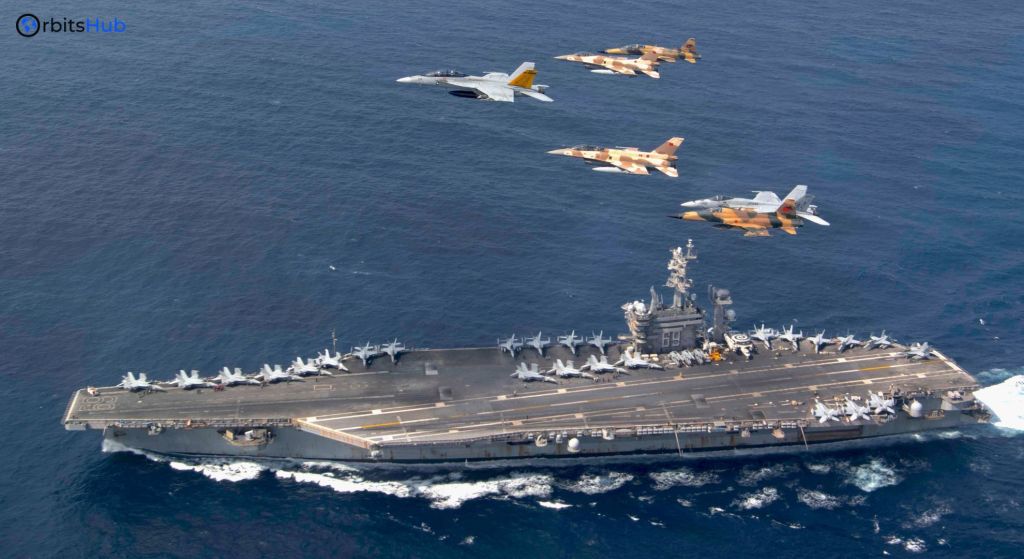
- Carrier Strike Groups (CSGs): Aircraft carriers don’t operate alone. Each carrier forms the centrepiece of a Carrier Strike Group (CSG), a mighty task force that includes cruisers, destroyers, submarines, and support vessels. This integrated force allows the carrier to effectively project airpower and conduct various missions.
- Deployment Cycles: Aircraft carriers typically undergo a deployment cycle that involves an extended period at sea, followed by a maintenance and training period back at their homeport. The specific location of a carrier depends on its current stage in this deployment cycle.
- Operational Secrecy: For security reasons, the US Navy doesn’t always publicly disclose the exact locations of deployed aircraft carriers. However, we can get a general idea of their operating areas based on open-source intelligence and news reports.
Current US Aircraft Carrier Locations
Important Note: Due to operational security concerns, the specific locations of US aircraft carriers are not always publicly available. The information below is based on publicly available data and may only be partially accurate or up-to-date.

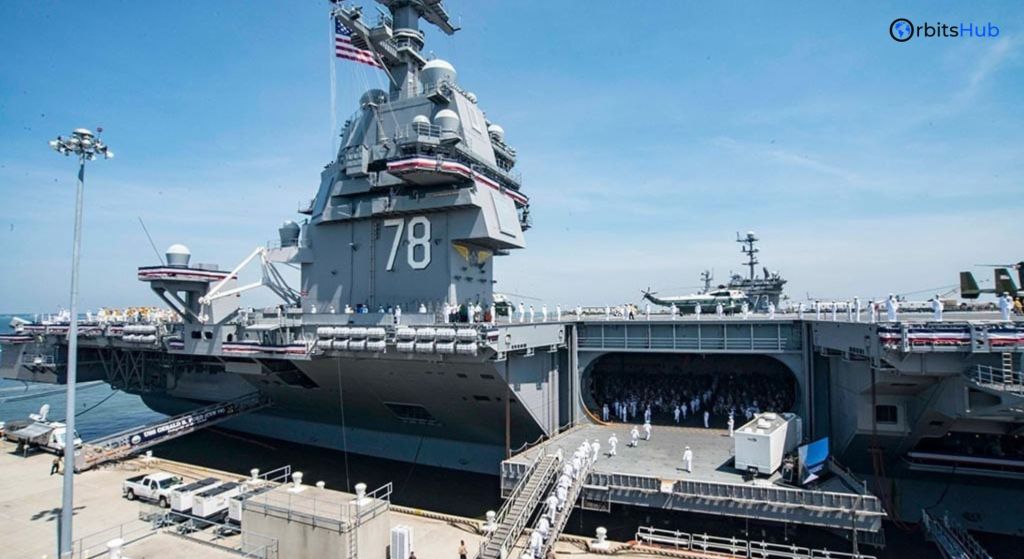
- USS Gerald R. Ford (CVN-78): This lead ship of the USS Gerald R. Ford-class carriers is the most advanced aircraft carrier in the world. Its current deployment location is private.
- USS Harry S. Truman (CVN-75): Another Nimitz-class carrier, the Harry S. Truman, is likely operating in the Indo-Pacific region, a strategically important area with growing geopolitical tensions.
- USS Dwight D. Eisenhower (CVN-69): The Eisenhower, a Nimitz-class carrier, might be deploy in the Atlantic Ocean or the Mediterranean Sea, crucial in maintaining regional security and stability.
Remember: This information is for general informational purposes and may only be partially accurate or up-to-date.
Significance and Strategic Implications
The locations of US aircraft carriers hold significant strategic importance:
- Power Projection and Deterrence: The presence of US aircraft carriers in strategic locations is a powerful symbol of American naval power and a deterrent to potential adversaries.
- Crisis Response and Humanitarian Aid: Aircraft carriers can be rapidly deploy in response to international crises, providing vital airpower and humanitarian assistance when needed.
- Maintaining Freedom of Navigation: The US Navy utilizes aircraft carriers to uphold navigation principles, ensuring the free flow of commerce and communication across international waters.
By strategically positioning its carrier strike groups, the US Navy safeguards its interests, promotes regional stability, and maintains its position as a leading maritime power.
Factors Affecting US Aircraft Carrier Locations
Several factors influence the deployment of US aircraft carriers:
- Geopolitical Tensions: The US may require a more extensive naval presence. This need could be in areas where tensions are rising, such as the Indo-Pacific or the Middle East. This could lead to deploying an aircraft carrier strike group to stop aggression and reassure friends.
- Military Exercises and Training: The US Navy frequently conducts joint military exercises with allied nations. These exercises often involve the participation of aircraft carriers. Their deployment locations might be chosen to facilitate these training activities.
- Planned Maintenance and Overhaul: Aircraft carriers require periodic maintenance and overhaul periods. The location of a carrier can be influence by the availability of shipyard facilities for these crucial maintenance activities.
The Future of US Aircraft Carrier Operations
Aircraft carriers remain central to US naval power. The future of aircraft carrier operations is shaped by continuous innovation and adaptation.
- New Carrier Technologies: The US Navy always uses new technologies to improve aircraft carriers. These advancements include improved air defence systems, more efficient propulsion systems, and the integration of uncrewed aerial vehicles.
- Evolving Threats: Wars are constantly changing. The US Navy needs to adapt how its carriers operate to address new threats, such as cyberattacks and advanced anti-ship weapons.
- International Cooperation: Collaboration with allies and partner nations is increasingly essential for maintaining maritime security. Future US aircraft carrier deployments involve greater cooperation with friendly navies for joint patrols and operations.
By embracing innovation, adapting to changing threats, and fostering international cooperation, the US Navy ensures that its aircraft carriers remain a potent symbol of American naval power well into the future.
The Ever-Evolving Landscape of US Aircraft Carrier Operations
The locations of US aircraft carriers are constantly evolving, reflecting the dynamic nature of global security threats and geopolitical considerations. Understanding these deployments provides valuable insights into US foreign policy and its commitment to maintaining a robust naval presence worldwide.
Are you intrigued by the complexities of global maritime strategy and naval operations? OrbitsHub, a leading marine and aviation consultancy, can be your guide. Our group of experts knows a lot about marine issues that affect countries worldwide. It can help us understand different parts of naval deployments, changes in geopolitics, and how aircraft carriers’ roles are changing in the 21st century.