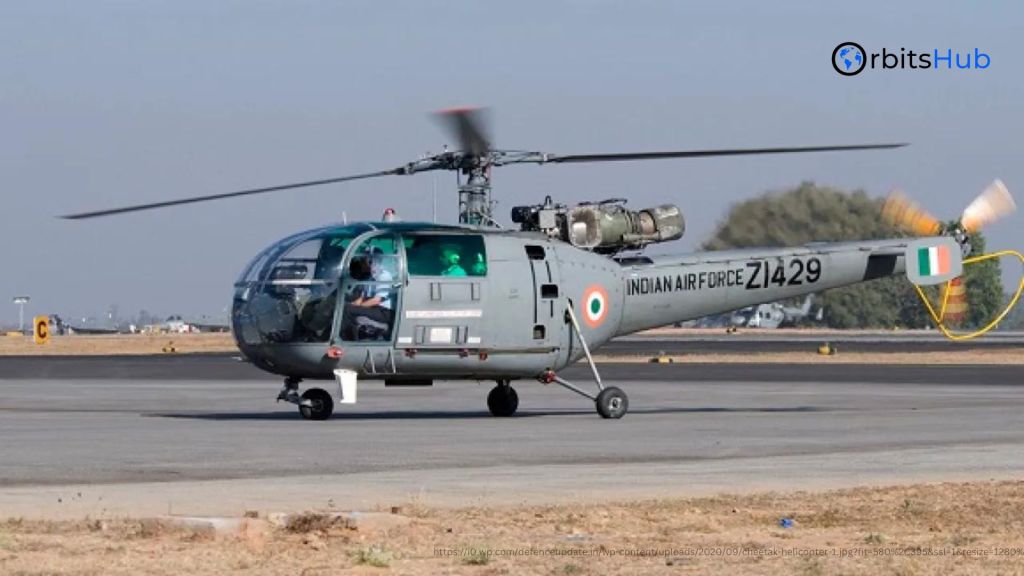
For almost sixty years, the Chetak helicopters—also called the Alouette III—has been an indispensable tool for the Indian armed forces. Since their introduction in the 1960s, these light utility helicopters have been vital in numerous military missions, including reconnaissance, casualty evacuation, and supply and personnel transport.
The Chetak’s impact can be understood by examining its contributions in critical areas:
- High-Altitude Operations: The Chetak excels in India’s challenging Himalayan terrain. Its powerful engine and compact design allow it to take off and land at high altitudes where heavier helicopters struggle. This capability has been vital for deploying troops and supplies to remote border outposts and high-altitude rescue missions.
- Battlefield Support: Chetaks have been extensively use for transporting troops and supplies to forward areas during conflicts. Their agility allows them to navigate through rough terrain and land close to combat zones, providing logistical support crucial for frontline soldiers.
- Medical Evacuation: The Chetak’s ability to land in confined spaces makes it ideal for medical evacuation in battlefield scenarios. These helicopters can quickly reach injured soldiers and transport them to medical facilities, often saving countless lives.
- Reconnaissance and Observation: Chetaks equip with observation pods have been use for reconnaissance missions, providing valuable intel on enemy positions and troop movements. Their manoeuvrability allows them to get closer to targets for better observation than fixed-wing aircraft.
- Disaster Relief: Beyond military operations, the Chetak’s versatility is evident. Helicopters like these have been lifesavers after earthquakes and floods, transporting aid to faraway places and conducting aerial surveys.
Challenges and the Road Ahead
Despite their long service, Chetak helicopters have limitations. Their age is a growing concern. The single-engine design raises safety issues, and their payload capacity is limited compare to newer helicopters. The Indian military is actively seeking replacements, with plans for phasing out the Chetak fleet in the coming years.
The Backbone of Training Exercises: Chetak Helicopter

Providing a Realistic Training Environment
Chetaks play a crucial role in training exercises for Indian military personnel. Their manoeuvrability and ability to operate in various terrains simulate real-world combat scenarios, allowing soldiers to hone their skills in troop insertion, casualty evacuation, and tactical manoeuvres.
Cost-Effective Training Platform
Compared to larger helicopters, Chetaks offers a more cost-effective solution for regular training exercises. Their lower operating costs allow for more frequent training opportunities, vital for maintaining combat readiness.
The Future of Light Utility Helicopters in India
Indigenous Alternatives
With the Chetak being phase out, India is looking towards indigenously develop light utility helicopters like the Advance Light Helicopter (ALH) HAL Dhruv and its variants. These helicopters offer improved performance, higher payload capacity, and advanced features compared to the Chetak.
Collaboration and Acquisitions
India is also exploring options for collaboration with foreign companies or the potential acquisition of new light utility helicopters. This approach aims to leverage cutting-edge technology while potentially creating opportunities for domestic manufacturing and technology transfer.
Technological Advancements in the Chetak – Chetak Helicopters
Upgraded Avionics
While the Chetak’s core design remains unchanged, the Indian military has incorporated various upgrades. Modern avionics with improved navigation and communication systems have enhanced operational safety and efficiency.
Weaponization for Expanded Roles
Some Chetak variants have had light weaponry for self-defence and limited offensive capabilities. These modifications allow them to provide armed reconnaissance and close air support in specific situations.
The Chetak’s Legacy: Beyond Military Service

Civilian Applications
Chetak helicopters have been use in various civilian applications beyond the military. They are use for law enforcement, aerial photography, and transporting personnel and cargo to remote locations inaccessible by land.
Promoting Domestic Manufacturing
The Chetak’s production in India fostered the development of a domestic aerospace industry. The experience in manufacturing and maintaining these helicopters laid the foundation for future indigenous helicopter projects in the country.
A Historical Overview of the Chetak Helicopter
The Chetak helicopter, known as the Alouette III, has been a cornerstone of India’s aerial capabilities since the 1960s. Initially developed by the French company Sud Aviation, Hindustan Aeronautics Limited (HAL) licensed the helicopter for production in India.
- Introduction in India: The Chetak was introduced into the Indian armed forces in the early 1960s, quickly becoming a versatile tool across various military branches.
- Design and Development: Known for its light utility design, the Chetak’s compact and agile frame made it ideal for operations in diverse terrains.
- Early Missions: Aside from its original functions of transportation and surveillance, the helicopter quickly gained additional uses, such as transporting freight, evacuating patients, and conducting search and rescue missions.
- Enduring Legacy: Over the decades, the Chetak has proven a reliable workhorse, serving in various capacities even as newer technologies emerge.
Operational Achievements in Indian Defense
The Chetak helicopter has been instrumental in numerous critical operations within the Indian armed forces. Its versatility has allowed it to be deployed in various roles, showcasing its operational prowess.
- High-Altitude Missions: The Chetak’s powerful engine enables it to operate effectively in high-altitude regions, such as the Himalayan border areas, where it has been used to transport troops and supplies.
- Combat Support: During conflicts, Chetaks have provided vital logistical support, delivering troops, ammunition, and medical supplies to front-line positions.
- Rescue Operations: The helicopter’s ability to land in confined spaces has been crucial in medical evacuations, saving countless lives by quickly transporting injured soldiers to medical facilities.
- Disaster Relief: Beyond military use, Chetaks have played a significant role in disaster relief, providing aid and conducting rescue missions in the aftermath of natural disasters like earthquakes and floods.
Critical Missions and Success Stories
The Chetak helicopter has a history of involvement in critical missions and success stories, cementing its reputation as a versatile and reliable aircraft.
- Operation Meghdoot: One of the most notable missions involving Chetak helicopters was Operation Meghdoot in 1984, where they deployed troops to the Siachen Glacier, the world’s highest battlefield.
- Humanitarian Missions: The Chetak has been pivotal in numerous humanitarian missions, including the 2004 Indian Ocean tsunami relief efforts, where it delivered aid and evacuated stranded individuals.
- Counter-Insurgency Operations: In various counter-insurgency operations, Chetak helicopters have been used for surveillance and troop insertion, providing critical support to ground forces.
- International Recognition: The Chetak’s versatility and reliability have garnered international recognition, with several countries adopting it for their military and civilian applications.
Comparing Chetak with Contemporary Helicopters
While the Chetak has been a mainstay in the Indian military, advancements in aviation technology have led to comparisons with newer helicopters.
- Performance Metrics: Compared to modern helicopters like the HAL Dhruv, the Chetak has a lower payload capacity and range but remains highly maneuverable and easy to maintain.
- Technological Features: Contemporary helicopters often come equipped with advanced avionics, superior navigation systems, and greater automation, areas where the Chetak is relatively basic.
- Cost-Effectiveness: Despite its age, the Chetak remains a cost-effective solution for light utility roles, offering a lower operational cost than more advanced helicopters.
- Adaptability: The Chetak’s adaptability to various roles and terrains makes it a valuable asset, even as newer helicopters offer more specialized capabilities.
Future Prospects and Technological Innovations in Indian Aviation
As the Indian military looks to phase out the aging Chetak fleet, the future of light utility helicopters in India is poised for significant advancements.
- Indigenous Development: India is increasingly focusing on indigenous development, with helicopters like the HAL Dhruv and Light Utility Helicopter (LUH) designed to replace the Chetak, offering enhanced capabilities.
- Technological Upgrades: Future helicopter designs are expected to feature advanced avionics, better payload capacities, and improved safety features, addressing the limitations of older models like the Chetak.
- Collaborative Ventures: India is exploring international collaborations and technology transfers to accelerate the development of next-generation helicopters, ensuring cutting-edge capabilities.
- Sustainability and Efficiency: A new benchmark for Indian aviation is poised to be set by new helicopters that include more efficient engines and ecologically benign technologies, driven by an increasing focus on sustainability.
The Chetak helicopter has undoubtedly left a lasting mark on Indian military history. These workhorses have served the nation with distinction in various operations, adapting to diverse conditions and playing a critical role in battlefield support, medical evacuation, and disaster relief. While their time in active service may be nearing its end, the legacy of the Chetak will endure as a testament to India’s reliance on reliable and adaptable aviation platforms.
The Indian military’s aviation landscape is constantly evolving. As newer and more advance helicopters are introduce, staying informed about these developments is crucial. OrbitsHub, a leading maritime and aviation consultancy services company, may serve as your go-to resource for up-to-date information on aviation trends in India and professional assistance.