Have you ever gazed at a soaring airplane and wondered what makes it fly? The answer lies in the intricate types of aircraft engines. These engineering marvels come in various types, each designed to power different aircraft and fulfill specific functions. From the fuel-efficient turbofans powering commercial giants to the powerful rocket engines propelling spacecraft, these engines are the beating hearts of aviation. Let’s delve deeper into the fascinating world of aircraft engines and explore the diverse technologies that enable flight.
The Powerhouse of Flight: Understanding Gas Turbine Engines
Most modern aircraft rely on gas turbine engines and jet engines. Continuous combustion is the process by which these engines work. It entails compressing air, mixing it with fuel, and lighting it in a combustion chamber. The resulting hot gases expand rapidly, driving a turbine and generating thrust to propel the aircraft forward.
A Closer Look at Different Gas Turbine Engines:
While the core principle remains the same, gas turbine engines come in various configurations, each with its strengths and applications:
Turbofan Engines: Aircraft Engines
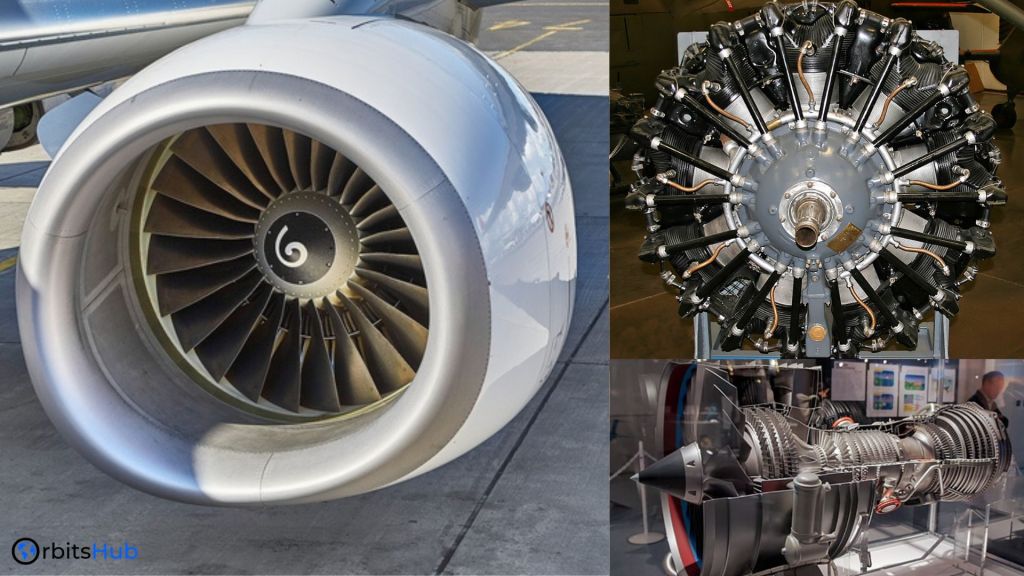
The most common type of gas turbine engine in commercial aviation, turbofan engines, are incredibly efficient and powerful. They feature a large bypass fan that draws in air and accelerates it around the core engine. This creates a high-volume, low-velocity airflow that significantly improves fuel efficiency and reduces noise compared to other jet engines. Turbofan engines power giants like the Boeing 747 and Airbus A380, enabling them to fly long distances with impressive fuel economy.
Turboprop Engines
A jet and propeller technology hybrid turboprop engines combine a gas turbine’s power with a propeller’s efficiency. The core engine’s hot exhaust gasses turn a turbine and spin a propeller, creating thrust. Turboprop engines are often used in regional aircraft and smaller airliners, offering excellent fuel efficiency for short- to medium-range flights.
Turboshaft Engines
Unlike turbofan and turboprop engines, which primarily generate thrust, turboshaft engines are designed to deliver rotational power. They are commonly found in helicopters, where the engine’s shaft drives the main rotor blades, providing lift and control. Turboshaft engines are also used in various industrial applications, such as powering generators and pumps.
Beyond Gas Turbines: Exploring Other Engine Types
While gas turbines dominate modern aviation, other engine types play crucial roles in specific applications:
Piston Engines: Aircraft Engines
These traditional engines, similar to those found in cars, are still use in smaller general aviation aircraft and recreational planes. They offer a more straightforward design and lower initial cost than gas turbines, making them suitable for training and leisure flying.
Rocket Engines
Rocket engines provide unmatched thrust and speed for high-performance military aircraft and space exploration. They achieve this by burning a combination of fuel and oxidizer, creating a potent and highly concentrated exhaust stream that propels the vehicle forward.
The Future of Flight: Exploring Alternative Propulsion Technologies
The quest for cleaner and more sustainable aviation drives the development of alternative propulsion technologies. These advancements hold the potential to revolutionize the way we fly, reducing emissions and improving fuel efficiency:
Electric and Hybrid Engines: Aircraft Engines
For short-haul and smaller aircraft, electric and hybrid engines are becoming more popular. Since they use batteries or fuel cells, electric motors run quietly and emit no pollution. Hybrid engines combine electric and gas turbine technologies, allowing for electric and jet-powered flight, improving fuel efficiency and reducing emissions.
Hydrogen-Powered Engines
Hydrogen has a high energy density and not only burns cleanly, but it also has the potential to be a fuel for airplanes. Hydrogen-powered engines can be configured similarly to gas turbine engines, using hydrogen instead of traditional jet fuel. While challenges remain in terms of storage and infrastructure, hydrogen holds significant potential for sustainable aviation in the future.
Maintaining Peak Performance: Engine Maintenance and Overhaul
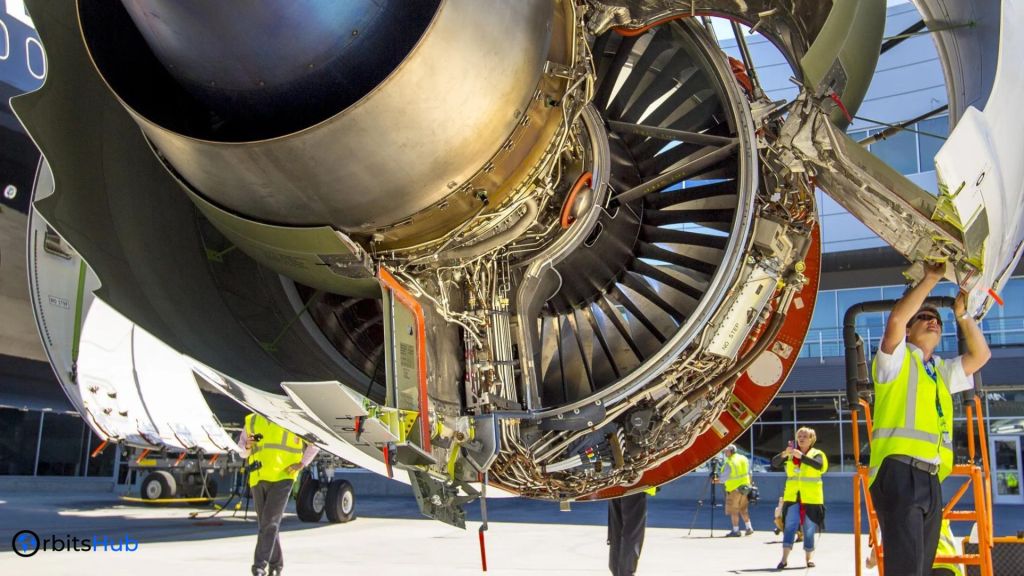
The reliable operation of aircraft engines is crucial for safety and efficiency. Regular maintenance and overhaul procedures ensure engines perform at their best and avoid potential issues. These procedures involve:
Scheduled Maintenance
Regular inspections and servicing are conducted at specific intervals to monitor engine health and address any minor issues before they escalate. This proactive approach helps prevent failures and extends the engine’s lifespan.
Engine Overhaul: Aircraft Engines
Engines undergo a comprehensive overhaul at designated intervals or after experiencing specific events. This process involves disassembling the engine, inspecting all components, replacing worn-out parts, and reassembling the engine to its original specifications. Overhauls ensure the engine meets safety and performance standards and extends its operational life.
The types of aircraft engines is diverse and fascinating, with each type playing a crucial role in enabling flight. From the fuel-efficient turbofans powering commercial airliners to the powerful rocket engines propelling spacecraft, these engines are marvels of engineering that continue to push the boundaries of aviation.
Are you curious to learn more about the intricate world of aviation and maritime technology? Explore OrbitsHub.com, a leading consultancy service provider specializing in these fields. If you have any unique questions or concerns, their team of specialists can answer them.