The Embraer E190 is a popular single-aisle jet airliner designed for regional routes. Renowned for its spacious cabin and impressive efficiency, the E190 has carved a niche in the aviation industry. Whether you’re a frequent flyer curious about the aircraft you might board or an aviation enthusiast, this comprehensive overview deepens into the E190’s world.
A Groundbreaking Concept: Filling the Market Gap Embraer E190
Embraer identified a gap in the market – the need for a regional aircraft that offered capabilities closer to mainline jets. The E190 was their answer. Launched in 2004, it boasted one of the most spacious interiors for single-aisle aviation, providing a comfortable flying experience for passengers on shorter hops and longer routes.
The E190’s success lies in its versatility. Airlines can leverage it for various routes, from connecting regional hubs to catering to higher passenger traffic on shorter routes. This flexibility and fuel efficiency make the E190 an attractive option for airlines seeking to optimize their operations.
Embraer E190 Aircraft Design and Performance
The E190 features a low-wing design with two underwing-mounted turbofan engines. These engines, typically General Electric CF34-10E models, are known for their efficiency and reduced emissions. Onboard computers manage the engines meticulously, optimizing performance and minimizing maintenance requirements.

Here’s a closer look at the E190’s specifications:
- Maximum Takeoff Weight (MTOW): 51,800 kg (114,199 lb)
- Maximum Landing Weight: 44,000 kg (97,003 lb)
- Maximum Payload Capacity: 13,047 kg (28,764 lb)
- Maximum Usable Fuel Capacity: 12,971 kg (28,596 lb)
The E190’s range varies depending on the configuration and passenger load. Typically, it can fly up to 4,267 kilometres (2,651 miles), making it suitable for a wide range of regional routes.
Passenger Capacity and Cabin Comfort:
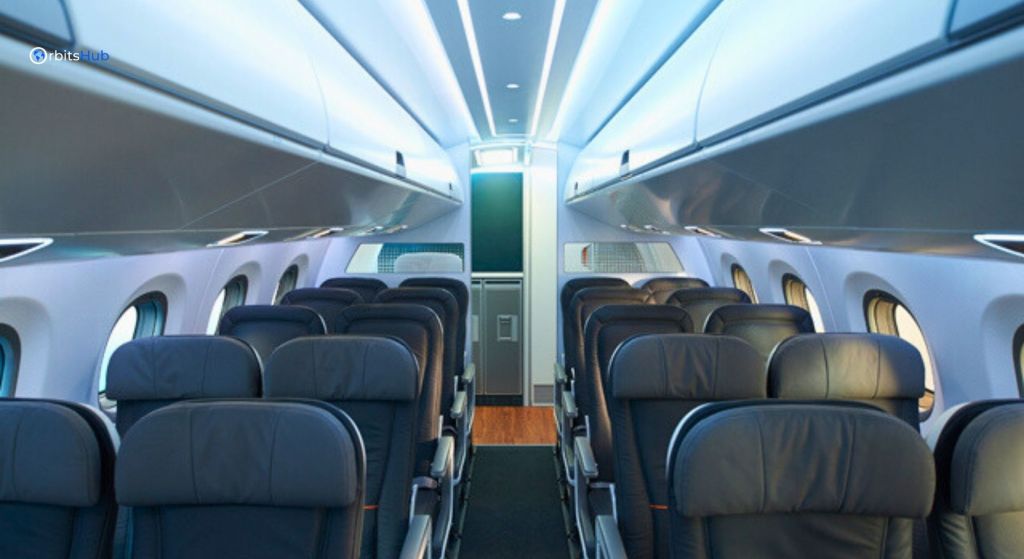
The E190 offers a flexible cabin configuration, allowing airlines to cater to their needs. Seating configurations typically range from 90 to 110 passengers across single—or dual-class layouts. The spacious cabin provides ample legroom and overhead bin space, enhancing the passenger experience.
E190 Variants: Catering to Diverse Needs
Embraer aircraft rolled out two primary variants of the E190: the LR (Long Range) and the AR (Advanced Range). The LR variant prioritizes extended ranges, allowing for longer regional routes. The AR variant, on the other hand, focuses on improved safety and high performance, making it ideal for operations in challenging weather conditions or at high-altitude airports.
In 2016, Embraer aircraft introduced the E190-E2, a next-generation evolution of the E190 family. The E2 boasts significant improvements in fuel efficiency, range, and operational costs. Airlines looking to optimize their fleets and explore new routes might find the E190-E2 compelling.
Inside the Cockpit: E190 Flight Deck
The E190’s flight deck is designed for pilot comfort and efficiency. It features a modern, glass cockpit layout with advanced avionics systems, which provide pilots with vital information about the aircraft’s performance, navigation, and surrounding environment.
- Advanced Avionics: The E190 incorporates a fully integrated digital flight deck, which includes Electronic Flight Instrument Systems (EFIS), Head-Up Displays (HUDs), and Flight Management Systems (FMS). These systems provide pilots with clear and concise information about the aircraft’s attitude, altitude, airspeed, heading, and navigation data.
- Pilot Ergonomics: The flight deck is designed with pilot comfort in mind. Even on lengthy flights, the seats’ ergonomic design ensures that you won’t feel a pinch. The controls and displays are position intuitively for easy access and minimal workload. This focus on ergonomics helps pilots maintain situational awareness and make critical decisions effectively.
E190’s Environmental Impact: Balancing Efficiency and Sustainability
The aviation industry is constantly striving to reduce its environmental impact. While air travel contributes to greenhouse gas emissions, the E190 stands out for its fuel efficiency.
- Reduced Emissions: The E190’s engines are known for their low emissions compare to older jetliners. This translates to a smaller carbon footprint per passenger. The E190’s operational efficiency also minimizes fuel burn, contributing to reduced emissions.
- Noise Reduction Technologies: The E190 incorporates noise reduction technologies to minimize its impact on communities around airports. These technologies include improved engine insulation and optimized flight procedures to reduce noise during takeoff and landing.
While the E190 represents a significant step towards sustainable air travel, the industry continues to develop new technologies for cleaner and more efficient aircraft.
Soaring High with the Embraer E190
The Embraer E190 Aircraft has established itself as a prominent player in the regional jet market. Its spacious cabins, operational efficiency, and versatility make it a favourite among airlines and passengers alike. Whether you’re embarking on a short regional trip or a longer route, the E190 promises a comfortable and efficient flying experience.
Are they considering venturing into the exciting world of aviation? OrbitsHub, a leading maritime and aviation consultancy services company, can be your guiding force. The aviation industry and specific aircraft models, such as the Embraer E190, are well within the expertise of our team of specialists. Fleet acquisition, route planning, regulatory compliance, and maintenance solutions are just a few services we provide. Contact OrbitsHub today and explore how we can help your aviation business take flight!