The T-34 Mentor has become a military aviation training classic after 70 years of flight. This classic American aircraft has shaped many Navy and Marine Corps pilots with its single turboprop engine and elegant design. We’ll examine its creative design, its variants, and why it’s a pilot training staple. However, the T-34’s narrative continues. We’ll also explore its specialized functions beyond introductory training and its future in aviation technology’s rapid evolution. Buckle up as we examine this incredible aeroplane!
A Legacy Rooted in Innovation: T 34 aircraft
The T-34’s story begins in the late 1940s with Walter Beech, the founder of Beechcraft. Recognizing the need for a cost-effective alternative to existing trainers, Beech developed the Model 45, a private venture aircraft based on the successful Beechcraft Model 35 Bonanza. This civilian aircraft, with its sleek design and reliable performance, caught the eye of the U.S. Air Force, leading to the T-34 Mentor’s official designation in 1953.
The early T-34 variants, the T-34A and T-34B were piston-powered trainers known for their docile handling characteristics and ease of maintenance. These features proved invaluable in familiarizing student pilots with the fundamentals of flight.
The T-33C Turbo Mentor: Taking Performance to New Heights
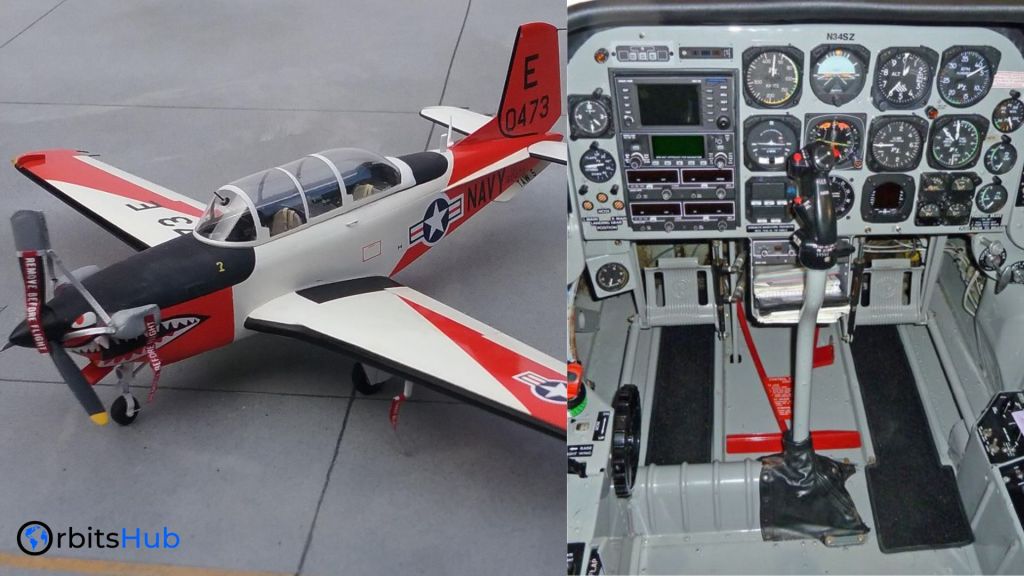
The introduction of the T-34C Turbo Mentor in the 1970s marked a significant evolution for the aircraft. This variant incorporated a turboprop engine, offering several advantages over its piston-powered predecessors. The turboprop engine provided increased power and improved fuel efficiency, allowing for higher cruising speeds and longer endurance. This translated to more efficient training routines and the ability to expose student pilots to a broader range of flight scenarios.
Here’s a closer look at some of the critical features of the T-34C Turbo Mentor:
- Tandem Seating: The T-34C features a tandem cockpit configuration, with the instructor pilot positioned behind the student pilot. This arrangement allows for optimal visibility and facilitates clear communication during training exercises.
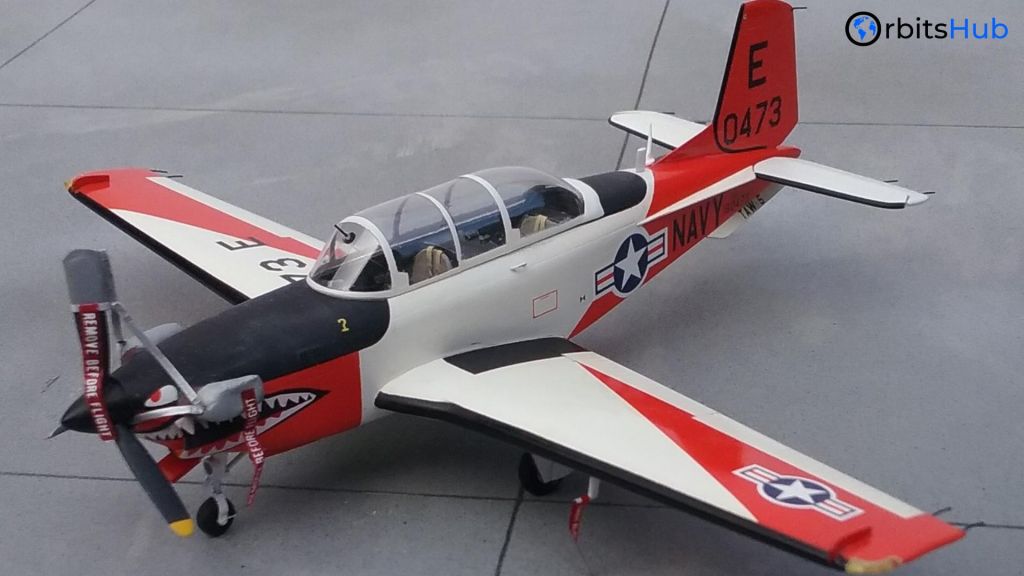
- Durable Construction: The T-34 is renowned for its robust airframe, built to withstand the demands of repeated training flights. Its low-wing design provides excellent stability and handling characteristics.
- Advanced Avionics: While primarily a trainer, the T-34C is equipped with essential navigation and communication equipment, preparing student pilots for more complex aircraft systems they might encounter later in their careers.
- Safety Focus: The T-34 prioritizes safety with features like a robust landing gear system and easily accessible emergency egress procedures. These features create a secure learning environment for student pilots.
A Trainer Built to Last: The T-34 Aircraft Enduring Legacy
The T-34’s impact on military aviation training is undeniable. It has been a dependable platform for countless pilots for over seven decades, fostering the skills and confidence necessary for successful Navy and Marine Corps careers. Its adaptability has allowed it to evolve alongside advancements in aviation technology, ensuring its continued relevance in modern training programs.
The T-34’s legacy extends beyond its role as a trainer. Its influence can be seen in the design of several civilian training aircraft, highlighting its contribution to the broader world of aviation education.
Variants of the T-34 and their Specialized Roles
This section can explore the different variants of the T-34C T-34C Turbo Mentor. Here’s how you can develop this section:
- Briefly mention the early piston-powered variants (T-34A and T-34B) and their role in introducing student pilots to basic flight manoeuvres.
- Discuss the T-34C’s specialized variants, such as the TE-34C, used for electronic warfare training and equipped with specialized avionics to familiarize pilots with jamming and countermeasure techniques.
- QT-34C: A target drone variant used for air defence training exercises.
- Briefly touch upon the T-34’s international adoption. Several countries, including Chile, Uruguay, and Israel, have utilized variants of the T 34 Aircraft in their training programs.
The T-34’s Future: Transitioning to a New Era
This section can discuss the ongoing role of the T-34 in pilot training and its potential future:
- Acknowledge the introduction of newer trainer aircraft like the T-6 Texan II.
- Highlight the T-34’s continued use as a cost-effective alternative for specific training aspects, particularly in familiarizing pilots with essential flight characteristics.
- Discuss potential upgrades or modifications the T-34 might undergo to remain relevant in future training programs.
- Briefly mention the possibility of the T-34 being phased out entirely and replaced by newer trainers.
The T-34 Mentor stands as a testament to both innovation and longevity. Its well-designed airframe, focus on safety, and adaptability to new technologies have solidified its place as a cornerstone of military pilot training for over 70 years. From essential trainers to specialized variants, the T-34’s impact extends far beyond its role in the cockpit. As the aviation industry continues to push boundaries, the T-34’s future remains intriguing. Whether it undergoes modernization or gracefully transitions to a well-deserved retirement, its legacy as a trainer that nurtured countless aviators is undeniable.
OrbitsHub, a leading marine and aviation consultancy services company, can be your one-stop shop. Explore their website for comprehensive services to empower your aviation or maritime endeavours.