The B-2 Spirit, known as the Stealth Bomber, is a remarkable aircraft. This futuristic-looking plane represents a leap forward in military technology, designed to evade even the most sophisticated air defence systems. In this blog, we’ll delve into the fascinating history of the B-2 and explore the cutting-edge technologies that make it such a formidable weapon.
A Cold War Legacy: The Birth of the B-2
The story of the B-2 begins during the Cold War, a period of intense tension between the United States and the Soviet Union. The US Air Force, recognizing the limitations of its existing bombers against advanced Soviet air defences, sought a new strategic bomber with a crucial capability: stealth.
The B-2 program was shrouded in secrecy for many years. The winning contractor, Northrop Grumman, developed the aircraft under tight security measures. The project faced numerous technical challenges, particularly in stealth technology, which aimed to minimize the B-2’s radar signature.
Design Innovations of the B-2 Bomber Jet
One of the most striking features of the B-2 is its unique flying wing design. Unlike conventional bombers with a distinct fuselage and tail section, the B-2 resembles a giant, smooth wing. This design offers several advantages:
- Reduced Radar Signature: The smooth, blended form minimizes radar reflections, making detecting the aircraft harder for enemy radars.
- Improved Aerodynamics: The flying wing design provides excellent lift and reduces drag, allowing for a more extended range and higher fuel efficiency.
- Increased Internal Capacity: The B-2’s internal bomb bays can house a large weapons payload while maintaining its stealth profile.
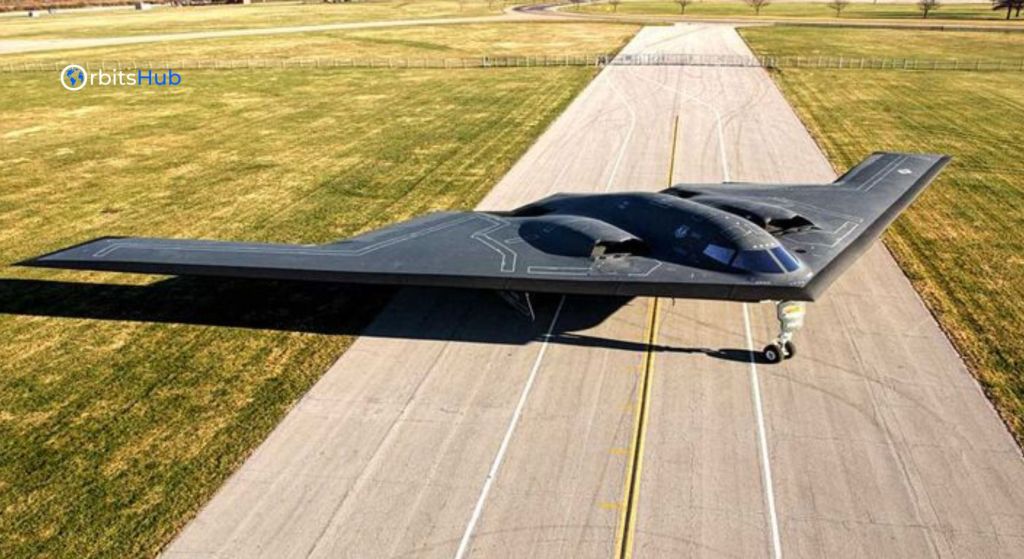
Beyond the Shape: Advanced Stealth Technologies
The B-2’s stealth capabilities go far beyond its innovative shape. Here are some additional technologies employed:
- Radar-Absorbent Materials (RAM): The B-2’s skin is coated with specialized materials that absorb radar waves, reducing its radar signature.
- Specialized Engine Inlets and Exhaust: The B-2’s engine intakes and exhausts are designed to minimize the emission of heat signatures, which makes them difficult for infrared sensors to detect.
- Flight Path Optimization: B-2 missions are meticulously plan to exploit terrain features and minimize exposure to enemy radar coverage.
These combined technologies make the B-2 an incredibly elusive aircraft, capable of penetrating heavily defended airspace with minimal risk of detection.
The B-2 Bomber Jet in Action
The B-2 entered service in the late 1990s and has participated in numerous military operations. While initially design for nuclear deterrence during the Cold War, the B-2’s versatility has been showcase in conventional warfare.
Its ability to deliver precision-guided munitions with pinpoint accuracy has proven highly effective in operations like the Kosovo War, the Iraq War, and the Afghanistan War. The B-2 is a powerful force multiplier, allowing for targeted strikes with minimal collateral damage.
The Future of the B-2: Upgrades and Modernization
The B-2, although a technological marvel, is not immune to the passage of time. Here, we can explore the ongoing efforts to keep this strategic bomber relevant:
- Avionics and Sensor Upgrades: The B-2 continues to receive upgrades to its avionics systems, including new radars, communication equipment, and mission computers. These upgrades enhance situational awareness, improve targeting accuracy, and ensure compatibility with future weapon systems.
- Weapon System Integration: The B-2 is constantly being evaluate for compatibility with new and emerging weapons technology. This could include the integration of next-generation precision-guided munitions, hypersonic weapons, or even advanced cyberwarfare capabilities.
- Autonomy and Uncrewed Operations: The future of warfare may involve a more significant role for uncrewed aerial vehicles (UAVs). The B-2’s design and capabilities may be leverage in developing next-generation, long-range, autonomous bombers.

Beyond the B-2: The Next Generation of Stealth Bombers
The B2 Bomber jet may be one of many stealth bombers in the skies for much longer. Here’s a glimpse into potential future developments:
- Next-Generation Stealth Materials: Advancements in new material science could lead to even more effective radar-absorbent materials, reducing the B-2’s successor’s radar signature.
- Biomimicry and Morphing Designs: Future bombers may incorporate biomimetic features inspired by nature, mimicking the low-observable characteristics of birds or insects. Additionally, morphing wing technologies could allow dynamic adjustments to optimize aerodynamic performance and stealth profile during flight.
- International Developments: The B-2’s success has spurred other nations to develop their stealth bomber programs. It will be interesting to see how these international efforts unfold and what capabilities future foreign stealth bombers may possess.
The B-2 Spirit – A Legacy of Innovation
The B-2 Spirit is an eloquent example of human inventiveness and technical capability. This incredible plane has been important in redefining strategic bombing and maintaining American airpower.
Are you considering a career in the maritime or aviation industry? OrbitsHub, a leading consultancy services company, can help you navigate the exciting world of marine and aviation. Those needing assistance in these ever-changing fields can turn to the knowledgeable staff at OrbitsHub for a comprehensive suite of services