Aircraft carriers, often referred to as “flattops” by sailors, are the behemoths of the seas. These colossal warships serve as floating airbases, projecting military power across vast stretches of ocean. They carry a potent arsenal of fighter jets, helicopters, and other military hardware, making them a critical component of a nation’s naval defence strategy. But which countries possess these titans of the waves, and how do their capabilities stack up? Let’s embark on a global voyage to discover the world’s most powerful aircraft carriers by country.
The Undisputed Leader: The United States Navy
The United States Navy reigns supreme when it comes to aircraft carrier dominance. They boast a formidable fleet of 11 nuclear-powered Nimitz-class carriers and America-class amphibious assault ships.
These floating airbases are colossal. Nimitz-class carriers stretch an astounding 1,092 feet in length and displace over 100,000 tons—more than ten times the weight of the Taj Mahal! Powered by nuclear reactors, they have virtually unlimited range, allowing them to stay on patrol for years without refuelling.
The firepower these carriers carry is equally impressive. A typical Nimitz-class carrier houses an air wing of around 80 fixed-wing aircraft, including F/A-18 Hornet fighter jets, E-2 Hawkeye early warning aircraft, and C-2 Greyhound transport planes. A robust helicopter squadron also provides crucial support for search-and-rescue, anti-submarine warfare, and troop transport.
This combination of long-range mobility, air power projection, and logistical support makes the US Navy’s carrier fleet unmatched in global naval power.
Rising Power in the East: China’s Growing Carrier Fleet
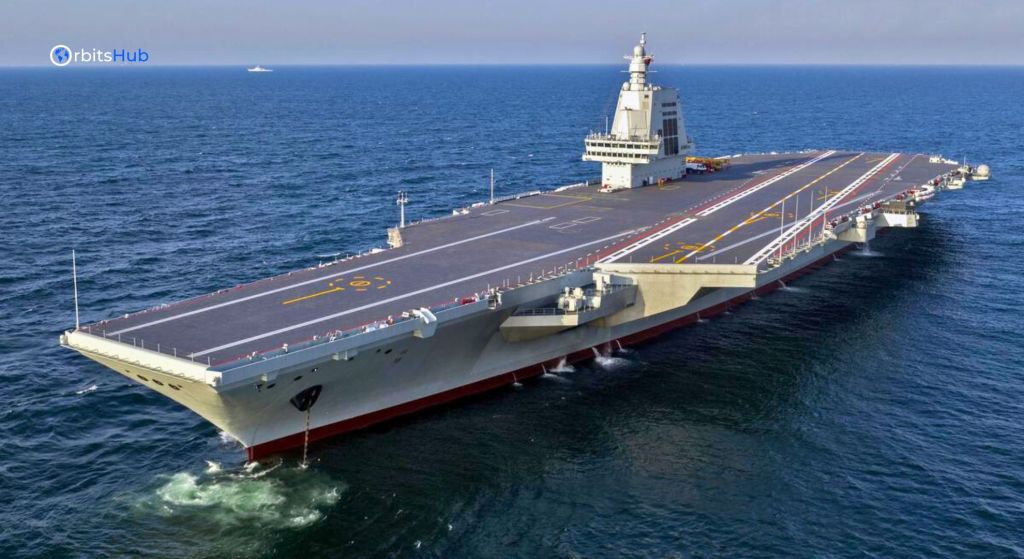
China’s People’s Liberation Army Navy (PLAN) rapidly expands its carrier fleet, challenging the US’s long-held dominance. Currently, China operates two operational aircraft carriers – the Liaoning (a refitted Soviet carrier) and the domestically-built Shandong. In 2024, they launched their most advanced carrier yet, the Fujian.
While smaller than the Nimitz-class carriers, China’s carriers are still formidable. The Shandong displaces around 70,000 tons and carries a mix of Shenyang J-15 fighter jets and helicopters. The newer Fujian boasts a more advanced design, including a catapult launch system for heavier aircraft.
China’s growing carrier fleet reflects its ambitions to become a significant maritime power. With continued investment and development, the PLAN’s carrier capabilities will likely pose a substantial challenge to the US Navy in the coming years.
European Carriers: A Mix of Legacy and Modernity
Several European nations maintain aircraft carrier capabilities, each with its unique approach.
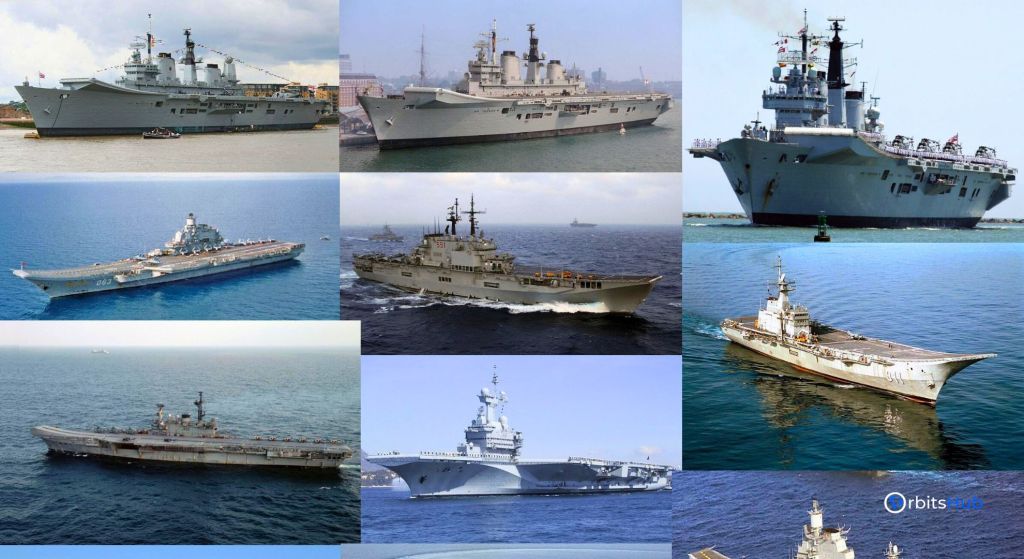
- France: The French Navy operates the Charles de Gaulle, a nuclear-powered carrier similar in size to the US’s Nimitz-class carriers. However, it utilizes a ski-jump launch system, limiting the types of aircraft it can carry.
- United Kingdom: The Royal Navy boasts two Queen Elizabeth-class carriers, known for their innovative design, which emphasizes stealth and fuel efficiency. These carriers carry a mix of F-35B Lightning II fighter jets (capable of vertical takeoff and landing) and helicopters.
- Italy: The Italian Navy controls two Cavour-class light aircraft carriers, which allow the country’s air force to deploy various aircraft, including helicopters and V/STOL planes like the F-35B.
While European carriers may not be as large as their American counterparts, they offer strategic advantages, such as the ability to operate in closer proximity to potential conflicts.
Other Notable Carriers Around the World
Several other countries possess or are developing aircraft carrier capabilities:
- India: India operates two carriers – the INS Vikramaditya (a refitted Russian carrier) and the domestically built INS Vikrant.
- Russia: The Russian Navy has a single operational carrier, the Admiral Kuznetsov. However, it has faced challenges with ageing technology and operational issues.
The Future of Aircraft Carriers
Aircraft carriers by country remain a powerful symbol of a nation’s naval might. As technology advances, carrier design constantly evolves, with features like electromagnetic catapults and drone integration becoming more prevalent. The future of aircraft carriers will likely continue the trend towards more significant, more advanced vessels alongside the development of specialized carriers for specific purposes.
Explore the World of Maritime and Aviation with OrbitsHub
If you’re interested in learning more about the fascinating world of maritime and aviation, OrbitsHub can be your one-stop shop. We are a leading consultancy services company specializing in these sectors. Our team has you covered from logistics and aircraft maintenance to shipbuilding and marine operations. If you’re a business professional, a marine enthusiast, or just interested in these intricate industries, OrbitsHub is the place for you. We have the resources and knowledge to assist you navigate the constantly changing aviation and maritime scene. Contact us today to learn more about how OrbitsHub can assist you with your needs.