The F22 Raptor, a marvel in aviation, is a testament to the advancement in aeronautical engineering. Its unique blend of stealth, supercruise, maneuverability, integrated avionics, and superior supportability sets it apart as a monumental leap in warfighting capabilities in the 21st century.
Purpose and Functionality
The primary function of the F22 Raptor transcends the conventional roles of an aircraft. It is a dominant, multi-role fighter designed to project power and control in the air rapidly and over great distances. The F22 Raptor is unrivaled by any known or projected fighter aircraft, making it a critical Global Strike Task Force asset.
The F22 Raptor performs air-to-air missions and is equipped to carry out air-to-ground assignments. This dual-functionality facilitates fully realizing operational concepts vital to the modern-day Air Force. Its unmatched capacity allows for a superior defense system that safeguards our nation’s Air Force, Army, Navy, and Marine Corps against threats attempting to deny access.
Key Features
The F22 Raptor possesses sensor capability, integrated avionics, situational awareness, and weaponry, providing a first-kill opportunity against threats. The pilot can avoid discovering air-to-air threats using its advanced sensor suite to monitor, identify, and fire them.
Significant enhancements in cockpit design and sensor fusion dramatically improve the pilot’s situational awareness. The Raptor carries two AIM-9 Sidewinders and six AIM-120 AMRAAMs in an air-to-air configuration. The F22 Raptor also boasts a substantial capability to attack surface targets. The aircraft can have two 1,000-pound GBU-32 Joint Direct Attack Munitions internally in an air-to-ground configuration—the avionics onboard the F22 Raptor aid in navigation and weapons delivery support.
Advancements in low-observable technologies significantly improve the survivability and lethality of the F22 Raptor against air-to-air and surface-to-air threats. It brings stealth into the day, safeguarding itself and other assets.
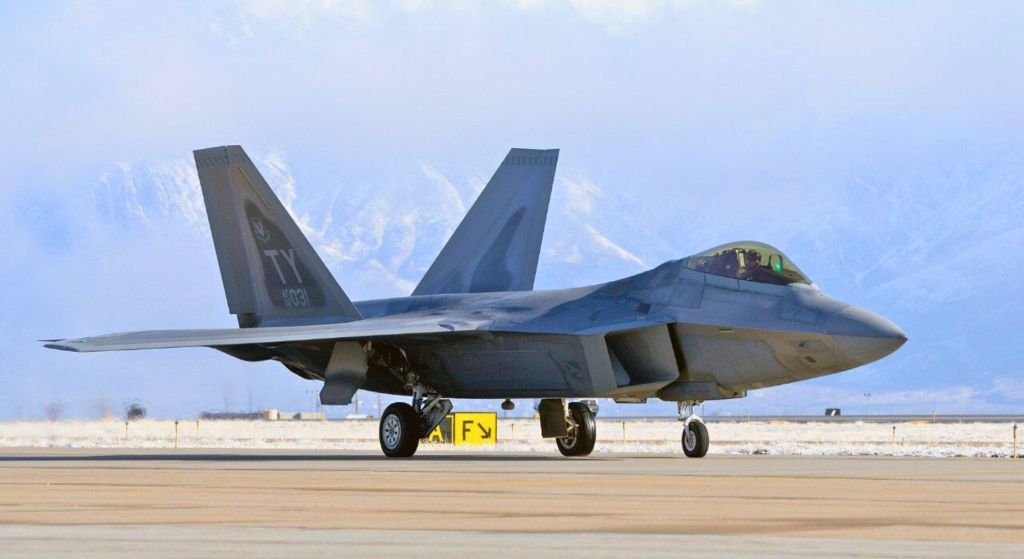
The F22 Raptor’s engines produce more thrust than any current fighter engine. The F22 Raptor can supercruise at airspeeds greater than 1.5 Mach without an afterburner because it combines improved thrust and streamlined aerodynamic design. This supercruise capability dramatically expands the F22 Raptor’s operating envelope in speed and range over current fighters, which must use fuel-consuming afterburners to operate at supersonic speeds.
In addition, the F22 Raptor can outmaneuver any aircraft, present or future, thanks to its high thrust-to-weight ratio, thrust vectoring, and sophisticated flight controls. The F22 Raptor’s design has been extensively tested and aerodynamically refined during development.
Operational Deployments and Combat Experience
This topic can delve into the F22 Raptor’s operational history, including its deployments in various theatres and its performance in combat situations. It can cover missions, tactics, and notable achievements of the F22 in real-world scenarios.
Technology and Future Improvements
This topic can explore the ongoing advancements in F22 technology, such as upgrades in avionics, stealth capabilities, weapon systems, and overall performance enhancements. It can also discuss potential upgrades or developments planned for the F22 Raptor program.
Background and Development
In 1986, the Advanced Tactical Fighter began its Journey into the Demonstration and Validation phase. In late 1990, the maiden flights of the YF-22 and YF-23 prototype aircraft were completed. Following a rigorous evaluation, the YF-22 was selected as the superior, and the engineering and manufacturing development effort commenced in 1991.
The development contracts were awarded to Lockheed/Boeing for the airframe and Pratt & Whitney for the engines. The development phase included extensive subsystem, system, and flight testing with nine Edwards Air Force Base, California aircraft.
The F22 Raptor program received approval to enter low-rate initial production in 2001. The first round of testing and operational evaluations was finish in 2004 by the Air Force Operational Test and Evaluation Center. Given the design maturity and other factors, the program received approval for total rate production in 2005. The primary Air Force organizations flying the F22 Raptor are Air Education and Training Command, Air Combat Command, and Pacific Air Forces. The aircraft designation was briefly F/A-22 before being renamed F-22A in December 2005.
General Characteristics
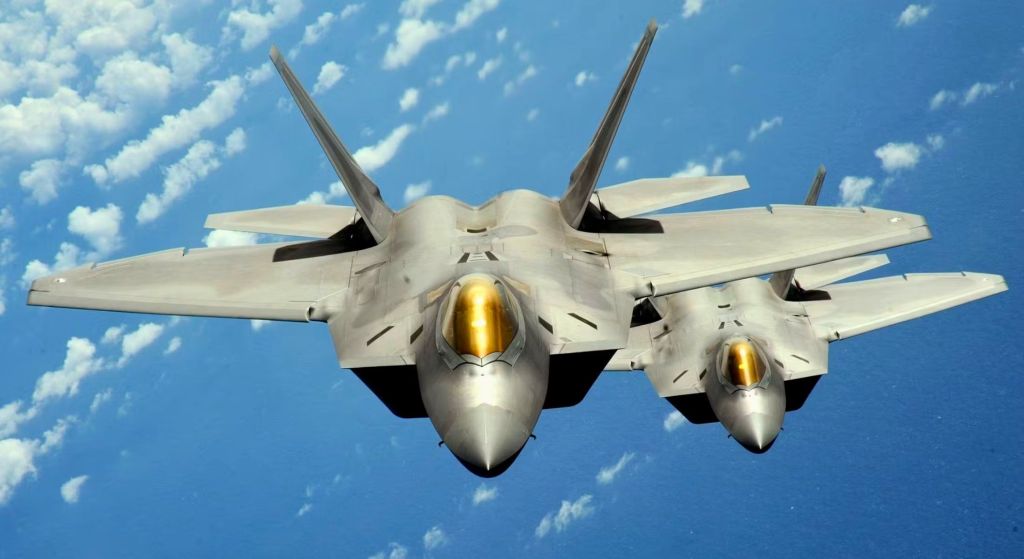
The F22 Raptor is a product of the collaboration between Lockheed-Martin and Boeing, with Pratt & Whitney supplying the power plant. Each of the two Pratt & Whitney F119-PW-100 turbofan engines has a thrust of 35,000 pounds. With a length of 62 feet and 1 inch (18.9 meters), a height of 16 feet and 8 inches (5.1 meters), and a wingspan of 44 feet and 6 inches (13.6 meters), this aircraft is rather impressive.
The F22 Raptor can achieve speeds in the Mach two class with supercruise capability. It has a ceiling above 50,000 feet (15 kilometers) and a more than 1,850 miles range with two external wing fuel tanks.
The F22 Raptor is arm with an M61A2 20-millimeter cannon with 480 rounds. In an air-to-air loadout, it carries six AIM-120 radar-guided air-to-air missiles internally. It has two 1,000-pound GBU-32 JDAMs and two AIM-120 radar-guided air-to-air missiles for air-to-ground missions.
Current State and Future Plans
As of August 2022, the total force inventory of the F22 Raptor stands at 183. The program uses an ‘agile’ modernization strategy to rapidly develop, test, and field incremental improvements. Current efforts include the Reliability, Availability, and Maintainability Program (RAMP), Software Increment 3.2B, and tactical capability improvements.
The USAF completed structural life-extension modifications in 2020, extending the fleet’s projected service life to 8,000 hours. The service evaluates the possibility of a Mid-Life Upgrade Program to increase survivability and lethality.
FAQ’s
1. What is the F-22 Raptor?
The United States Air Force (USAF) created the F-22 Raptor, a fifth-generation stealth tactical fighter aircraft. It has one seat and two engines and can fly in all weather conditions. It is primarily design as an air superiority fighter but has ground attack, electronic warfare, and signal intelligence capabilities.
2. Who manufactures the F-22 Raptor?
Lockheed Martin Aeronautics manufactures the F-22 Raptor in partnership with Boeing Defense, Space & Security.
3. What are the capabilities of the F-22 Raptor?
Stealth technology: Minimizes radar detection.
Supercruise: Being able to fly without afterburners at supersonic speeds.
Advanced avionics: Equipped with sophisticated sensors and communication systems.
Maneuverability: Exceptional agility due to thrust vectoring nozzles.
4. How fast can the F-22 Raptor fly?
The F-22 Raptor can reach speeds up to Mach 2.25, approximately 1,500 mph (2,414 km/h) at altitude.
5. Is the F-22 Raptor still in production?
No, production of the F-22 Raptor was officially end in 2011, with the final aircraft deliver in 2012.

6. Can other countries buy the F-22 Raptor?
No, the export of the F-22 Raptor is ban by US federal law, meaning that it can only be operate by the USAF and cannot be sold to other countries.
7. How many F-22 Raptors does the USAF have?
As of the last update before my knowledge cutoff in April 2023, the USAF had 186 F-22 Raptors in its inventory. However, this number may have changed due to various factors such as the retirement of aircraft, losses, or other updates to the fleet.
The F22 Raptor represents a significant breakthrough in aviation technology. It is an aircraft that embodies the amalgamation of stealth, super cruise, maneuverability, and integrated avionics. Its unmatched capabilities make it invaluable in ensuring our nation’s air dominance.
The F22 Raptor’s advanced sensor suite allows for unparalleled situational awareness, giving pilots a decisive edge in combat scenarios. Its ability to seamlessly integrate with other elements of the military arsenal enhances overall mission effectiveness. With its groundbreaking design and superior performance, the F22 Raptor continues to set the standard for next-generation fighter aircraft worldwide.