The Age of Exploration
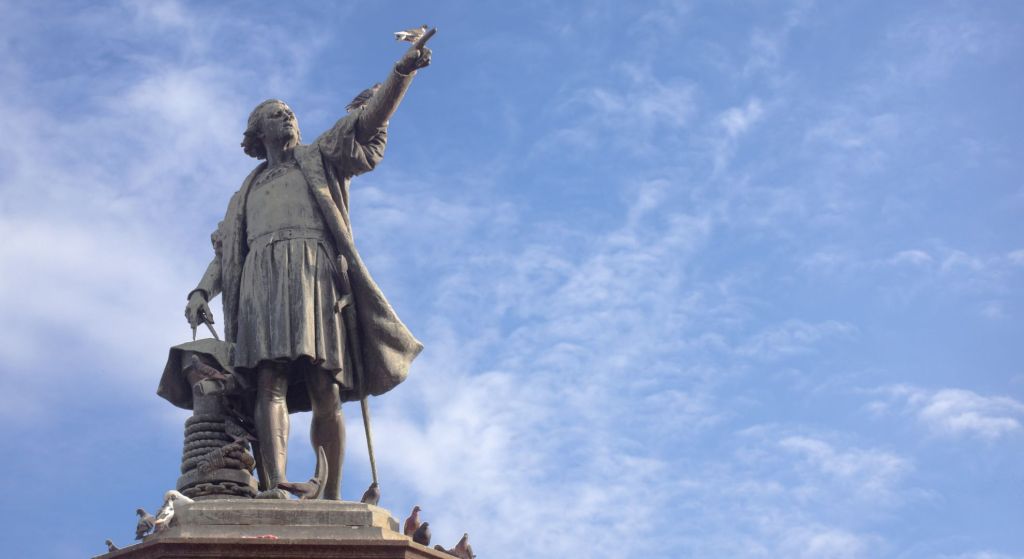
Christopher Columbus: Discovering the New World
Our journey begins with Christopher Columbus, the Genoese explorer who defied the conventional wisdom of his time. In 1492, he set sail westward, seeking a new route to Asia. Little did he know that he would stumble upon an entirely new continent, forever altering the course of history. Columbus’s voyages opened the door to the New World, and his name became synonymous with exploration.
Ferdinand Magellan: Circumnavigating the Globe
In 1519, the Portuguese adventurer Ferdinand Magellan set off from Spain on a dangerous mission. His mission: to find a westward route to the Spice Islands. Magellan’s voyage took him around the world, proving the Earth was round. Though he didn’t survive the journey, his legacy lives on as the first person to circumnavigate the globe.
The Golden Age of Piracy
Blackbeard: Terror of the High Seas
In the shadowy world of piracy, one name struck fear into the hearts of sailors: Blackbeard. This notorious pirate, whose real name was Edward Teach, terrorized the Caribbean and the American colonies in the early 18th century. With his menacing appearance and ruthless tactics, Blackbeard became a legend of the high seas.
Anne Bonny and Mary Read: The Fearsome Female Pirates
The Golden Age of Piracy also saw the rise of Anne Bonny and Mary Read, two formidable women who defied gender norms and sailed as pirates. Their tales of piracy and adventure continue to inspire and challenge our notions of gender roles in history.
Naval Heroes of the Napoleonic Wars
Horatio Nelson: The Master Tactician
Horatio Nelson, a British naval commander, is celebrated for his brilliant strategies and leadership during the Napoleonic Wars. His famous quote, “England expects that every man will do his duty,” still resonates with sailors today.
James Lawrence: “Don’t Give Up the Ship!”
James Lawrence, an American naval officer, uttered the famous words, “Don’t give up the ship!” during the War of 1812. His unwavering determination in the face of adversity has become a symbol of naval heroism.
Whalers and Their Legendary Captains
William Scoresby: The Arctic Explorer
In the frigid waters of the Arctic, William Scoresby led daring expeditions in pursuit of whales. His explorations of the polar areas and subsequent contributions to our understanding of them were groundbreaking.
George Pollard Jr.: The Real Captain Ahab
George Pollard Jr. found notoriety as the captain of the ill-fated Essex, a whaling ship that inspired Herman Melville’s “Moby-Dick.” Pollard’s harrowing tale of survival after a whale attack is a testament to human endurance.
Clipper Ship Legends

Donald McKay: The Clipper King
Donald McKay was the mastermind behind some of the fastest sailing ships ever built, known as clippers. These ships revolutionized global trade, and McKay’s innovations in ship design left an enduring legacy.
Joshua Slocum: The First Solo Circumnavigator
Joshua Slocum achieved the unthinkable when he became the first person to sail solo around the world in the late 19th century. His epic journey showcased the indomitable spirit of sailors.
America’s Cup: Racing Legends
Harold Vanderbilt: The Cup’s Custodian
Many famous sailors have held the helm at the helm of the America’s Cup, the oldest international athletic trophy. Harold Vanderbilt, an American yachtsman, dominated the cup in the 1930s and left an indelible mark on competitive sailing.
Dennis Conner: The Comeback King
Dennis Conner, known as “Mr. America’s Cup,” staged a remarkable comeback in 1987, recapturing the prestigious trophy for the United States. His tenacity and skill made him a legend in the world of competitive sailing.
Modern Maritime Icons
Sir Robin Knox-Johnston: Solo Sailing Pioneer
Sir Robin Knox-Johnston is remembered as the first person to sail around the world without stopping in 1969. His feat paved the way for modern solo sailing adventures.
Ellen MacArthur: The Record-Breaker
Ellen MacArthur, a British sailor, set numerous world records in solo and crewed sailing. Her accomplishments continue to inspire a new generation of sailors.
Women at the Helm
Tracy Edwards: Maiden’s Trailblazer
By leading the first all-female crew in the Whitbread Round the World Race, Tracy Edwards broke barriers and showed that women belonged at the top levels of competitive sailing.
Isabelle Autissier: Conquering the Southern Ocean
Isabelle Autissier, a French sailor, displayed extraordinary courage in the face of adversity while sailing solo in the treacherous Southern Ocean. Her resilience and determination inspire sailors worldwide.
Tales of Survival and Resilience

Ernest Shackleton: The Endurance Expedition
Ernest Shackleton’s leadership during the ill-fated Endurance expedition in Antarctica is a testament to human resilience. His ability to keep his crew alive under the harshest conditions is a story of true heroism.
Thor Heyerdahl: Kon-Tiki’s Voyage
Thor Heyerdahl’s daring voyage on the Kon-Tiki raft across the Pacific Ocean in 1947 challenged conventional wisdom and demonstrated the potential of ancient seafaring techniques.
The Legacy Lives On
Captains of the 21st Century
Today, a new generation of captains continues to push the boundaries of sailing. They embrace cutting-edge technology while honoring the traditions of the past, ensuring that the legacy of legendary captains lives on.
Inspiring the Next Generation
The stories of these legendary captains serve as a beacon of inspiration for aspiring sailors and adventurers. Their courage, determination, and love for the sea remind us that the world’s oceans are filled with endless possibilities and untold treasures.
Trailblazers of the Seven Seas
Many fearless individuals have blazed new paths in the annals of marine exploration, revealing hitherto uncharted regions and paving the way for decades. These captains were not just sailors but pioneers whose courage and vision reshaped the world’s understanding of geography and culture.
- Early Exploration: The age of exploration saw captains like Bartolomeu Dias and Vasco da Gama push the boundaries of known maps. The first European to circumnavigate the Cape of Good Hope was Dias, and Vasco da Gama’s journey to India opened a vital trade route to Asia.
- Cultural Exchanges: These explorers were instrumental in the cultural exchanges between the East and the West. The Portuguese, for example, established trade links with India, bringing spices and silks to Europe and introducing European goods and ideas to Asia.
- Technological Advances: The era was marked by significant technological advancements, such as the development of the astrolabe and improved shipbuilding techniques. These innovations made long voyages possible and more efficient.
- Impact on Global Trade: The discoveries made by these captains had profound economic implications, leading to the establishment of new trade routes and the colonization of new territories. This era laid the foundation for the global economy as we know it today.
Pioneers of Maritime Innovation
Maritime innovation has always been at the heart of human progress, and throughout history, captains have pushed the boundaries of technology and navigation. These pioneers introduced new techniques and technologies that revolutionized sea travel and commerce.
- Innovative Ship Designs: Captains like John Cabot and Sir Francis Drake were skilled navigators and innovators in ship design. They used advanced shipbuilding techniques to create faster, more maneuverable vessels crucial for exploration and piracy.
- Navigational Breakthroughs: The introduction of new navigational instruments, such as the quadrant and the marine chronometer, allowed captains to determine their position with greater accuracy. This reduced the risks associated with long sea voyages and opened up new routes for exploration.
- Advancements in Sailing Techniques: Innovations in sail design, such as the lateen sail, allowed ships to sail closer to the wind. This increased the versatility of ships and made it possible to explore previously inaccessible regions.
- Impact on Trade and Warfare: These innovations not only facilitated exploration but also significantly impacted trade and naval warfare. Faster ships meant more efficient trade routes, and advanced navigational techniques allowed for more strategic naval operations.
Legendary Navigators and Their Epic Voyages
Throughout history, there have been navigators whose epic voyages have become the stuff of legend. These captains braved uncharted waters, often under challenging conditions, to achieve feats that seemed impossible at the time.
- Magellan’s Circumnavigation: Perhaps the most famous of these voyages was Ferdinand Magellan’s circumnavigation of the globe. This journey proved that the world was round and that it was possible to sail around it, changing how people viewed the Earth.
- Cook’s Pacific Exploration: Captain James Cook’s voyages to the Pacific were equally groundbreaking. He mapped many Pacific islands for the first time and provided detailed descriptions of the indigenous peoples he encountered, greatly expanding European knowledge of the region.
- Shackleton’s Antarctic Expeditions: Ernest Shackleton’s expeditions to the Antarctic are legendary for their tales of survival and endurance. He demonstrated exceptional navigational and leadership abilities during the Endurance mission, rescuing his entire crew from one of the Earth’s most hostile settings.
- Darwin and the Beagle: The voyage of the HMS Beagle, captained by Robert FitzRoy, is another epic journey that changed the world. Charles Darwin was a member of the expedition that developed the idea of evolution by natural selection.
Maritime Mavericks: Captains Who Defied the Odds

Maritime history is filled with captains who, through sheer determination and skill, defied the odds to achieve remarkable feats. These mavericks often operated outside the norms of their time, demonstrating extraordinary resilience and ingenuity.
- Pirates and Buccaneers: Figures like Sir Francis Drake and Sir Henry Morgan were not just captains but also pirates and buccaneers who operated with a degree of autonomy that set them apart from the naval officers of their time. They were skilled in maritime combat and strategy, often outmaneuvering larger and better-equipped enemy fleets.
- Solo Circumnavigators: the first person to sail solo worldwide, Joshua Slocum exemplifies the maverick spirit. His journey in the small sloop “Spray” was fraught with challenges, from navigation to dealing with hostile encounters, yet he succeeded where many would have faltered.
- Innovators in Naval Warfare: Some captains were pioneers in naval warfare tactics. For example, John Paul Jones is remembered for his aggressive and innovative tactics during the American Revolutionary War, including his daring raids on British soil.
- Overcoming Adversity: Many of these captains faced significant personal and professional challenges. Admiral Yi Sun-sin of Korea, despite being repeatedly demoted and facing numerous setbacks, demonstrated unparalleled naval strategy and courage, playing a crucial role in defending Korea from Japanese invasions.
The Evolution of Naval Command: From Sail to Steam
The transition from sail to steam marked a significant evolution in naval command and strategy. This period saw dramatic changes in naval fleets’ design, operation, and tactics, reshaping maritime history.
- Technological Shifts: The introduction of steam power revolutionized naval warfare and commerce. Steam engines allowed ships to travel faster and against the wind, providing greater control and reliability than traditional sailing vessels.
- Strategic Changes: The new capabilities brought about by steam power led to changes in naval strategy. The ability to maintain a steady speed regardless of wind conditions meant that navies could implement more precise and coordinated maneuvers.
- Ironclads and Dreadnoughts: The development of ironclad ships and, later, dreadnoughts marked a significant shift in naval architecture. These heavily armored vessels were a departure from the wooden sailing ships of the past, offering more excellent protection and firepower.
- Impact on Global Power: The adoption of steam power and new naval technologies played a crucial role in the rise of global naval powers. Nations with advanced steam navies, like the British Royal Navy, could project power more effectively, influencing international politics and trade.
Sailing into Immortality: The Captains’ Legacy

As we conclude our journey through the lives of these legendary captains, we are reminded that the spirit of adventure and exploration lives on in the hearts of those who dare to command the sailing ships of today. These captains, whether explorers, pirates, or record-breakers, have left an indelible mark on maritime history, and their legacy will forever be woven into the fabric of our seafaring heritage. So, as we set our sights on the horizon, may we always remember the captains who sailed before us, guiding us with their enduring wisdom and courage.