The evolution from the Lockheed Electra to the P-3 Orion represents a significant leap in maritime patrol and reconnaissance capabilities. The P-3 Orion, a legendary aircraft in the annals of aviation history, has set a benchmark in marine surveillance. We will explore the transition from the Electra to the P-3 Orion, highlighting the technological advancements and the impact on maritime operations.
The Legacy of Lockheed Electra
The Genesis of Electra
The Lockheed L-188 Electra was introduce in the late 1950s as a propeller-driven airliner. It was design to compete with jet-powered aircraft and offered a quieter and more efficient alternative. Despite initial challenges, including design modifications following early accidents, the Electra proved reliable and versatile.
Transition to Maritime Patrol
The Electra’s robust design caught the attention of military strategists looking for a reliable platform for maritime patrol. Its long-range capabilities and stability made it an ideal candidate. Thus, the foundation was laid for developing a dedicated naval patrol aircraft.
Emergence of the P-3 Orion
Birth of the P-3 Orion
In the early 1960s, Lockheed introduced the P-3 Orion, derived from the Electra’s airframe. The P-3 Orion was tailor specifically for anti-submarine warfare (ASW) and maritime patrol missions. It featured advanced avionics, extended range, and increased payload capacity. The Orion quickly became a cornerstone of naval aviation worldwide.
Technological Advancements
The P-3 Orion was equip with state-of-the-art technology for its time. Key features included:
- Magnetic Anomaly Detector (MAD): Essential for detecting submarines.
- Sonobuoys: Deployed to listen for underwater acoustic signals.
- Advanced Radar Systems: Enabled detection of surface ships and submarines.
- Electronic Warfare Systems: Enhanced capability to intercept and analyze enemy signals.
These advancements made the P-3 Orion a formidable asset in maritime defense.
Impact on Maritime Operations
Anti-Submarine Warfare
The P-3 Orion excelled in anti-submarine warfare. Its ability to locate and track submarines from the air revolutionized naval strategy. The aircraft’s endurance allowed it to patrol vast ocean areas, providing a continuous presence and deterrence.
Search and Rescue Operations
The Orion’s versatility extended beyond military applications. It played a critical role in search and rescue missions. Equipped with various sensors and communication equipment, the P-3 could locate distressed vessels and coordinate rescue efforts efficiently.
Environmental Monitoring
In addition to its military roles, the P-3 Orion has been utilize for environmental monitoring. It can track oil spills, monitor ocean currents, and conduct weather reconnaissance. This multifaceted capability has proven invaluable in both military and civilian contexts.
The Future of Maritime Patrol Aircraft
Advancements in Technology
As technology continues to evolve, so too do the capabilities of maritime patrol aircraft. Modern aircraft have cutting-edge sensors, artificial intelligence, and enhanced communication systems. These advancements promise to extend further maritime patrol missions’ operational reach and effectiveness.
The Role of Unmanned Aerial Vehicles (UAVs)
Uncrewed Aerial Vehicles (UAVs) are increasingly being integrate into maritime surveillance strategies. UAVs offer the advantage of extended operational endurance without risking human life. They are expected to complement manned aircraft like the P-3 Orion, providing a more comprehensive surveillance network.
Evolution of Aircraft Design and Capabilities
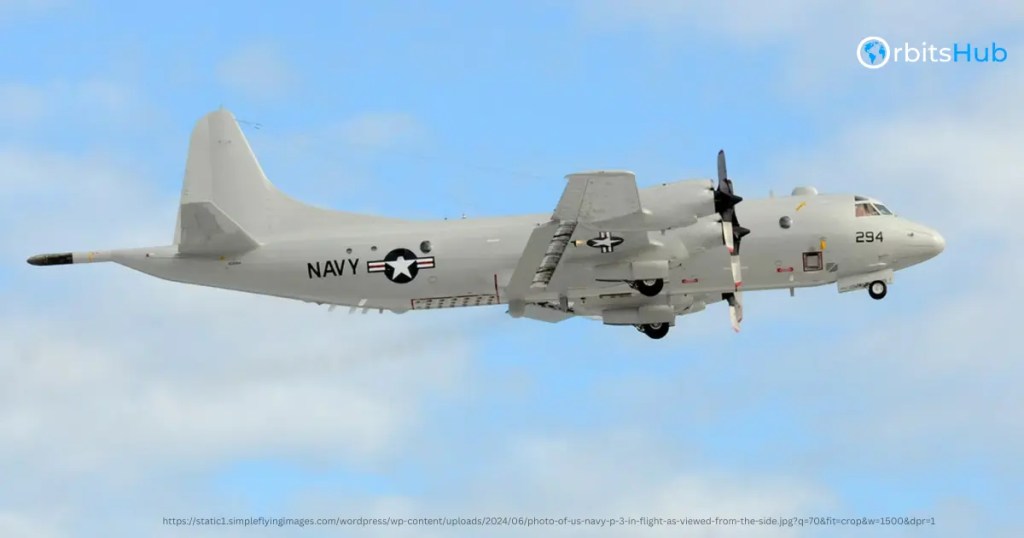
- Introduction of Turboprop Engines: The transition from the Electra to the P-3 Orion marked significant advancements in aircraft propulsion. The P-3 Orion utilized more powerful and efficient turboprop engines, enhancing its range and endurance.
- Improved Aerodynamics: The design of the P-3 Orion featured improved aerodynamics, contributing to its better fuel efficiency and operational performance.
- Enhanced Payload Capacity: With the shift to the P-3 Orion, there was a notable increase in payload capacity, allowing the aircraft to carry more advanced surveillance equipment and weapons systems.
- Advanced Avionics: The P-3 Orion was equipped with cutting-edge avionics, including sophisticate radar and navigation systems, significantly improving its capability to perform complex maritime patrol missions.
The Role of the P-3 Orion in Cold War Surveillance
- Strategic Importance: During the Cold War, the P-3 Orion was critical in monitoring Soviet naval activities. Its long-range capabilities allowed it to patrol vast ocean areas, providing valuable intelligence.
- Submarine Tracking: The P-3 Orion was instrumental in anti-submarine warfare. Its sensors and sonobuoys enabled it to detect and track Soviet submarines, maintaining a strategic advantage.
- Reconnaissance Missions: The aircraft conducted numerous reconnaissance missions, gathering essential data on enemy movements and activities. This intelligence was crucial for strategic planning and maintaining national security.
- NATO Collaboration: The P-3 Orion was extensively used by NATO forces, enhancing collaboration and information sharing among allied nations during the tense Cold War.
Operational Milestones and Achievements
- Successful Missions: The P-3 Orion has a history of successful missions, from locating enemy submarines to participating in search and rescue operations. Its reliability and effectiveness have been proven time and again.
- Service Longevity: The P-3 Orion has been in service for over five decades, a testament to its robust design and enduring capabilities. It has been continuously upgrade to meet modern operational demands.
- Global Deployments: The aircraft has seen deployments across the globe, from the Arctic to the tropics, demonstrating its versatility in various environments and conditions.
- Humanitarian Efforts: Beyond military operations, the P-3 Orion has been used in humanitarian missions, including disaster relief and environmental monitoring, showcasing its multifaceted utility.
Comparative Analysis: Electra vs. P-3 Orion
- Design and Structure: The Electra was primarily design as a commercial airliner, while the P-3 Orion was engineered explicitly for military and maritime patrol purposes. This fundamental difference influenced their structural designs and functionalities.
- Engine Performance: The P-3 Orion’s engines were optimize for long-duration flights and heavy payloads, unlike the Electra’s engines, which were tailored for commercial passenger transport.
- Technology and Avionics: The P-3 Orion featured more advanced technology and avionics compared to the Electra, enabling it to perform complex surveillance and reconnaissance tasks.
- Operational Roles: While the Electra was a civilian aircraft, the P-3 Orion’s role was predominantly military, focusing on anti-submarine warfare, surveillance, and reconnaissance missions.
Global Adoption and Deployment of the P-3 Orion
- Widespread Use: The P-3 Orion has been adopt by various navies and air forces worldwide, including the United States, Japan, Australia, and several NATO countries.
- Operational Versatility: Different countries have utilized the P-3 Orion for various missions, from maritime patrol and anti-submarine warfare to search and rescue operations and environmental monitoring.
- Upgrades and Modernizations: Many nations have invested in upgrading their P-3 Orion fleets, incorporating modern technology to extend the aircraft’s service life and enhance its operational capabilities.
- International Collaboration: Using the P-3 Orion has fostered international collaboration and joint exercises among allied nations, strengthening global maritime security efforts.
The transition from the Lockheed Electra to the P-3 Orion represents a significant milestone in maritime and aviation history. The P-3 Orion has proven itself as a versatile and reliable aircraft, excelling in various roles, from anti-submarine warfare to environmental monitoring. As technology advances, the capabilities of maritime patrol aircraft will continue to expand, ensuring the safety and security of our oceans.
For more insights into maritime and aviation advancements, explore our comprehensive consultancy services at Orbitshub. Explore how we can help you get around the complicated world of modern naval tactics.