Have you ever gazed out the window at a plane being refuelled and wondered what kind of gas keeps those giant machines soaring through the sky? The answer might surprise you – it’s not gasoline! This blog dives into the fascinating science behind aircraft fuel, exploring what it’s made of, how it’s delivered, and even the cutting-edge technology of mid-air refuelling.
Understanding Jet Fuel: Not Your Everyday Petrol
Unlike the gasoline that powers your car, aeroplanes rely on a type of fuel called Jet A-1. This is a highly refined form of kerosene, a lightweight hydrocarbon liquid derived from crude oil. Jet A-1 boasts several fundamental properties that make it ideal for aviation:
- High Energy Density: Jet A-1 packs a lot of punch in terms of energy per unit weight. This allows aeroplanes to carry less fuel for longer journeys than gasoline-powered vehicles.
- Low Volatility: Unlike gasoline, Jet A-1 has a high flash point, meaning it’s less likely to vaporize and ignite at ambient temperatures. This significantly reduces fire risk during storage and refuelling.
- Excellent Cold Flow: At high altitudes, temperatures can plummet. Jet A-1fuel remains fluid even in these extreme conditions, ensuring a smooth flow to the engines.
From Refinery to Reservoir: The Journey of Aircraft Fuel
Supplying the vast fuel needed by modern aviation is a complex logistical feat. Here’s a simplified breakdown of the process:
Refining Crude Oil:
The journey begins at oil refineries, where fractional distillation separates crude oil into various components. Jet A-1 is one of the byproducts of this process.
Transportation to Storage Tanks:
Once refined, Jet A-1 is transported to airport storage tanks through pipelines or specially designed tanker trucks. Strict quality checks ensure the fuel meets stringent aviation safety standards.
Refuelling the Aircraft:
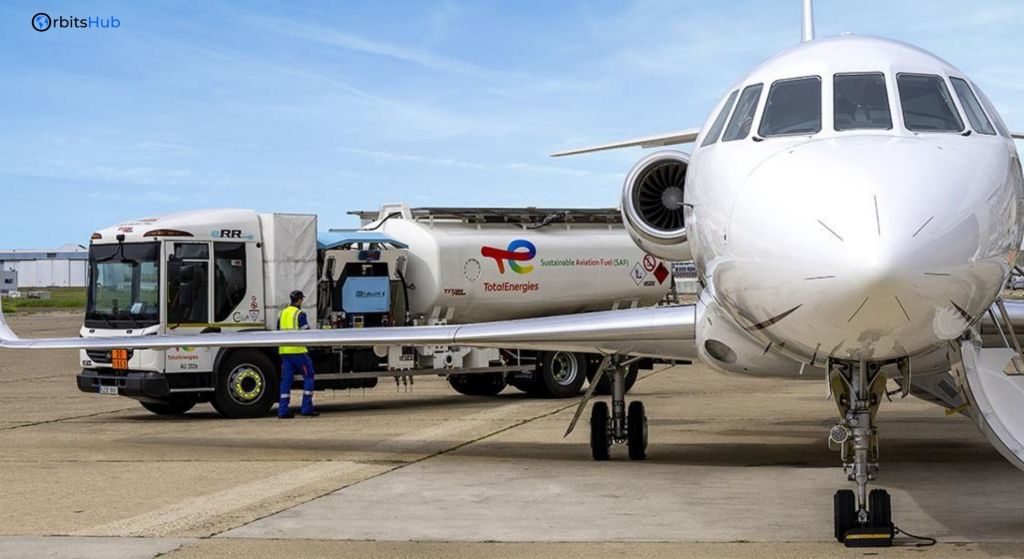
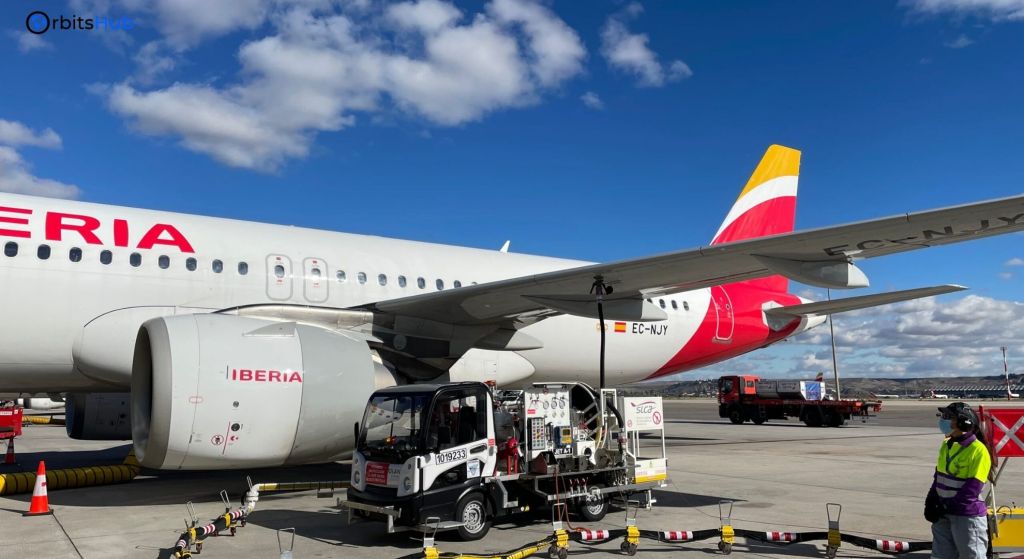
At the airport, a network of underground pipes or dedicated refuelling trucks delivers Jet A-1 to the aircraft. The refuelling process is meticulously monitored to ensure the correct amount of fuel is loaded for each flight, considering factors like flight distance, weather conditions, and passenger/cargo weight.
Taking Flight to New Heights: Mid-Air Refueling
For certain types of aircraft, particularly military jets, the concept of “refuelling on the go” becomes a reality. Mid-air refuelling, also known as air-to-air refuelling (AAR), is a complex manoeuvre where a tanker aircraft transfers fuel to a receiver aircraft while both are airborne.
There are two main methods of AAR:
- Probe-and-Drogue System: The receiver aircraft extends a probe that connects to a drogue (a funnel-like receptacle) attached to a hose deployed by the tanker.
- Flying Boom System: The tanker aircraft has a long, flexible boom with a nozzle. The highly skilled operator manoeuvres the boom until it connects to a fitting on the receiving plane.
Mid-air refuelling significantly extends the range and operational capabilities of military aircraft. Fighter jets can stay airborne for extended periods, bombers can reach distant targets, and transport planes can deliver critical supplies to remote locations.
The Future of Flight: Exploring Sustainable Alternatives Aircraft Fuel
While Jet A-1 remains the dominant fuel source for commercial aviation, the industry is actively exploring more sustainable alternatives. Possible answers to lessen aviation’s ecological footprint include biofuels made from oils extracted from plants and synthetic fuels made from captured carbon dioxide.
The Chemistry Behind Jet Fuel Performance
This section dives deeper into the science behind Jet A-1’s performance.
- Additives for Enhanced Performance: Explain how specific additives are blended with Jet A-1 to improve its properties further. Examples include anti-icing agents to prevent fuel line freezing at high altitudes and corrosion inhibitors to protect aircraft engines.
- How Engine Performance Is Influenced by Fuel Quality: Briefly explain how variations in fuel quality (e.g., density, freezing point) can affect engine efficiency and overall aircraft performance.
Keeping the Skies Fueled for the Future Aircraft Fuel
Aircraft fuel is a fascinating blend of science and logistics, powering the marvels of modern aviation. From the meticulous refining process to the innovative techniques of mid-air refuelling, every step ensures safe and efficient air travel. As we look towards the future, the focus remains on developing sustainable alternatives to provide a cleaner and greener tomorrow for air travel.
Would you like to explore innovative solutions in the maritime and aviation industry? OrbitsHub, a leading consultancy services company, can help you navigate the ever-evolving world of transportation.