What Is a Grapnel Anchor?
Origin and Evolution
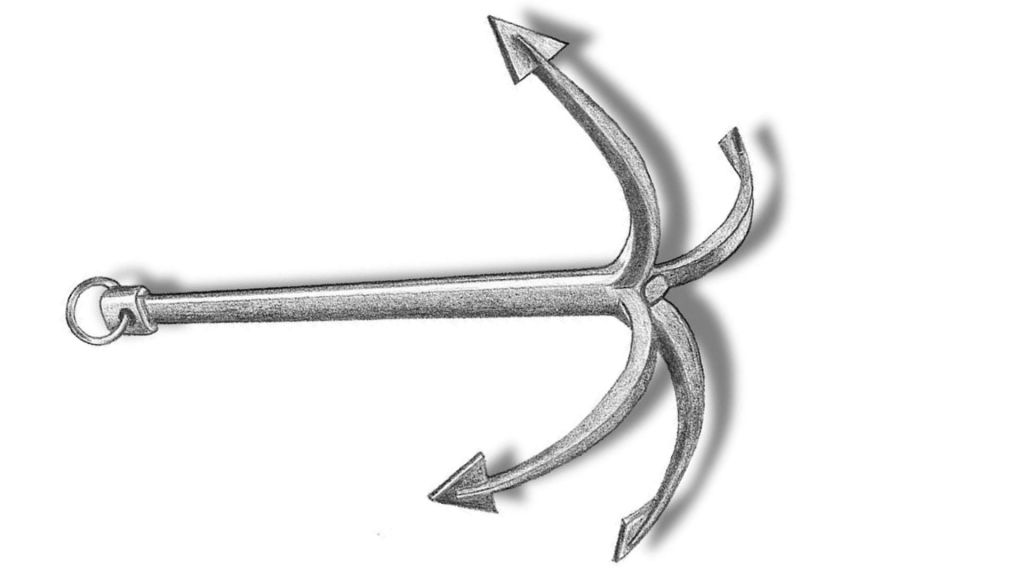
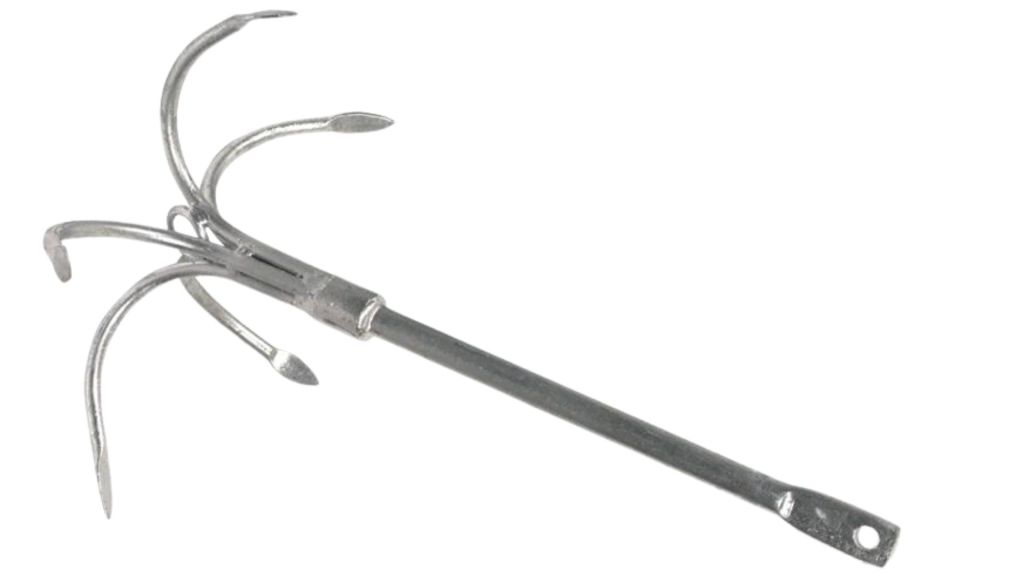
Grapnel anchors have a rich history dating back centuries. These multi-pronged marvels originated from simple hooks used by ancient mariners to secure their vessels. Over time, they evolved into the sophisticated tools we know today. The basic design – multiple flukes radiating from a central shank – has remained largely unchanged, testament to its enduring effectiveness.
Key Components
A typical grapnel anchor consists of several crucial parts:
- Shank: The central bar that connects to the anchor rode
- Crown: The point where the flukes meet the shank
- Flukes: The prongs that dig into the seabed
- Stock: A crossbar that helps the anchor orient itself correctly
Each part is very important to how the anchor works, and they all work together to provide strong binding power in a variety of situations.
How Grapnel Anchors Work
The Mechanics Behind the Design
Grapnel anchors operate on a simple yet ingenious principle. When deployed, they sink to the bottom and drag along the seabed. As they move, one or more of the flukes catch on the bottom material, digging in and creating resistance. This resistance, combined with the weight of the anchor, provides the holding power that keeps your vessel in place.
Seabed Interaction
The multi-fluke design of grapnel anchors makes them particularly effective in rocky or weed-covered bottoms. Unlike single-fluke anchors that might struggle to find purchase in these conditions, grapnel anchors can grab onto various surfaces and objects on the seabed. This versatility makes them a favorite among boaters who frequent diverse marine environments.
Types of Grapnel Anchors
Folding Grapnel Anchors
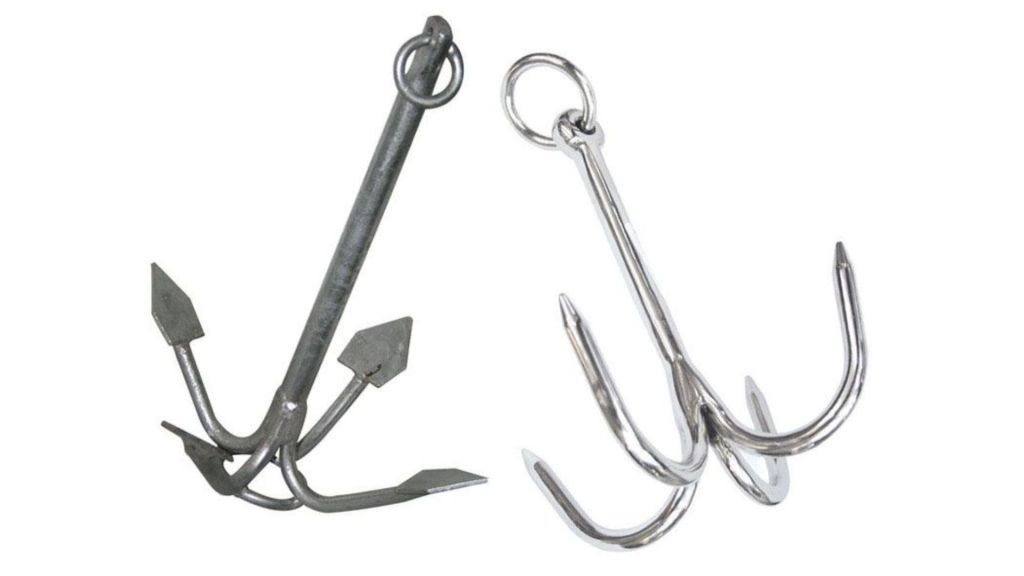
Folding grapnel anchors are the Swiss Army knives of the maritime world. These compact marvels feature hinged flukes that fold against the shank for easy storage. When deployed, the flukes spring open, ready to grip the seabed. Because they don’t take up much room, they’re perfect for smaller boats or as backup anchors on bigger ones.
Fixed Grapnel Anchors
Fixed grapnel anchors, as the name suggests, have flukes that are permanently positioned. While less compact than their folding counterparts, fixed grapnel anchors often provide superior holding power due to their rigid construction. They’re the go-to choice for situations where maximum strength is required.
Specialized Varieties
The maritime industry has spawned several specialized grapnel anchor designs:
- Ice Anchors: Featuring sharper, more robust flukes for penetrating frozen surfaces
- Reef Anchors: Designed with extra flukes to minimize damage to delicate coral ecosystems
- River Anchors: Optimized for fast-flowing water with elongated flukes for better grip
Each variant caters to specific environmental conditions, showcasing the adaptability of the grapnel anchor concept.
Choosing the Right Grapnel Anchor
Factors to Consider
Selecting the perfect grapnel anchor involves weighing several crucial factors:
- Boat size and weight
- Typical anchoring conditions (seabed type, water depth, current strength)
- Primary usage (day trips, overnight stays, emergency backup)
- Storage space available
- Local regulations and environmental considerations
By carefully evaluating these aspects, you’ll ensure your chosen anchor meets your specific needs.
Size and Weight Guidelines
As a general rule, your primary grapnel anchor should weigh approximately 1 pound for every 2 feet of boat length. However, this guideline may need adjustment based on your vessel’s design and typical anchoring conditions. For example, boats with high windage might require heavier anchors to maintain position in strong winds.
Proper Usage and Deployment Techniques
Step-by-Step Deployment Process
- Choose your anchoring spot carefully, considering depth, bottom composition, and surrounding hazards.
- Position your boat into the wind or current.
- Lower the anchor slowly, allowing it to touch the bottom.
- Reverse your boat gently, paying out anchor rode as you go.
- Once you’ve let out sufficient scope (typically 7:1 ratio of rode to water depth), secure the rode.
- Check for proper setting by observing stationary landmarks or using GPS.
Common Mistakes to Avoid
- Insufficient scope: Not letting out enough anchor rode reduces holding power.
- Anchoring from the stern: This can lead to swamping in rough conditions.
- Ignoring wind and current changes: Failing to adjust your position can result in dragging.
- Overlooking underwater obstacles: Anchoring near reefs or cables can damage your anchor or the environment.
By steering clear of these pitfalls, you’ll dramatically improve your anchoring success rate.
Maintenance and Care
Cleaning and Inspection
Regular maintenance ensures your grapnel anchor remains in top condition:
- Rinse thoroughly with fresh water after each use to remove salt and debris.
- Check for signs of corrosion, especially on moving parts of folding anchors.
- Inspect the shank and flukes for bends or cracks.
- Lubricate hinges on folding anchors to ensure smooth operation.
Storage Tips
Proper storage extends your anchor’s lifespan:
- Keep it somewhere dry and well-ventilated to keep it from rusting.
- Use anchor bags or covers to protect from scratches and dings.
- For folding anchors, store in the closed position to save space.
- Keep away from harsh chemicals that could damage the anchor’s finish.
Grapnel Anchors vs. Other Anchor Types
Advantages and Disadvantages
Grapnel anchors offer several benefits:
- Excellent holding power in rocky or weedy bottoms
- Compact design, especially folding varieties
- Versatility across various seabed types
However, they also have limitations:
- Less effective in soft mud or sand compared to fluke-style anchors
- Can be difficult to retrieve if deeply embedded
- May not perform as well in extreme weather conditions as heavier anchor types
Best Scenarios for Use
Grapnel anchors shine in specific situations:
- Day anchoring in varied bottom conditions
- As secondary or lunch hooks for larger vessels
- In areas with limited swinging room
- For small boats with minimal storage space
While not the ideal choice for every scenario, grapnel anchors prove invaluable in these contexts.
Safety Considerations
Weight Capacity and Limitations
It’s crucial to understand your grapnel anchor’s weight capacity:
- Never exceed the manufacturer’s recommended boat size/weight.
- Factor in additional forces from wind, waves, and current.
- Use a larger anchor or a secondary anchor in challenging conditions.
Respecting these limitations ensures your safety and that of your vessel.
Emergency Procedures
In case of anchor dragging or other emergencies:
- Maintain a proper anchor watch, especially in changing conditions.
- Have an engine ready to assist if the anchor starts dragging.
- Keep a cutting tool handy to free a fouled anchor in urgent situations.
- Practice anchor retrieval drills to prepare for quick departures.
Being prepared for potential issues allows for swift, effective responses when seconds count.
Innovative Applications of Grapnel Anchors
Beyond Maritime Use
Grapnel anchors have found applications far beyond the nautical world:
- Search and rescue operations: Retrieving objects from wells or crevasses
- Rock climbing: As makeshift anchors in emergencies
- Robotics: Enabling machines to climb or anchor themselves
- Agriculture: Retrieving items from grain silos or tanks
These diverse uses showcase the grapnel anchor’s versatility and enduring design.
Future Developments
The maritime industry continues to innovate:
- Smart grapnel anchors with embedded sensors for real-time holding power data
- Biodegradable materials for environmentally friendly temporary anchoring
- Shape-memory alloys allowing anchors to adapt to different bottom types
These advancements promise to make grapnel anchors even more effective and user-friendly in the coming years.
Expert Tips and Tricks
Maximizing Holding Power
- Use a trip line for easier retrieval in rocky bottoms.
- Add weight to the crown for better penetration in soft bottoms.
- Deploy two anchors in a V-formation for increased holding in strong currents.
Adapting to Different Conditions
- In fast-flowing rivers, use a shorter scope to reduce drag.
- In coral areas, wrap the flukes with sacrificial material to minimize damage.
- For overnight stays, periodically check your position and adjust as needed.
These pro tips will elevate your anchoring game, ensuring safer and more enjoyable boating experiences.
Wrapping Up: The Versatile World of Grapnel Anchors
Grapnel anchors stand as a testament to the ingenuity of maritime engineering. Their simple but effective design has been around for a long time and has changed to meet the needs of modern boaters. From their historical roots to cutting-edge applications, grapnel anchors continue to play a crucial role in maritime safety and convenience.
As you venture out on your next boating adventure, armed with this comprehensive knowledge, you’ll approach anchoring with newfound confidence. Remember, the right anchor, properly deployed and maintained, serves as your silent guardian, keeping you safe and secure in the ever-changing marine environment.