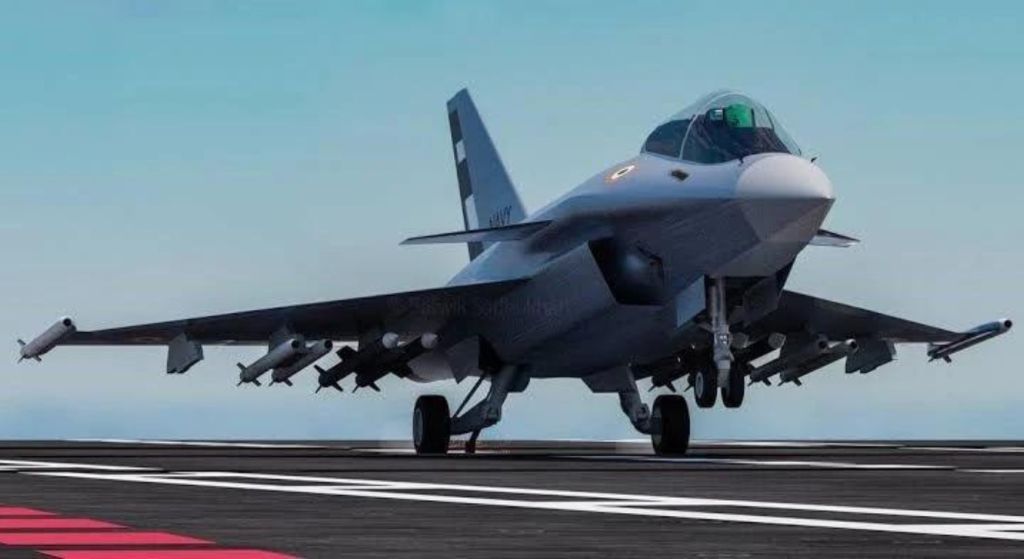
The HAL TEDBF (Hindustan Aeronautics Limited Twin Engine Deck Based Fighter) is an ambitious project to revolutionize Indian naval aviation. Developed by the Aeronautical Development Agency (ADA) and manufactured by Hindustan Aeronautics Limited (HAL), the TEDBF is a canard delta-wing, twin-engine, carrier-based, multi-role combat aircraft. Designed to replace the aging Mikoyan MiG-29K fighters onboard the INS Vikramaditya and the upcoming INS Vikrant, the TEDBF is expected to enhance the capabilities of the Indian Navy significantly.
Development and Background of HAL TEDBF
Naval LCA Programme
The origins of the HAL TEDBF can be traced back to the naval LCA (Light Combat Aircraft) program, launched in 2003. The Aeronautical Development Agency (ADA) was tasked with developing a carrier-based fighter for the Indian Navy based on the existing Tejas template. The program was divided into two phases, with the first phase involving the development of two prototypes based on the Tejas Mk. 1 design. In the second phase, two more prototypes were planned based on the Tejas Mk. 2 design. However, the program faced several challenges and setbacks, leading to the Indian Navy’s withdrawal from the project in 2016.
TEDBF Programme
In response to the Indian Navy’s dissatisfaction with the single-engine carrier-base fighter base on the HAL Tejas, the TEDBF program was officially announce in 2020. The ADA unveiled a model of the TEDBF at the Aero India airshow in 2021, showcasing its twin-engine, medium-weight fighter design. The TEDBF is being develop to meet the Indian Navy’s requirement to replace the existing fleet of Mikoyan MiG-29K fighters.
Enhanced Combat Capabilities of HAL TEDBF
- Multi-Role Capabilities: Discuss how the HAL TEDBF’s design allows it to perform various roles, including air superiority, air interdiction, anti-ship warfare, electronic warfare, and anti-access/area denial (A2/AD) missions.
- Advanced Avionics and Weapon Systems: Explore the TEDBF’s avionics suite, including the LRDE Uttam AESA Radar, and its compatibility with various indigenous and international weapons systems. Highlight how these technologies improve the aircraft’s combat effectiveness and situational awareness.
Impact on Indigenous Defense Production and Self-Reliance
- Boosting Aerospace Sector: Discuss how the development and production of HAL TEDBF contribute to the growth of India’s aerospace sector, fostering innovation, skill development, and technological advancements.
- Reducing Dependency on Imports: Analyze how the TEDBF’s indigenous development aligns with India’s goal of reducing dependency on defence imports, enhancing national security, and promoting self-sufficiency in defence production.
Design and Features OF HAL TEDBF
The HAL TEDBF incorporates several advanced design features to enhance its performance and operational capabilities. With its canard delta-wing configuration, the TEDBF offers improved maneuverability and control. The twin engines enable shorter takeoffs from the Indian Navy’s Short Takeoff Barrier Arrested Recovery (STOBAR) aircraft carriers. To optimize storage space, the TEDBF features foldable wings. The aircraft is expect to predominantly utilize indigenous weapons systems predominantly, further enhancing India’s self-reliance in defense production.
Specifications
The HAL TEDBF boasts impressive specifications, making it a formidable addition to the Indian Navy‘s fleet. While the exact specifications are subject to change as the aircraft undergoes further development and testing, the projected figures provide an insight into its capabilities:
General characteristics:
- Crew: 1
- Length: 17 m (55 ft 9 in)
- Wingspan: 11.60 m (38 ft 1 in) (unfolded), 8.3m (24 ft 11 in) (folded)
- Empty weight: 14,000 kg (30,865 lb)
- Max takeoff weight: 26,000 kg (57,320 lb) (expected)
- Powerplant: 2 × General Electric F414 afterburning turbofan, 58.5 kN (13,200 lbs) thrust each dry, 98 kN (22,000 kg) with afterburner
Performance:
- Maximum speed: Mach 1.6
- Service ceiling: 18,000 m (60,000 ft)
- g limits: +8/−3
Armament:
- Hardpoints: 11 (2 × wing tip, 6 × under-wing, and 3 × under-fuselage), with a capacity of 7500 kg
- Missiles: Air-to-air missile, Anti-ship missile, Anti-radiation missile

Avionics:
- LRDE Uttam AESA Radar (planned)
Development Timeline
The HAL TEDBF is in the development phase, with an expected first flight scheduled for 2026. The production of the aircraft is plan to commence in 2031. However, it is crucial to note that these timelines are subject to change as the project progresses and undergoes rigorous testing and evaluation.
Future Prospects and Impact
The HAL TEDBF holds great promise for the Indian Navy and the country’s defense capabilities. By replacing the aging MiG-29K fighters, the TEDBF will provide the Indian Navy with a technologically advanced and versatile aircraft capable of performing various missions, including air supremacy, air interdiction, anti-access/area denial (A2/AD), anti-ship warfare (ASW), and electronic warfare (EW).
Technological Innovations in HAL TEDBF
The HAL TEDBF represents a significant leap forward in naval aviation technology. It embodies advanced features and innovations that align with modern combat requirements. These technological advancements ensure that the TEDBF can perform optimally in diverse operational scenarios.
- Advanced Avionics: The TEDBF has cutting-edge avionics systems that enhance navigation, targeting, and situational awareness. These systems integrate with the aircraft’s combat systems, providing real-time data and supporting precise mission execution.
- Stealth Technology: To reduce radar cross-section and enhance survivability, the TEDBF incorporates stealth features. These include specially designed airframe contours and radar-absorbing materials.
- Enhanced Engine Performance: The aircraft’s engines offer improved thrust and efficiency, enhancing maneuverability and operational range. The engines are also designed to minimize maintenance requirements and operational costs.
- Modern Weapons Systems: The TEDBF is designed to carry various advanced weapons. Among these are anti-ship missiles and precision-guided munitions, which increase their adaptability and effectiveness in multiple types of warfare.
HAL TEDBF vs. Global Naval Aviation Trends
The HAL TEDBF is positioned to compete with global naval aviation trends through its state-of-the-art features and operational capabilities. By addressing contemporary demands, the TEDBF aligns with international standards while offering unique advantages tailored to the Indian Navy’s needs.
- Comparative Performance: The TEDBF exhibits comparable or superior performance metrics to its international counterparts. This includes speed, range, and combat effectiveness.
- Technological Alignment: The TEDBF incorporates technologies prevalent in advanced naval aircraft globally, such as integrated avionics and stealth features.
- Strategic Value: Unlike some global models, the TEDBF is specifically designed to meet the strategic requirements of the Indian Navy, including capabilities for carrier operations and integration with Indian naval doctrines.
- Cost Efficiency: The TEDBF offers a cost-effective solution for modern naval aviation needs, balancing advanced capabilities with budget considerations, an essential factor for many global navies.
Operational Efficiency of HAL TEDBF in Modern Warfare
The HAL TEDBF’s operational efficiency is a cornerstone of its design, aimed at meeting the demanding requirements of modern naval warfare. Its efficiency is reflected in various aspects of its operational profile.
- Versatility in Missions: Air superiority, strike operations, surveillance, and anti-submarine warfare are just a few missions the TEDBF can carry out.
- Enhanced Survivability: With its stealth features and advanced countermeasures, the TEDBF can operate effectively in contested environments, increasing its chances of mission success and crew safety.
- Rapid Deployment: The aircraft’s design ensures quick turnaround times and ease of maintenance, which is crucial for maintaining high operational tempo and readiness.
- Advanced Navigation and Targeting: The TEDBF’s sophisticated navigation and targeting systems allow for precise mission planning and execution, improving overall mission effectiveness and efficiency.
HAL TEDBF’s Role in Strengthening Naval Power
The HAL TEDBF plays a pivotal role in bolstering India’s naval power by enhancing the operational capabilities of the Indian Navy. Its introduction into service represents a strategic upgrade to India’s maritime defense assets.
- Carrier Operations Capability: The TEDBF is designed to operate from aircraft carriers, extending the reach and power projection capabilities of the Indian Navy.
- Enhanced Combat Readiness: By integrating the TEDBF into the fleet, the Navy gains a more capable and versatile combat platform, improving its ability to respond to various threats.
- Indigenous Defense Boost: The TEDBF contributes to India’s self-reliance in defense production, showcasing the country’s growing capabilities in designing and manufacturing advanced military aircraft.
- Strategic Deterrence: With its advanced features and combat capabilities, the TEDBF strengthens India’s deterrent posture, contributing to regional stability and security.
Integration of HAL TEDBF into the Indian Naval Fleet
Integrating the HAL TEDBF into the Indian Naval Fleet is a strategic move that will enhance the fleet’s capabilities and operational effectiveness. There are several critical aspects and processes to this process.
- Operational Training: Comprehensive training programs will be implemented to ensure that pilots and maintenance crews are proficient in handling the TEDBF’s advanced systems and features.
- Fleet Upgradation: The TEDBF will complement and gradually replace older aircraft models, modernizing the fleet and improving overall operational capabilities.
- Support Infrastructure: Adequate infrastructure and logistics support will be established to maintain and service the TEDBF, ensuring its operational readiness.
- Interoperability: The TEDBF will be integrated into existing naval operations and strategies, ensuring that it works seamlessly with other assets and enhances the overall effectiveness of the Indian Navy’s maritime operations.
The development of the TEDBF also signifies India’s commitment to indigenously manufactured defense equipment. India plans to become more self-sufficient in defense production and less dependent on imports by utilizing its aerospace sector and partnering with different research and development institutions. The successful realization of the TEDBF project will not only enhance India’s naval aviation capabilities and strengthen its defense industry and technological prowess.
FAQ’s
1. What is HAL TEDBF?
HAL TEDBF stands for “Hindustan Aeronautics Limited Twin Engine Deck-Based Fighter.” It’s a naval fighter aircraft Hindustan Aeronautics Limited (HAL) developed for the Indian Navy.
2. What is the purpose of HAL TEDBF?
The primary purpose of HAL TEDBF is to serve as a carrier-based fighter aircraft for the Indian Navy, capable of operating from aircraft carriers.
3. Is Hal Amca better than F35?
The AMCA has a top speed of 2633 km/h, whereas the F 35 has a top speed of 2,000 km/h. The AMCA has a range of 3,240 kilometres, whereas the F 35 has a range of up to 2,800 kilometres. The AMCA has a combat range of up to 1620 kilometres, while the F35 has a range of 1239 kilometres.
The HAL TEDBF represents a significant leap forward in Indian naval aviation. With its advance design, impressive specifications, and indigenous development, the TEDBF is poise to become a game-changer for the Indian Navy. As the project progresses, witnessing the aircraft’s maiden flight in 2026 and subsequent production in 2031 will be enjoyable. The TEDBF shows India’s self-reliance in defense manufacture and bodes well for naval aviation in India.