The quest for speed has always driven human innovation, and nowhere is this more evident than in the development of supersonic aircraft. These remarkable machines, capable of travelling faster than the speed of sound, have revolutionized air travel, military operations, and aerospace engineering. From their inception during the post-World War II era to the latest advancements in the 21st century, supersonic aircraft have played a crucial role in pushing the boundaries of what is possible in aviation.
The Birth of Supersonic Flight
The Sound Barrier: A Challenge to Overcome
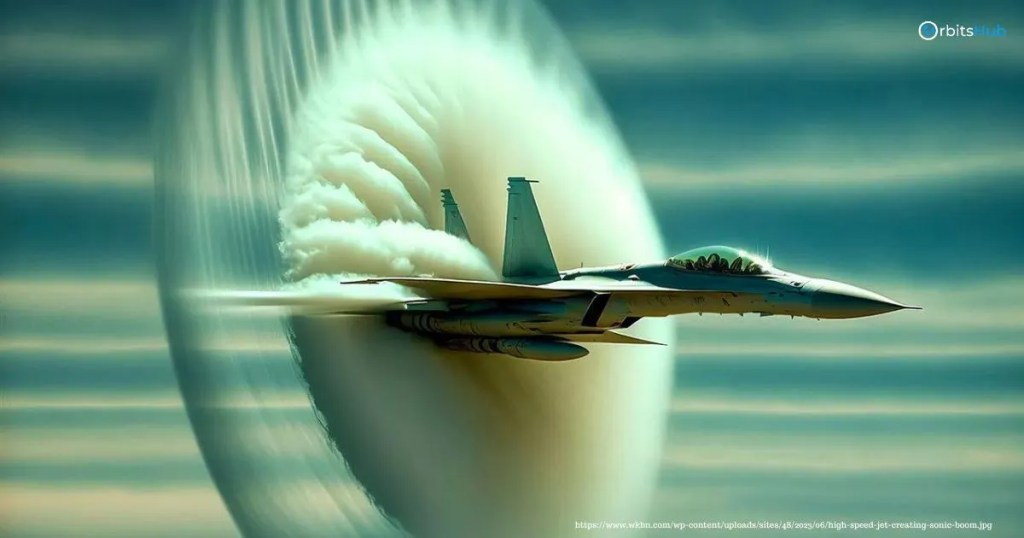
Breaking the sound barrier was not just about achieving high speeds but overcoming significant aerodynamic challenges. As an aircraft approaches the speed of sound, it encounters a drastic increase in drag and a phenomenon known as “shock waves.” These waves create intense pressure differences, leading to instability and potential structural failure.
The Bell X-1, developed by Bell Aircraft and piloted by Chuck Yeager, became the first aircraft to nd barrier on October 14, 1947. This milestone was a game-changer, proving that controlled supersonic flight was possible and setting the stage for further advancements.
The Bell X-1: A Historic Achievement
The Bell X-1 was a rocket-powered aircraft designed to break the sound barrier. Its sleek design, bullet-shaped fuselage, and powerful engine enabled it to reach a speed of Mach 1.06 during its historic flight. Chuck Yeager’s achievement in the X-1 opened the door for further exploration into supersonic flight, inspiring subsequent generations of engineers and pilots to push the speed limits.
The Dawn of Supersonic Military Aircraft
Supersonic Fighters: Redefining Air Superiority
In the 1950s and 1960s, the development of supersonic fighters became a top priority for military forces. These aircraft were designed to achieve high speeds, agility, and the ability to engage enemy targets with unprecedented precision. Introducing jet engines with afterburners allowed fighters to reach supersonic speeds during combat missions.
The MiG-21 and F-4 Phantom II: Icons of Supersonic Combat
The Soviet Union’s MiG-21 and the United States’ F-4 Phantom II are iconic supersonic fighters defining this era. The MiG-21, with its simple yet effective design, became one of the most widely produced supersonic aircraft in history. The F-4 Phantom II, on the other hand, was a versatile multi-role fighter that served in various conflicts, showcasing the advantages of supersonic speed in both air-to-air and air-to-ground missions.
The Era of Supersonic Commercial Flight
The Concorde: A Supersonic Marvel
The Concorde, developed jointly by the United Kingdom and France, was the world’s first and only successful supersonic passenger jet. With its distinctive delta wing design and robust engines, the Concorde could cruise at speeds of Mach 2, cutting transatlantic flight times in half. The Concorde’s maiden flight in 1969 marked the beginning of a new era in commercial aviation.
The Challenges and Legacy of the Concorde
Despite its technological marvel, the Concorde faced several challenges, including high operating costs, limited range, and noise pollution caused by sonic booms. These factors, combined with the economic downturn of the 1970s, led to the eventual retirement of the Concorde in 2003. However, the Concorde’s legacy endures as a symbol of human achievement and the desire to push the boundaries of air travel.
Modern Advancements and Future Prospects
The Quest for Sustainable Supersonic Flight
One of the critical challenges facing modern supersonic aircraft is the need for sustainability. Engineers are exploring reducing fuel consumption, minimizing sonic booms, and developing quieter engines. These advancements are crucial for making supersonic flight economically viable and environmentally friendly.
The Boom Supersonic and NASA’s X-59: Leading the Way
Companies like Boom Supersonic are at the forefront of this new wave of innovation. Their Overture prototype aims to provide supersonic commercial flights with reduced environmental impact. Additionally, NASA’s X-59 Quiet Supersonic Technology (QueSST) aircraft is designed to minimize sonic booms, potentially allowing for supersonic flight over land—a feat previously deemed impossible.
Supersonic aircraft have a rich history demonstrating how far humans have come in their quest for speed. These machines have left an indelible mark on aviation history. They were the first to break the sound barrier. From this achievement, there came the development of supersonic military and commercial aircraft. In the future, people may be able to travel across the world at the speed of light. This is due to the ongoing search for sustainable supersonic flying technology.
To explore the fascinating world of aviation and maritime services, consider visiting Orbitshub, where you can discover a wealth of expertise and insights tailored to your needs. Whether you’re a seasoned professional or an aviation enthusiast, Orbitshub offers a comprehensive range of services designed to elevate your experience in aviation and beyond.