The HMHS Britannic, also known as His Majesty’s Hospital Ship Britannic, holds a fascinating and remarkable history. As the sister ship of the renowned Olympics and Titanic, Britannic was destined for greatness. However, its journey took an unexpect turn during World War I when it was requisition and convert into a hospital ship. On November 21, 1916, tragedy struck as Britannic sank off the Greek coast after hitting a mine. In this article, we will delve into the captivating story of HMHS Britannic, exploring its construction, modifications, service as a hospital ship, and its tragic demise. Join us as we uncover the unique and untold tale of this illustrious vessel.
Construction of HMHS Britannic
The Britannic was built by the esteem Belfast firm Harland and Wolff as part of the Olympic-class liners for the White Star Line. The construction of the ship began on November 30, 1911, with the laying of its keel. Designed initially as an Atlantic liner, the Britannic underwent significant modifications following the sinking of the Titanic in 1912. These alterations were focus on enhancing the ship’s safety features. Additional lifeboats were add, bringing the total count to meet the new regulations. Watertight compartments were increase to 17, with five containers raised to B deck. The ship’s name was change from Gigantic to Britannic during this time. On February 26, 1914, the Britannic was launch, beginning its extraordinary journey.
Requisition as a Hospital Ship
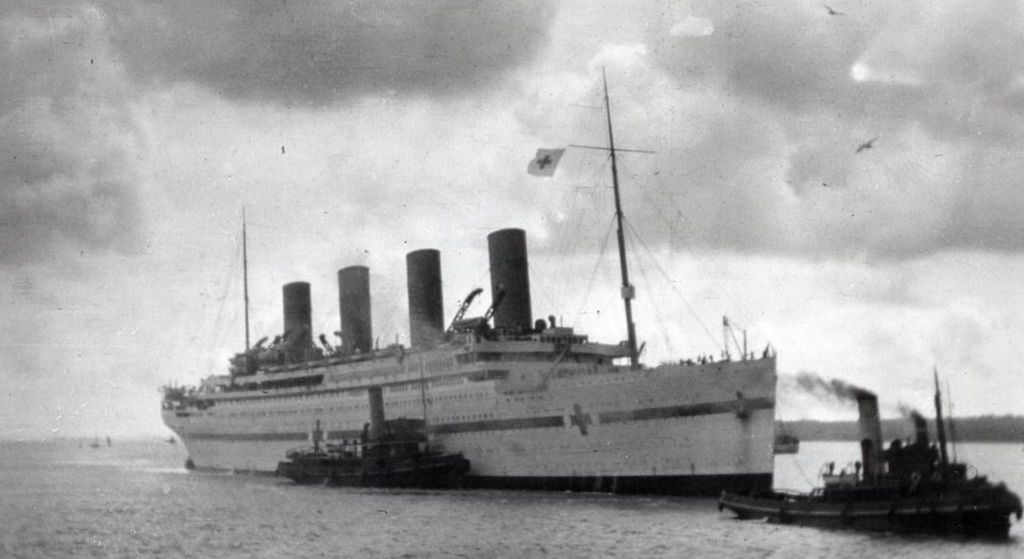
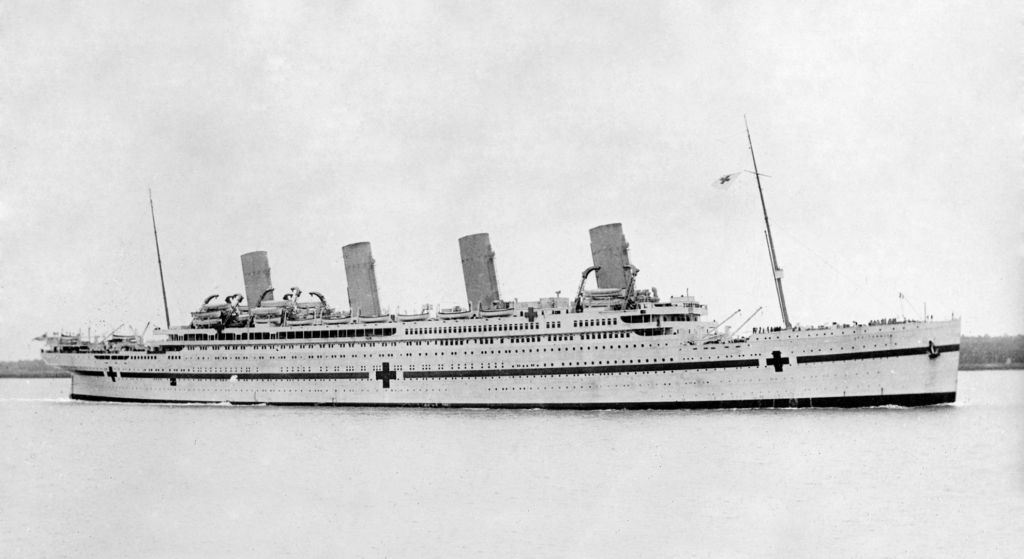
With the outbreak of World War I in 1914, the Britannic’s fate took a different course. The ship was requisition by the British Government in 1915 and transformed into a hospital ship. Its luxurious interiors were replace with state-of-the-art medical facilities to cater to wounded soldiers. The vessel was rename His Majesty’s Hospital Ship Britannic, or HMHS Britannic, after being painted white with big red crosses and a horizontal green line. The ship was now a symbol of hope and healing during the war.
As HMHS Britannic embarked on its new mission as a hospital ship, it sailed through the dangerous waters of the Mediterranean and the Aegean, attending to the wounded from various fronts of the war. The once opulent cabins were repurposed into wards, and the grand dining areas transformed into operating rooms, highlighting the vessel’s adaptation to its vital humanitarian role.
Maiden Voyage and Service as a Hospital Ship
On December 23, 1915, the Britannic embarked on its maiden voyage as a hospital ship. Departing from Liverpool, England, it set course for the Greek island of Lemnos, stopping at Naples. This voyage marked the beginning of Britannic’s service supporting the Gallipoli campaign. Equipped with state-of-the-art medical facilities, the ship could carry over 3,300 patients on each trip. Despite the evacuation of the Gallipoli peninsula in January 1916, the Britannic continued its mission in the Eastern Mediterranean. It completed three more voyages, evacuating over 10,000 troops from the Salonika campaign. The ship provided crucial support to wounded soldiers, symbolizing resilience and dedication in adversity.
The Tragic Sinking of the Britannic
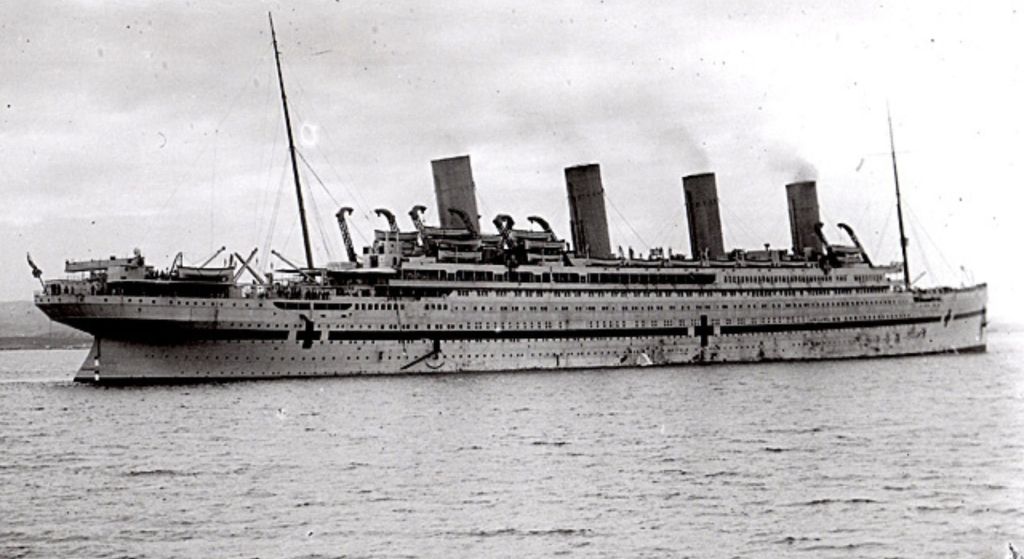
The fateful day of November 21, 1916, they forever changed the destiny of the Britannic. While sailing close to the Kea Channel, approximately 40 miles southeast of Athens, disaster struck. At around 8:15 am, a loud explosion resounded through the ship. The Britannic had struck a mine, causing extensive damage to its starboard side. The first five compartments were flooded, but the boat was design to remain afloat even with six rooms flooded. Captain Charles Bartlett, known as “Iceberg Charlie” to his crew, immediately order distress signals to be sent and all watertight doors to be shut. Despite these efforts, the doors between boiler rooms five and six failed to close, resulting in the flooding of the maximum six compartments.
As water engulfed the ship, panic and chaos ensued. Within a quarter of an hour, the water had reached the portholes on decks ‘E’ and ‘F.’ The open portholes, left by nurses to allow fresh air in preparation for incoming casualties, worsened the situation. Captain Bartlett decided to steer the ship towards the island of Kea, hoping to beach it there. On the boat deck, crew members prepared for the order to abandon the ship. Lifeboats were lowered towards the sea, but the still-turning propellers halted their descent about six feet from the water’s surface.
At 8:30 am, two lifeboats were lowered into the sea using automatic lowering gear. Unaware of the imminent danger, the occupants of these lifeboats watched as the Britannic continued its descent. However, at the last moment, they realized the peril they were in. The ship’s propellers, forced above the surface by the sinking bow, collided with the two lifeboats, crushing them. The survivors from these lifeboats were left to cling to debris in the icy waters.
As the situation grew dire, Captain Bartlett ordered the engines to be stopped and the remaining lifeboats to be lowered. The order to halt the engines saved the occupants of a third lifeboat, which was about to be crushed by the propellers. Pushing against the now-static blades, the relieved survivors floated away from the sinking Britannic.
Evacuation and Rescue Efforts
Captain Bartlett abandoned the ship at 8:35 am, just twenty-three minutes after the explosion. Over the next half hour, the 600 crew members and 500 medical staff evacuated the Britannic, boarding lifeboats or swimming towards safety. The scenes of chaos and survival were reminiscent of the Titanic’s tragic sinking four years prior.
Rescue efforts were swift, with local fishing boats being the first to arrive. Larger vessels, including HMS Heroic and HMS Scourge, soon joined the rescue operation. Together with two French tugs, they picked up over 800 survivors. The survivors were then transport to Piraeus, on the mainland, where they were cared for and provided with much-needed support.
The Legacy of HMHS Britannic
Despite the speed and tragedy of its sinking, the Britannic’s loss of life was relatively low. Out of the 1,066 crew and medical staff on board, only 30 individuals, including 21 crew members and eight members of the Royal Army Medical Corps, lost their lives. The Britannic’s fate serves as a reminder of the immense risks hospital ships face during the conflict.
In the years following its sinking, the Britannic has become a subject of fascination for explorers and historians alike. In 1975, renowned French ocean explorer Jacques Cousteau discovered the wreckage of the Britannic lying on its starboard side at a depth of approximately 390 feet. The ship remains one of the most significant intact passenger shipwrecks in the world, serving as a testament to its grandeur and tragic end.
FAQ’s
1. What was the HMHS Britannic ship?
The HMHS Britannic was a hospital ship built for the British White Star Line by Harland and Wolff in Belfast, Northern Ireland. It was launched in 1914 and was intended to be a more extensive and safer version of the Titanic.
2. What happened to the HMHS Britannic?
After striking a mine on November 21, 1916, the HMHS Britannic sank in the Aegean Sea. Thankfully, most crew and passengers escaped the ship’s submersion in less than an hour because of the crew’s and the rescue teams’ prompt response.
3. How many people were on board the HMHS Britannic when it sank?
There were 1,066 people on board the HMHS Britannic when it sank, including crew members, medical staff, and injured soldiers who were being transport.
4. Was the sinking of the HMHS Britannic investigated?
Yes, there was an investigation into the sinking of the HMHS Britannic. The British government conduct an inquiry, and the ship’s captain, Charles Bartlett, was clear of wrongdoing.
5. Is the wreck of the HMHS Britannic still accessible?
Yes, the wreck of the HMHS Britannic is still accessible to divers today. However, due to the depth and location of the impact, it is consider a challenging dive and should only be attempt by experience divers with the appropriate equipment and training.
The HMHS Britannic, sister ship to the Olympic and Titanic, underwent a remarkable transformation during World War I. From being a luxurious liner to becoming a symbol of hope and healing as a hospital ship, the Britannic played a vital role in supporting wounded soldiers. Its sinking off the Greek coast in 1916 marked the end of a remarkable journey. Today, the Britannic’s story and its resting place on the seafloor serve as reminders of the sacrifices made during times of war. The legacy of HMHS Britannic lives on, immortalized in the annals of maritime history.