Ailerons are crucial components in modern aircraft, playing a vital role in controlling and manoeuvring the plane. They are small hinged sections on the outer part of the wing, working in tandem to control the aircraft’s roll. Read on as we delve into the inner workings of ailerons in the aircraft, their significance in the aviation industry, and how they improve manoeuvrability and safety.
Introduction to Ailerons
Ailerons are control surfaces found on an aircraft’s wings. Typically located near the wingtips, they control the aircraft’s roll axis. When a pilot wants to turn the aircraft, the ailerons create a differential lift on the wings, causing the aircraft to roll to the left or right. This rolling motion allows the plane to bank, making turns possible.
What are Ailerons?
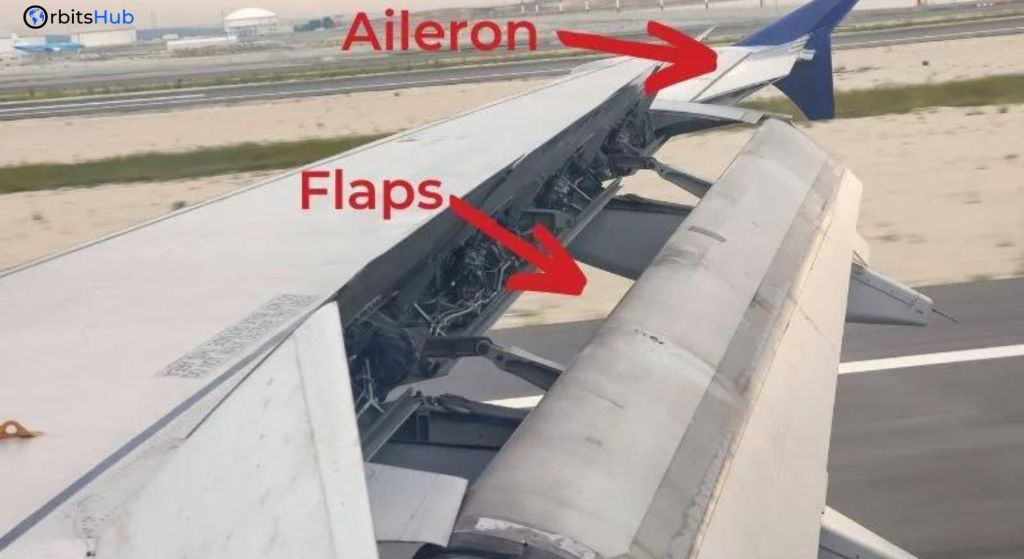
Ailerons are movable surfaces on the trailing edge of an aircraft’s wings. They work in opposite directions; the other goes down when one aileron goes up. This action creates a difference in lift between the two wings, causing the aircraft to roll to one side. “aileron” is derived from the French word for “little wing.”
How Do Ailerons Work?
Aileron’s work is based on the principle of differential lift. When the pilot moves the control yoke or joystick to the left or right, the ailerons move in opposite directions. The aileron on one wing moves up, reducing lift on that wing, while the aileron on the other wing moves down, increasing lift. This causes the aircraft to roll towards the wing with the reduced lift, allowing the aircraft to turn.
Importance of Ailerons in Aircraft
Ailerons are essential for controlling an aircraft’s roll, which is crucial for turning. Without ailerons, an aircraft could not make coordinated turns and would be limited to basic up-and-down movements. Ailerons provide the necessary control for manoeuvering in the air, making them indispensable for safe and efficient flight operations.

The Role of Ailerons in Maneuverability
Ailerons are primarily responsible for an aircraft’s roll control, a critical aspect of manoeuvrability. Roll control allows the aircraft to turn, adjust its flight path, and maintain stability during flight.
Enhancing Turn Performance
Ailerons are crucial to executing turns. When pilots want to turn the aircraft, they use the ailerons to roll it in the desired direction. This role creates a banking angle, allowing the aircraft to change direction. The ailerons’ precise control enables smooth and coordinated turns, which is essential for safe flying.
Stability and Control
Ailerons also contribute to an aircraft’s stability. By controlling the roll, ailerons help maintain the aircraft’s flight level and prevent unwanted rolling motions. This stability is crucial during various phases of flight, including takeoff, cruising, and landing.
Performing Advanced Maneuvers
Ailerons are vital for aerobatic aircraft, performing advanced maneuvers such as rolls, loops, and spins. These manoeuvres require precise control of the aircraft’s roll axis, which is achieved by using ailerons. Pilots rely on ailerons to execute these complex manoeuvres safely and accurately.
Safety Enhancements Through Ailerons
Ailerons enhance manoeuvrability and contribute significantly to flight safety. They provide the necessary control to maintain stability, execute safe turns, and recover from unusual attitudes.
Maintaining Control During Adverse Conditions
Ailerons play a crucial role in maintaining control during adverse weather conditions. In turbulent air or during crosswind landings, ailerons help pilots keep the aircraft stable and on course. By adjusting the roll, pilots can counteract the effects of turbulence and maintain a smooth flight path.
Recovering from Unusual Attitudes
Ailerons are instrumental in recovering aircraft control in an unusual attitude or upset condition. Pilots use ailerons to roll the plane back to a level flight position, helping to restore stability and prevent potential accidents.
Ensuring Safe Landings
Precise control of the aircraft’s roll is essential during landing. Ailerons allow pilots to adjust the aircraft’s attitude, ensuring a smooth and safe touchdown. This control is significant during crosswind landings, where maintaining the correct alignment with the runway is critical.
Types of Ailerons and Their Design
Ailerons come in various designs, each with its advantages and applications. The design of ailerons can affect their performance and the overall handling characteristics of the aircraft.
Differential Ailerons
Differential ailerons are designed to reduce adverse yaw, which is the tendency of the aircraft’s nose to move in the opposite direction of the turn. In differential ailerons, the upward-moving aileron deflects more than the downward-moving aileron. This design helps to balance the drag forces on each wing, reducing adverse yaw and improving turn coordination.
Frise Ailerons
Frise ailerons are another design aimed at reducing adverse yaw. When the aileron deflects upward, the leading edge of the aileron projects below the wing, creating additional drag on the rising wing. This drag helps to counteract the adverse yaw effect, making turns smoother and more coordinated.
Spoilers
Spoilers combine the functions of spoilers and ailerons. When deployed, they disrupt the airflow over the wing, reducing lift and increasing drag on one side of the aircraft. This action helps to roll the plane, similar to traditional ailerons. Spoilers are commonly used in larger aircraft to provide additional roll control.
Common Issues and Maintenance of Ailerons
Like all aircraft components, ailerons require regular maintenance to ensure their proper function. Understanding common issues and the importance of maintenance can help prevent potential problems and ensure safe flight operations.
Common Aileron Issues
- Wear and Tear: Ailerons can experience wear and tear over time due to continuous use. If left unchecked, this could cause problems or even failure.
- Corrosion: Ailerons are exposed to various environmental conditions, which can cause corrosion. Routine inspections and maintenance are required to avoid problems caused by corrosion.
- Mechanical Failures: Mechanical linkages and control cables can sometimes fail, leading to a loss of aileron control. Routine checks and maintenance help identify and address these issues before they become critical.
Maintenance Practices
- Regular Inspections: Routine inspections are essential to identify any signs of wear, corrosion, or mechanical issues. Regular checks help ensure that ailerons are in good working condition.
- Lubrication: Proper lubrication of aileron hinges and control linkages is crucial for smooth operation. Regular lubrication prevents sticking and ensures responsive control.
- Repairs and Replacements: Any damaged or worn components should promptly be replaced. Timely maintenance helps maintain the reliability and effectiveness of ailerons.
Ailerons are vital components that enhance both manoeuvrability and safety in aircraft. By controlling the aircraft’s roll, ailerons enable smooth turns, maintain stability, and ensure safe flight operations. Technological advancements have further improved aileron design and functionality, contributing to modern aircraft’s overall efficiency and performance. Regular maintenance and understanding of common issues are essential to keep ailerons in optimal condition. Ailerons will remain vital in achieving safe and efficient flight as we explore the skies.
Explore aviation technology and consultancy. services on OrbitsHub. Whether you are an aviation enthusiast or a professional, OrbitsHub offers valuable insights and expert guidance in maritime and aviation consultancy.