In the ever-evolving realm of space exploration, Blue Origin has emerged as a distinctive player, setting itself apart from other space companies through its unique philosophy, technological innovations, and strategic objectives. Jeff Bezos started Blue Origin in 2000. Their goal is to make space flight easier and cheaper for everyone. Eventually, they want millions of people to be able to live and work in space for the benefit of Earth.
Blue Origin’s Vision and Philosophy
Unlike many of its counterparts, Blue Origin operates on a long-term vision, emphasizing gradual and sustainable progress in space technology. The company’s motto, “Gradatim Ferociter,” which translates to “Step by Step, Ferociously,” encapsulates its approach to innovation and development. This philosophy reflects a commitment to meticulous engineering and safety, ensuring that each advancement builds upon the last.
Technological Innovations
Blue Origin has developed several key technologies that distinguish it from other space companies:
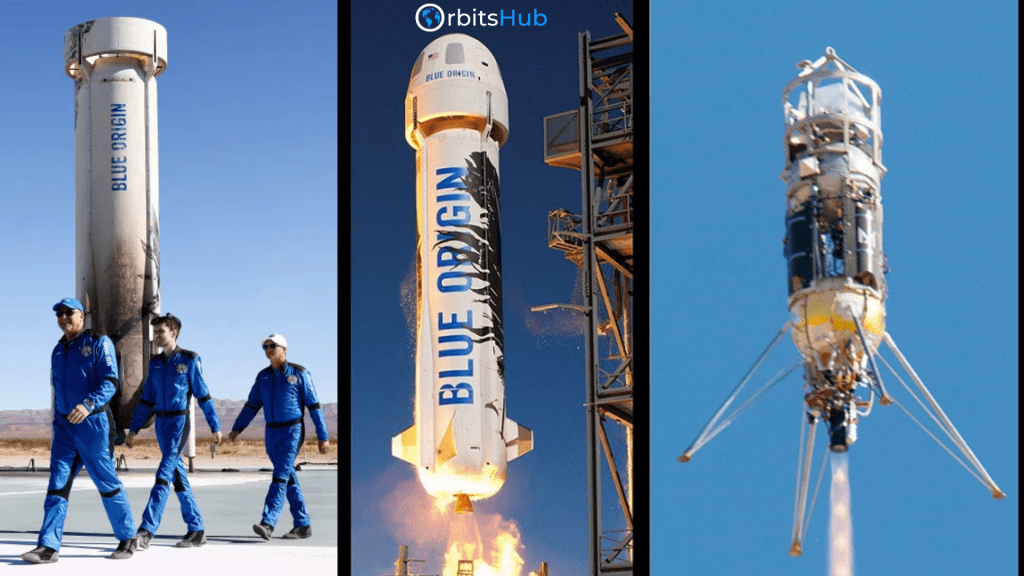
- New Shepard Rocket: Designed for suborbital flights, the New Shepard rocket is capable of carrying passengers and cargo to the edge of space. It can be used more than once because it can take off and return vertically, which significantly lowers the cost of getting to space.
- New Glenn Rocket: A heavy-lift orbital launch vehicle, New Glenn is designed to carry large payloads to space. Standing over 320 feet tall, it is intended to compete with other heavy-lift rockets in the industry.
- BE-4 Engine: Blue Origin’s BE-4 engine is a liquid rocket engine powered by liquefied natural gas and liquid oxygen. It is designed to be reusable and is intended for use in both the New Glenn rocket and United Launch Alliance’s Vulcan Centaur rocket.
Strategic Objectives

Blue Origin’s strategic objectives are centred around the following goals:
- Reducing the Cost of Space Travel: Blue Origin’s goal is to make space travel more affordable by creating launch vehicles and spacecraft that can be used more than once. This will allow more people to use space for things like study, communication, and tourism.
- Enabling Human Presence in Space: The company envisions a future where millions of people live and work in space, contributing to the development of space-based industries and the preservation of Earth’s environment.
- Supporting Lunar Exploration: Blue Origin is actively involved in NASA’s Artemis program, aiming to return humans to the Moon. NASA gave Blue Origin a $3.4 billion deal in May 2023 to make a human landing system for missions to the Moon. This shows how important the company will be in future lunar exploration.
Recent Developments
In January 2025, Blue Origin achieved a significant milestone by successfully launching its New Glenn rocket from Cape Canaveral, Florida. The rocket reached orbit, marking Blue Origin’s entry into the orbital space race. Although the first-stage booster was lost during descent, the mission demonstrated the company’s capability to launch heavy-lift vehicles.
Comparison with Other Space Companies
While companies like SpaceX and Virgin Galactic have made notable strides in space exploration, Blue Origin’s approach remains distinct:
- SpaceX: Founded by Elon Musk in 2002, SpaceX has focused on rapid development and frequent launches, achieving significant milestones such as the first privately developed rocket to reach orbit and the first private company to dock with the International Space Station. SpaceX’s Starship aims for interplanetary missions, including Mars colonization.
- Virgin Galactic: Richard Branson started Virgin Galactic in 2004. Since then, it has focused on suborbital space tourism, giving people short periods of weightlessness and views of Earth from space. Its SpaceShipTwo vehicle is designed for these commercial flights.
In contrast, Blue Origin’s focus on gradual development, reusability, and long-term goals sets it apart, aiming to make space accessible to a broader range of applications and participants.
Impact on the Space Industry
Blue Origin’s emphasis on reusability and safety has influenced industry standards, encouraging other companies to adopt similar practices. The company’s involvement in NASA‘s Artemis program and its partnerships with other aerospace entities underscores its commitment to advancing space exploration and technology.
FAQs
1. What is Blue Origin’s primary mission?
Blue Origin’s primary mission is to reduce the cost of space travel and enable the future of human spaceflight by developing reusable launch vehicles and spacecraft.
2. How does Blue Origin’s New Glenn rocket compare to SpaceX’s Starship?
Both New Glenn and Starship are heavy-lift launch vehicles designed for orbital missions. New Glenn is designed for reusability, focusing on launching satellites and cargo. Starship, on the other hand, aims for interplanetary missions, including crewed missions to Mars.