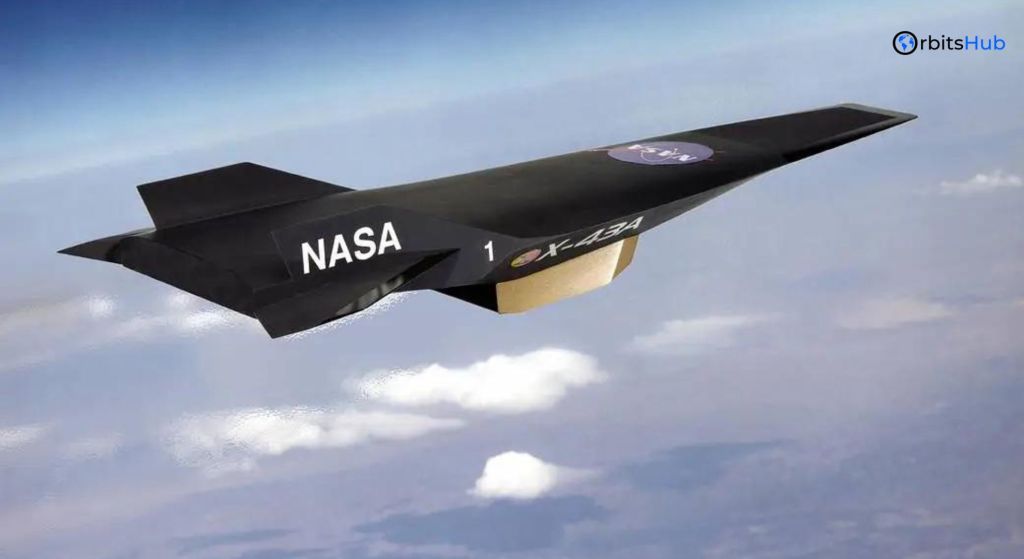
The X-43 plane, a marvel of modern aerospace engineering, has captivated the world with its ability to achieve hypersonic speeds. Developed by NASA, the X-43 has set records and pushed the boundaries of what is possible in flight. What makes the X-43 plane capable of such incredible speeds is the subject of this blog’s investigation into its design, technology, and processes. We will explore the background, concepts, and theories of hypersonic flight and its potential effects on the aviation and space industries of the future.
The Genesis of the X-43 Plane
Early Hypersonic Research
Hypersonic flight, defined as speeds greater than Mach 5 (five times the speed of sound), has been a goal for researchers since the early days of the space race. Initial experiments in the 1960s and 70s laid the groundwork for understanding the challenges and potential of hypersonic travel.
NASA’s Role in Hypersonic Development
NASA has been at the forefront of hypersonic research. The X-43 project, part of NASA’s Hyper-X program, was designed to explore new technologies that could make hypersonic flight a reality—the program aimed to develop and test an air-breathing engine capable of sustaining hypersonic speeds.
Understanding Hypersonic Flight
What is Hypersonic Speed?
Hypersonic speed refers to velocities of Mach 5 and above. Air resistance creates significant heat and pressure at these speeds, requiring advanced materials and cooling systems to protect the aircraft.
Challenges of Hypersonic Flight
- Thermal Management: The tremendous heat produced during hypersonic flight can damage Conventional aircraft materials.
- Aerodynamic Stability: Maintaining stability at such high speeds is complex due to the turbulent airflow.
- Propulsion: Traditional jet engines are unsuitable for hypersonic speeds, necessitating the development of new propulsion technologies.
The Technology Behind the X-43 Plane
The Scramjet Engine
How Scramjets Work
The X-43 is powered by a scramjet (Supersonic Combustion Ramjet) engine. Unlike traditional jet engines that compress air and mix it with fuel at subsonic speeds, a scramjet operates with air intake at supersonic speeds, maintaining its velocity throughout the combustion process.
Advantages of Scramjets
- Efficiency: Scramjets are more efficient at high speeds than rocket engines, as they do not carry oxidizers and rely on atmospheric oxygen.
- More straightforward Design: Scramjets have fewer moving parts, reducing mechanical complexity.
Advanced Materials
Heat-Resistant Materials
The X-43 utilizes advanced heat-resistant materials, including ceramics and reinforced carbon-carbon composites, to withstand extreme temperatures during hypersonic flight.
Lightweight Construction
The aircraft’s lightweight construction is crucial for achieving high speeds. Materials like titanium and advanced composites keep the weight down while maintaining structural integrity.
Aerodynamic Design
Shape and Structure
The X-43’s aerodynamic design is optimized for hypersonic flight. Its sleek, elongated shape reduces drag and helps maintain stability at high speeds.
Control Surfaces
Specialized control surfaces, such as canards and stabilizers, manage the aircraft’s trajectory and stability.
The Flight Testing of the X-43
The First Successful Flights
X-43A Missions
The X-43A achieved its first successful flight in March 2004, reaching speeds of Mach 7. Later that year, another X-43A flight set a record by reaching Mach 9.6, solidifying its place in aviation history.
Launch Mechanism
The X-43 was launched from a B-52B aircraft and accelerated to its testing speed by a Pegasus rocket before the scramjet engine took over.
Data Collection and Analysis
During its flights, the X-43 collected valuable data on hypersonic aerodynamics, propulsion, and thermal protection, contributing to the development of future hypersonic vehicles.
Implications for Future Aviation and Space Travel

Military Applications
Hypersonic Missiles
The technology behind the X-43 has potential military applications, including the development of hypersonic missiles capable of evading existing defence systems.
Rapid Global Reach
Hypersonic aircraft could enable rapid global reach for military operations, allowing forces to be deployed worldwide within hours.
Commercial Aviation
Reducing Travel Time
Hypersonic travel could revolutionize commercial aviation by significantly reducing travel time. For example, a flight from New York to Tokyo could be completed in just a few hours.
Challenges to Overcome
However, significant challenges remain, including cost, safety, and the environmental impact of hypersonic flight.
Space Exploration
Reusable Spacecraft
Hypersonic flight principles also apply to reusable spacecraft, potentially lowering the cost of access to space.
Planetary Exploration
Hypersonic technology could enable faster travel to other planets, opening new possibilities for exploration and colonization.
The X-43 plane represents a significant leap forward in aerospace technology. Its hypersonic capabilities result from the dogged persistence of engineers and researchers. While challenges remain, the lessons learned from the X-43 project pave the way for a new era in aviation and space travel.
As we look to the future, advancements in hypersonic technology promise to transform how we travel, defend, and explore our world and beyond. The X-43 is not just a record-breaking aircraft; it is a glimpse into the future of flight.
Visit the OrbitsHub website to learn about the latest advancements in aviation and maritime consultancy. Please find out how our knowledge can assist you in understanding the intricacies of contemporary aeronautical technology.