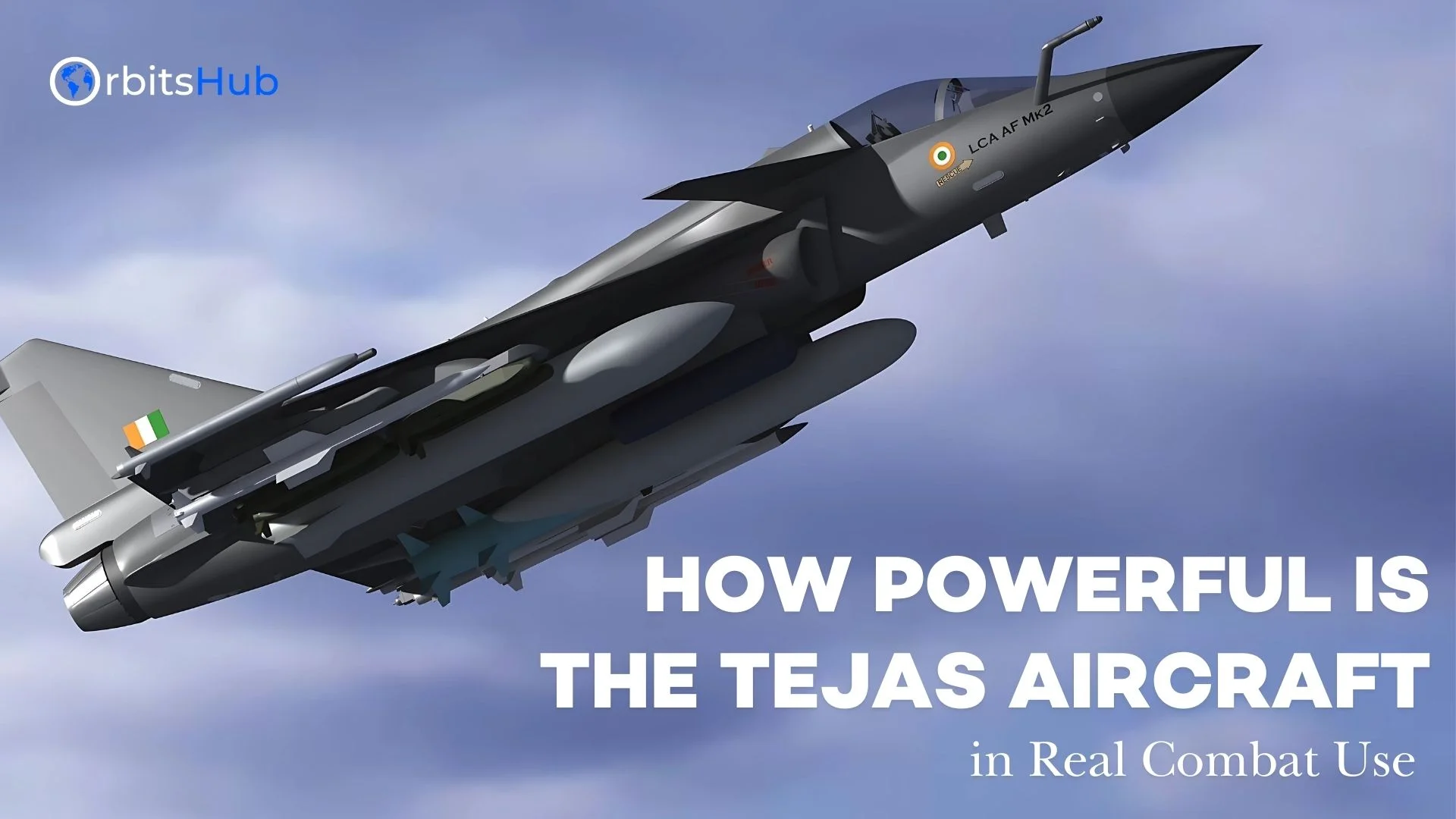
Tejas, developed by Hindustan Aeronautics Limited (HAL) in collaboration with the Aeronautical Development Agency (ADA), represents a key advancement in India’s indigenous defense manufacturing capabilities. As a Light Combat Aircraft (LCA), it plays a critical role in enhancing national air defense preparedness. For professionals in the aviation and defense sectors, Tejas serves as a benchmark in systems integration, mission agility, and indigenous innovation. This article objectively assesses its combat performance, operational deployment, and strategic relevance in modern aerial warfare.
The Origin and Evolution of Tejas Aircraft
A Breakthrough in Indigenous Defense Technology
When the Indian Air Force needed to replace its old MiG-21 force in the 1980s, the Tejas program was born. What started as a replacement project quickly evolved into an ambitious leap toward indigenous military aviation capability. The aircraft was officially inducted into the IAF’s No. 45 Squadron in 2016.
Over the years, Tejas has undergone extensive testing and multiple upgrades, transforming into a fourth-generation multi-role combat aircraft. From limited scope to full operational capability, the evolution of Tejas reflects India’s determination to bridge technological gaps while minimizing dependency on foreign systems.
Real Combat Capabilities: Is the Tejas Battle-Ready?
Air-to-Air Superiority
Regarding air-to-air combat, Tejas is equipped with Derby beyond-visual-range (BVR) missiles and advanced targeting systems that significantly boost its situational awareness and strike accuracy. Its high thrust-to-weight ratio allows quick maneuvering.
At the same time, the digital fly-by-wire system enables stable control even during high-speed dogfights. Additionally, the aircraft’s Glass Cockpit offers a high degree of automation and sensor fusion, allowing pilots to make faster, data-driven decisions critical in dynamic air combat scenarios.
Air-to-Ground Precision
Additionally, Tejas is a capable ground-attack platform. Its compatibility with laser-guided bombs, anti-radiation missiles, and precision-guided munitions (PGMs) allows it to perform a wide range of strike missions.
The aircraft has shown remarkable accuracy in targeting during live-fire exercises and simulations of the real world. This accuracy has been backed by contemporary navigation technologies such as the Ring Laser Gyroscope and Inertial Navigation System (RLG-INS).
Radar and Electronic Warfare Capabilities
One of the most significant combat enablers for Tejas is the EL/M-2032 multi-mode radar and the integration of electronic countermeasure systems. These technologies allow it to jam enemy radars, spoof incoming threats, and operate in contested environments, which are vital capabilities in modern electronic warfare.
More advanced features, including an Active Electronically Scanned Array (AESA) radar and enhanced onboard computer capability, are expected to be included in the Tejas Mk1A and Tejas Mk2 models scheduled to be released shortly.
Operational Deployment: Lessons from Exercises and Missions

Joint Military Drills and Strategic Deployment
Though Tejas has not seen direct action in wartime, it has been extensively tested in joint military drills such as “Vayu Shakti,” “Iron Fist,” and bilateral exercises with foreign air forces. Tejas has performed on par with or exceeded expectations in these events compared to older platforms, especially in agility, response time, and radar invisibility.
Moreover, its lightweight build and small radar cross-section enhance survivability in real combat environments.
Border Patrol and Tactical Readiness
In recent years, Tejas aircraft have been deployed along India’s western and northern borders for patrol and quick-response missions. Their performance in high-altitude and harsh weather conditions, such as those in Ladakh, demonstrated technical robustness and logistical and maintenance efficiency.
Tejas jets can be scrambled quickly, serviced relatively easily, and supported by integrated maintenance diagnostics, which are ideal features for forward airbases and rapid deployment scenarios.
Strategic and Technological Advantages
Stealth and Survivability
While not a stealth aircraft in the traditional sense, Tejas benefits from reduced radar signature, thanks to its design and materials. Its composite airframe accounts for over 90% of its structure, making it lighter and more durable while minimizing radar reflection. This allows it to operate with greater stealth in electronic warfare zones.
Superior Agility and Maneuverability
Tejas boasts a high angle-of-attack capability and instantaneous turn rate, making it well-suited for short-range combat and evasive maneuvers. Its delta wing design and relaxed static stability contribute to excellent handling, enabling superior dogfight performance compared to older fighters.
Integration with Future Systems
As the IAF and Indian Navy look toward integrating unmanned aerial systems (UAS), AI-based avionics, and satellite-based networking, Tejas stands out due to its modular design and upgrade-friendly architecture. These features make it a scalable platform for next-generation warfare requirements and interoperability with future defense technologies.
Sustainability and Cost-Effectiveness in Aviation

Indigenous Manufacturing and Lifecycle Support
For sustainability advocates in transport and aviation, Tejas represents a significant step toward eco-efficient defense production. Indigenous manufacturing ensures shorter supply chains, reduced carbon footprints, and lower logistical dependencies.
It also allows quicker upgrades, efficient resource utilization, and better lifecycle management. The aircraft’s lower maintenance requirements and long service intervals significantly reduce its total operating cost, making it combat-ready and economically viable for long-term deployment.
Export Potential and Global Partnerships
With interest from countries such as Argentina, Egypt, and the Philippines, the Tejas platform also opens doors for international collaboration and defense diplomacy. These partnerships can accelerate global tech-sharing, stimulate local aerospace industries, and support peacekeeping operations worldwide.
Operational Significance and Strategic Positioning of the Tejas Aircraft
The Tejas aircraft represents a significant achievement in India’s aerospace development and defense self-reliance. Designed for multi-role functionality, it offers advanced avionics, agility, and reliability, aligning with the operational requirements of modern air forces.
Though it has not yet been deployed in active combat, its performance in live-fire exercises, patrol operations, and joint military drills has established its operational credibility.
Tejas is a practical example of successful integration between indigenous technology, strategic defense planning, and industry collaboration. With continuous enhancements and scalability, the platform is well-positioned to meet future combat and security challenges.
FAQs
1. What makes the Tejas aircraft suitable for modern air combat?
Tejas is equipped with advanced avionics, BVR missiles, and superior agility, making it ideal for air-to-air and air-to-ground missions in modern combat scenarios.
2. Has the Tejas aircraft been used in real combat situations?
While not yet deployed in an active war, Tejas has performed strongly in live-fire drills and patrol missions, proving its combat readiness and operational reliability.