The vast expanse of our planet holds many secrets, and a significant portion of those secrets lies beneath a frozen blanket – the polar ice caps. These icy regions, harsh and unforgiving, have captivated explorers for centuries. But navigating these frozen waters presents a unique challenge – ice. Here’s where ice breaker ships are crucial in scientific research, resource exploration, and opening new maritime trade routes.
The Mighty Muscle: How Icebreakers Work
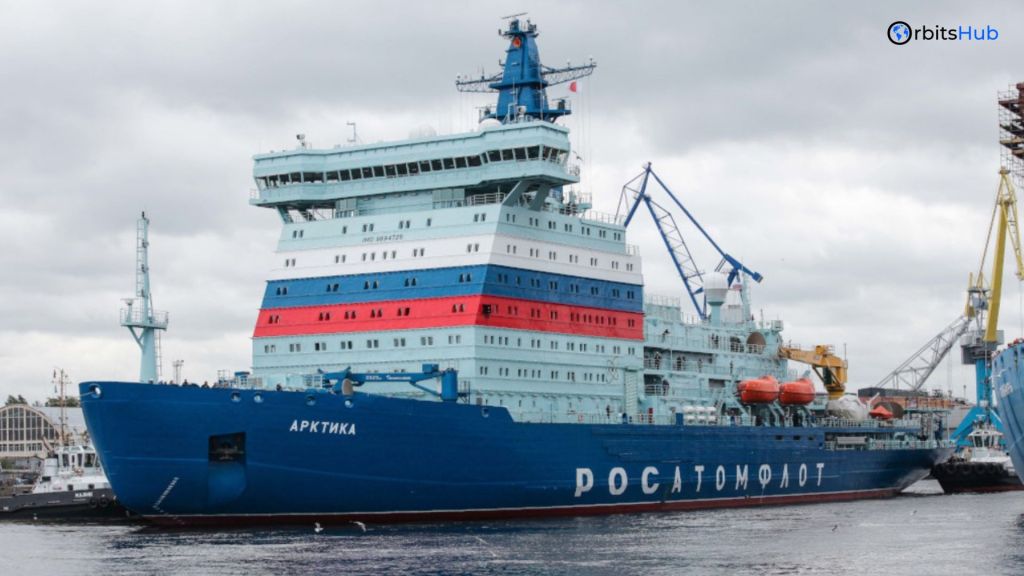
Icebreakers are specially designed ships built to traverse ice-covered waters. Unlike regular ships, whose hulls are easily crushed by ice, icebreakers boast a reinforced hull, often made of high-strength steel, which allows them to push through or break ice.
There are three main types of icebreaking techniques:
- Ramming: This is a direct approach where the icebreaker uses its strengthened bow to break through the ice. The weight and design of the bow concentrate the force, causing the ice to fracture.
- Bow Crushing: Here, the icebreaker utilizes its specially designed bow to ride onto the ice sheet and crush it under its weight. This technique is effective for thicker ice floes.
- Canal Cutting: In this method, the ice breaker ships continuously steams forward in a straight line, creating a channel or canal in the ice. This allows other vessels to follow through the newly created path.
Beyond Brawn: Advanced Technologies on Icebreakers

Modern icebreakers are marvels of engineering, equipped with cutting-edge technology to enhance their capabilities. Here are some key features:
- Azimuth thrusters: These steerable propellers rotate 360 degrees, allowing the icebreaker to manoeuvre precisely, even in tight spaces.
- Water jets: Powerful water jets at the bow or stern can clear broken ice away from the hull and further aid in manoeuvring.
- Advanced navigation systems: Sophisticated radars, sonar systems, and satellite navigation tools help icebreakers navigate treacherous ice fields and ensure safe passage.
- Scientific research equipment: Many icebreakers have laboratories and specialized equipment to support scientific research in polar regions. This could include oceanographic instruments, weather monitoring systems, and tools for collecting biological samples.
Venturing into the Unknown: The Role of Icebreakers
Icebreakers play a vital role in various fields, paving the way for exciting new ventures:
- Scientific Research: Icebreakers provide crucial support for scientists studying the delicate ecosystems of polar regions. They enable researchers to access remote areas and collect valuable data on climate change, marine life, and geological formations.
- Resource Exploration: The icy regions are believed to hold vast reserves of natural resources like oil, gas, and minerals. Icebreakers facilitate exploration activities by creating access channels and providing support vessels.
- New Trade Routes: As polar ice melts due to climate change, new shipping routes are becoming accessible. Icebreakers are instrumental in exploring and establishing these new trade routes, potentially revolutionizing global maritime trade.
- Tourism: Interest in polar shipping tourism is growing. Icebreakers can safely transport tourists to these breathtaking landscapes, allowing them to experience the wonders of the Arctic and Antarctic regions firsthand.
Life Aboard an Icebreaker: A Crew Built for the Extreme
Following the “Advanced Technologies on Icebreakers” section, you can introduce this section by highlighting the crew’s crucial role in navigating these unforgiving environments.
- Explore the specialized skills icebreaker crew members need, like as navigation, ice piloting, engineering, and scientific research.
- Briefly touch upon the training and experience necessary to operate in extreme conditions.
- Crew members who live and work together for long periods develop friendship and resilience.
Environmental Considerations: Balancing Exploration with Preservation
Following the “Venturing into the Unknown: The Role of Icebreakers” section, you can introduce this section by acknowledging the potential environmental impact of icebreaker operations.
- Discuss how icebreakers are increasingly designed sustainably, utilizing cleaner-burning fuels and minimizing waste generation.
- Mention international regulations and best practices followed by icebreaker operators to minimize their environmental footprint.
- Briefly touch upon the ongoing research and development of eco-friendlier icebreaking technologies.
Icebreakers are the key to unlocking the secrets of the polar regions. Exploring new resources, discovering new trade and tourist routes, and making scientific discoveries are all made possible by these strong vessels. Icebreakers will become even more sophisticated as technology advances, venturing further into the icy frontiers and enabling us to understand our planet better.
OrbitsHub, a leading maritime and aviation consultancy services company, can assist you. If you want your project to succeed, our team of seasoned experts is here to help you every step of the way. Contact OrbitsHub today, and let us help you chart your course into the exciting world of polar exploration!