Modern airspace is a dynamic environment teeming with commercial jets, helicopters, and uncrewed aerial vehicles (UAVs), all of which play vital roles in our world. However, this ever-increasing traffic necessitates robust air defence systems to safeguard against potential threats. Enter the Igla anti-aircraft missiles system, a potent and versatile tool for deterring unauthorized aerial incursions. Developed in the Soviet Union, the Igla (meaning “needle” in Russian) is a man-portable air defence system (MANPADS) designed for a single soldier to neutralize low-flying aerial threats. We’ll also explore its limitations, potential countermeasures, and how the future of MANPADS technology might influence Igla’s role in safeguarding airspace.
Igla: A Reliable Shield
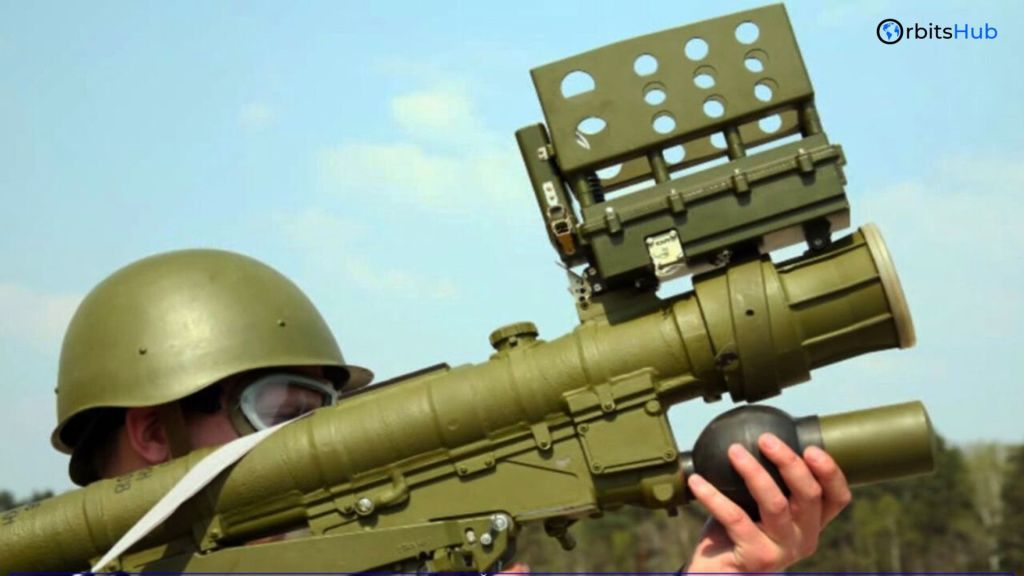
Developed in the Soviet Union, the Igla (meaning “needle” in Russian) is a man-portable air-defense system (MANPADS). Classified under the NATO reporting name SA-18 “Grouse,” the Igla is a shoulder-launched surface-to-air missile (SAM) designed for a single operator to bring down low-flying aerial threats.
Variants of the Igla anti-aircraft missiles

The Igla boasts a rich history with several variants that have developed over the years. Here’s a quick look at the most prominent ones:
- 9K310 Igla-1 (SA-16 Gimlet): This simplified, early version entered service in 1981 and became the foundation for later advancements.
- 9K38 Igla (SA-18 Grouse): The standard production version, adopted in 1983, addressed the limitations of the Igla-1 and is still used by many countries today.
- 9K338 Igla-S (SA-24 Grinch): The latest and most sophisticated variant, the Igla-S boasts an extended range, enhanced seeker for better target acquisition, and improved resistance to countermeasures.
Igla’s Strengths: What Makes it Effective?
The Igla’s effectiveness lies in its unique blend of portability, simplicity, and lethality. Here are some key aspects that make it a formidable air defence solution:
- Man-Portable Design: Unlike bulkier radar-guided systems, the Igla Anti-Aircraft Missiles is lightweight and easily carried by a single soldier. This allows for rapid deployment in diverse environments, making it ideal for ground troops and special forces.
- Ease of Use: The Igla is known for its user-friendly interface. With minimal training, operators can acquire a target, lock on, and launch the missile within seconds. This swift response time is crucial in fast-paced combat situations.
- Infrared Homing Guidance: The Igla utilizes an infrared (heat) seeker to focus on the target’s heat signature. This passive guidance system makes it less susceptible to jamming than radar-guided missiles.
- Destructive Power: The Igla packs a punch. Its high-explosive fragmentation warhead is designed to inflict significant damage on various aerial targets, including fixed-wing aircraft, helicopters, and uncrewed aerial vehicles (UAVs).
Beyond the Battlefield: Applications of the Igla anti-aircraft missiles
While primarily used for military applications, the Igla’s capabilities extend to civilian air defence needs. Here are some potential civilian uses:
- Protecting Sensitive Infrastructure: Airports, nuclear power plants, and other critical infrastructure can benefit from the Igla’s ability to neutralize unauthorized aerial incursions like drones.
- Combating Unmanned Threats: The growing prevalence of rogue drones poses a security threat. The Igla offers a reliable way to counter such threats, safeguarding airspace.
Countering the Igla: Challenges and Countermeasure
This section will delve into the limitations of the Igla system and how potential adversaries might counter its effectiveness. Here are some talking points to consider:
- Limited Range and Altitude: While effective against low-flying aircraft, the Igla’s range and altitude limitations make it less effective against high-flying jets or long-range missiles.
- Susceptibility to Countermeasures: Advanced aircraft can deploy flares or jamming techniques to distract the Igla’s infrared seeker, reducing its hit probability.
- Training Requirements: While user-friendly, optimal Igla operation requires proper training and practice to ensure successful target acquisition and launch.
The Future of MANPADS: Looking Beyond the Igla
This section can explore the ongoing advancements in MANPADS technology and potential future trends that may influence Igla’s role in air defence strategies. Here are some ideas to explore:
- Next-Generation Seekers: Developments in seeker technology could lead to MANPADS with better target discrimination capabilities, making them even more effective against countermeasures.
- Integration with Advanced Systems: Future MANPADS might integrate with other air defence systems, forming a layered defence network for comprehensive airspace protection.
- Focus on Miniaturization and Portability: The trend towards lighter and more portable MANPADS will likely continue, enhancing their tactical flexibility.
The Igla anti-aircraft missile system has established itself as a prominent force in air defence. Its portability, user-friendliness, and effectiveness against various aerial threats make it a valuable tool for military and civilian applications. Air defence systems will also change in response to new technological developments. However, the Igla’s proven capabilities ensure its continued relevance in safeguarding airspace for years.
At OrbitsHub, a leading maritime and aviation consultancy services company, we understand the complexities of air defence. Contact us today to learn more about how OrbitsHub can help you navigate the ever-changing landscape of air defence.