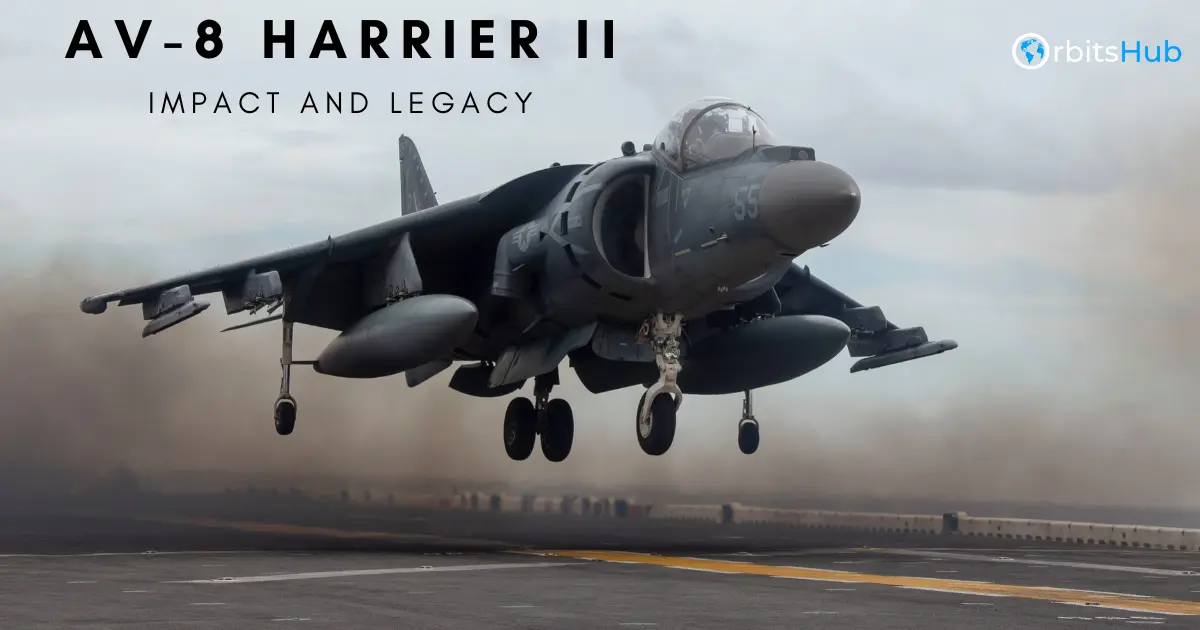
The Harrier AV-8, often called the Harrier Jump Jet, represents a revolutionary leap in aviation history. Known for its vertical/short takeoff and landing (V/STOL) capabilities, the Harrier AV-8 has left an indelible mark on military operations and aviation technology. This delves into the impact and legacy of the Harrier AV-8, exploring its contributions to modern warfare and its enduring influence on aircraft design. As we unfold the significance of this iconic aircraft, you’ll discover why it remains a pivotal piece of aviation history.
The Evolution of the Harrier AV-8
The Harrier AV-8 was developed when traditional aircraft required long runways for takeoff and landing. The innovative design of the Harrier AV-8, with its ability to take off vertically, was a game-changer. This unique feature allowed it to operate in environments where conventional aircraft could not, making it an invaluable asset to the military.
The Birth of the V/STOL Concept
Aircraft that could take off and land vertically or briefly arose from the necessity to accommodate unorthodox runway conditions or forward operating bases. The Harrier AV-8’s design incorporated rotating nozzles that directed thrust downward, enabling vertical takeoff and landing. This groundbreaking innovation allowed the Harrier to perform in previously unimaginable ways.
Operational Impact of the Harrier AV-8
The Harrier AV-8 played a crucial role in several military conflicts, proving its worth repeatedly. Being nimble in close quarters and able to take off and land on improvised airstrips made it a dangerous foe. During the Falklands War, the Harrier AV-8’s performance was particularly noteworthy, as it provided air support for ground forces and played a crucial role in securing victory.
Legacy of the Harrier AV-8
The legacy of the Harrier AV-8 extends far beyond its operational achievements. Its innovative design has influenced the development of subsequent aircraft, particularly in the realm of V/STOL technology.
Influence on Modern Aircraft Design
The Harrier AV-8’s pioneering V/STOL technology has significantly influenced modern aircraft design. Its success demonstrated the feasibility of aircraft not relying on traditional runways, paving the way for future innovations. Aircraft like the F-35B Lightning II, which also features V/STOL capabilities, owe much of their design to the groundbreaking work done on the Harrier AV-8.
Continued Use and Training
Even after decades of service, the Harrier AV-8 remains used by several military forces worldwide. Its enduring presence is a testament to its reliability and effectiveness. Moreover, the aircraft continues to be used in training exercises, preparing new generations of pilots to master its unique capabilities.
The Cultural Impact of the Harrier AV-8
Beyond its technical and operational achievements, the Harrier AV-8 has also made a significant cultural impact. It has been featured in various films, documentaries, and books, further solidifying its place in history.
The Harrier AV-8 in Popular Culture
The Harrier AV-8’s distinctive design and capabilities have captured the imagination of many, making it a popular subject in films and media. Movies like “True Lies” have showcased the Harrier AV-8 in action, bringing its impressive abilities to a broader audience. This cultural representation has helped to maintain the aircraft’s iconic status.
Symbol of Innovation and Adaptability
The Harrier AV-8 has come to symbolize innovation and adaptability, not just in the aviation world but also in broader contexts. A symbol of perseverance and accomplishment in the face of adversity, it can thrive in harsh environments and assume various tasks.
Technological Innovations of the Harrier AV-8

- Advanced Engine Design: The Harrier AV-8 was powered by the Rolls-Royce Pegasus engine, a pioneering design that allowed the aircraft to achieve vertical/short takeoff and landing (V/STOL). This engine featured rotating nozzles that could direct thrust downward for vertical lift or backward for conventional flight, making it one of the most versatile engines of its time.
- Rotating Nozzle System: The unique rotating nozzle system of the Harrier AV-8 was a breakthrough in aviation technology. This system allowed the aircraft to transition seamlessly from vertical to horizontal flight, providing unmatched flexibility in various operational scenarios.
- Lightweight Materials: Using lightweight yet durable materials in the Harrier AV-8’s construction was another technological innovation. This helped balance the aircraft’s structural integrity and its need for agility during vertical takeoffs and landings.
- Integrated Avionics: The Harrier AV-8 also featured advanced avionics systems that enhanced its maritime capabilities. The integration of radar, communication systems, and targeting technology made the Harrier AV-8 a formidable asset in combat.
The Operational Effectiveness of the Harrier AV-8
- Versatile Combat Role: The Harrier AV-8 proved highly effective in various combat roles, including close air support, reconnaissance, and air-to-air combat. Its ability to operate from short, improvised runways made it an invaluable asset in conflict zones where traditional aircraft could not be deployed.
- Success in the Falklands War: One of the most notable demonstrations of the Harrier AV-8’s operational effectiveness was during the Falklands War. The aircraft’s ability to provide continuous air support from improvised airstrips was crucial in achieving victory for British forces.
- Quick Deployment: The Harrier AV-8’s V/STOL capability allowed rapid deployment in areas with limited infrastructure. This capability was instrumental in crises where traditional runways were unavailable or compromised.
- Adaptability in Diverse Conditions: The Harrier AV-8 could perform effectively in various environmental conditions, from deserts to mountainous regions. Its adaptability made it a versatile tool in the military’s arsenal.
Global Deployment and Usage of the Harrier AV-8
- Widespread Adoption: The Harrier AV-8 was adopted by various military forces worldwide, including the United States Marine Corps and the Royal Air Force. Its unique capabilities made it a valuable addition to any military’s aircraft fleet.
- Joint Operations: The Harrier AV-8 was often used in joint operations with allied forces. Its ability to operate from land bases and aircraft carriers made it an essential component of multinational military exercises.
- Training and Simulation: The global deployment of the Harrier AV-8 also led to the developing of specialized training programs and simulation systems. These programs ensured that pilots could master the unique flight characteristics of the Harrier AV-8, regardless of their geographical location.
- Longevity in Service: Despite being introduced in the 1960s, the Harrier AV-8 remained in service for several decades across multiple countries. This longevity is a testament to the aircraft’s enduring value and versatility.
Maintenance and Upgrades of the Harrier AV-8
- Routine Maintenance: Regular maintenance of the Harrier AV-8 was crucial to ensuring its operational readiness. The aircraft’s complex V/STOL capabilities required specialized maintenance procedures to keep it functioning optimally.
- Engine Upgrades: The Harrier AV-8 underwent several engine upgrades to improve its performance over the years. These upgrades focused on enhancing thrust, fuel efficiency, and reliability, allowing the aircraft to remain competitive with newer models.
- Avionics Modernization: The avionics systems of the Harrier AV-8 were continually updated to incorporate the latest technology. This included improved radar, communication systems, and navigation tools, ensuring the aircraft could meet modern combat demands.
- Structural Enhancements: The airframe of the Harrier AV-8 also saw several enhancements over its service life. These enhancements aimed to reduce weight, increase durability, and improve the aircraft’s overall vertical and horizontal flight performance.
Lessons Learned from the Harrier AV-8 in Modern Aviation
- Importance of Versatility: The Harrier AV-8 demonstrated the critical importance of versatility in modern military aircraft. Its ability to perform multiple roles in various environments set a new standard for military aviation.
- Advancements in V/STOL Technology: The success of the Harrier AV-8 led to significant advancements in V/STOL technology. Modern aircraft like the F-35B Lightning II have directly benefited from the lessons learned during the development and operation of the Harrier AV-8.
- Impact on Aircraft Carrier Design: The Harrier AV-8’s ability to take off and land vertically influenced the design of modern aircraft carriers. Smaller carriers supporting V/STOL aircraft became more feasible, allowing for greater flexibility in naval operations.
- Integration of Technology and Training: The Harrier AV-8 highlighted the importance of integrating advanced technology with comprehensive pilot training. Modern V/STOL aircraft follow the same pattern of specialized training necessary for pilots flying the Harrier due to the aircraft’s distinctive flying characteristics.
The Harrier AV-8 is more than just an aircraft; it symbolizes technological innovation, military prowess, and cultural significance. Its impact on modern aviation is undeniable, and its legacy inspires both military and civilian aviation sectors. As we reflect on the contributions of the Harrier AV-8, it is clear that this remarkable aircraft will continue to be remembered as a pioneering force in aviation history.
For more information and to explore our services, visit Orbitshub – a maritime service. Discover how we can assist you with cutting-edge solutions and expert insights.