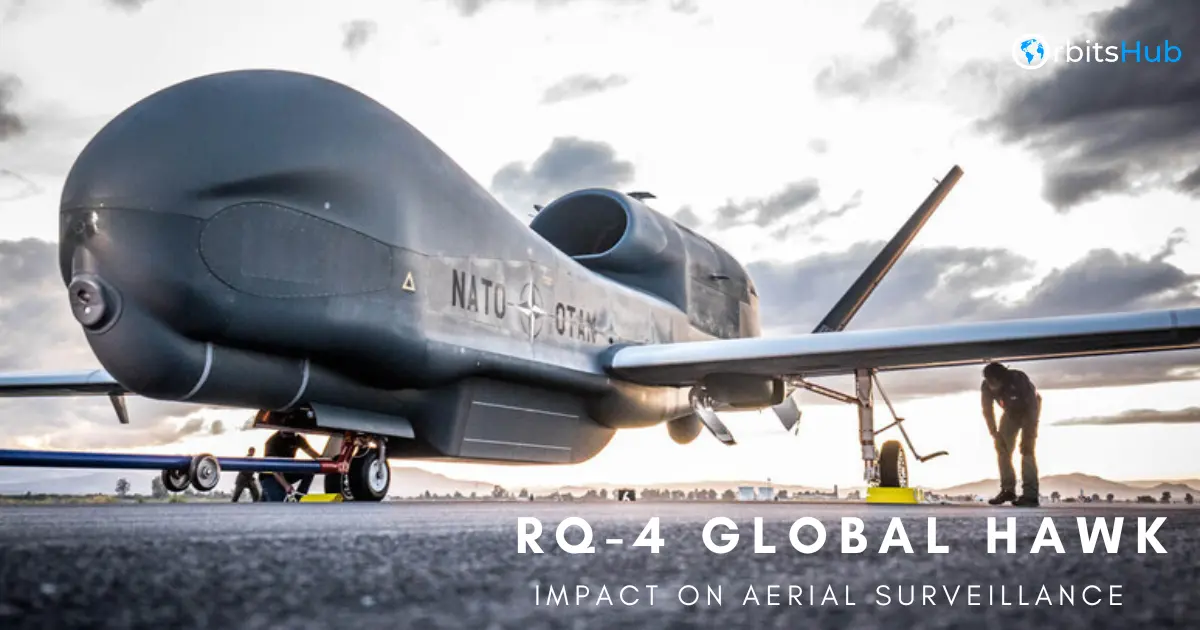
The Global Hawk RQ-4, an advanced uncrewed aerial vehicle (UAV), has significantly transformed aerial surveillance. Designed and developed by Northrop Grumman, this high-altitude, long-endurance (HALE) drone has redefined how military forces gather intelligence, conduct surveillance, and ensure security. With its state-of-the-art technology and unparalleled capabilities, the RQ-4 Global Hawk plays a pivotal role in modern aerial surveillance. We will explore the key features, impact on aerial surveillance, and its importance in global security operations.
Key Features of the RQ-4 Global Hawk
The RQ-4 Global Hawk is renowned for its exceptional features, making it a leader in UAV technology. Some of the standout features include:
- High-Altitude Surveillance: The Global Hawk operates up to 60,000 feet, allowing it to cover vast areas with a single flight. This high-altitude capability ensures the UAV remains out of reach from most ground-based threats.
- Long-Endurance Capability: One of the critical attributes of the RQ-4 is its ability to stay airborne for up to 30 hours. This extended flight duration allows it to conduct continuous surveillance over large geographical areas without frequent refueling or landing.
- Advanced Sensor Suite: The RQ-4 has cutting-edge sensors, including electro-optical, infrared, and radar imaging systems. These sensors provide real-time data and high-resolution images, enabling military personnel to make informed decisions.
- Global Coverage: The Global Hawk is designed to operate in various environments, from arid deserts to icy polar regions. Its adaptability and global reach make it an invaluable asset for surveillance missions worldwide.
- Autonomous Operation: The RQ-4 Global Hawk is capable of autonomous flight, including takeoff, navigation, and landing. This reduces the need for human intervention, minimizing risks associated with human-crewed missions.
Impact of RQ-4 Global Hawk on Aerial Surveillance
The introduction of the RQ-4 Global Hawk has profoundly impacted the field of aerial surveillance. Some of the most significant impacts include:
- Enhanced Intelligence Gathering: The Global Hawk’s ability to provide real-time, high-resolution imagery has greatly improved intelligence gathering efforts. Military forces can now monitor enemy movements, assess battlefield conditions, and identify potential threats with unprecedented accuracy.
- Increased Mission Efficiency: With its long-endurance capability, the RQ-4 can cover more ground in a single mission than traditional surveillance aircraft. This increased efficiency reduces the required missions, saving time and resources.
- Reduced Risk to Personnel: The autonomous operation of the Global Hawk minimizes the need for human pilots in dangerous environments. This has significantly reduced the risk to personnel involved in surveillance missions, making it a safer alternative to manned reconnaissance flights.
- Global Security Enhancement: The RQ-4 Global Hawk’s global reach and adaptability have bolstered international security efforts. It is crucial in monitoring conflict zones, border areas, and maritime regions, contributing to a more secure world.
- Strategic Advantage: The intelligence provided by the Global Hawk gives military forces a strategic advantage. With real-time data, decision-makers can plan and execute operations more effectively, ensuring successful outcomes.
The Importance of RQ-4 Global Hawk in Modern Warfare
The RQ-4 Global Hawk is an indispensable tool for modern warfare in today’s complex global security landscape. Its importance can be highlighted in the following aspects:
- Surveillance and Reconnaissance: The primary function of the Global Hawk is to provide surveillance and reconnaissance support. Its advanced sensors and high-altitude capabilities allow it to gather critical intelligence for mission planning and execution.
- Target Identification: The RQ-4 plays a vital role in identifying and tracking potential targets. Whether monitoring enemy positions or tracking the movement of high-value targets, the Global Hawk provides accurate data crucial for precision strikes.
- Disaster Response and Humanitarian Missions: Beyond military applications, the Global Hawk is also used in disaster response and humanitarian missions. Its ability to survey large areas quickly makes it an effective tool for assessing damage after natural disasters and coordinating relief efforts.
- Maritime Surveillance: The RQ-4 is instrumental in monitoring maritime regions, especially in detecting illegal activities such as piracy, smuggling, and unauthorized fishing. Its presence in international waters helps ensure maritime security and the safety of global shipping routes.
- Future Developments: The RQ-4 Global Hawk is expected to advance as technology evolves. Future iterations include enhanced sensors, longer endurance, and improved autonomy, ensuring it remains at the forefront of aerial surveillance.
Technological Advancements in the RQ-4 Global Hawk
- Enhanced Sensors and Imaging: The RQ-4 Global Hawk can take high-resolution pictures in various settings thanks to its state-of-the-art sensor technology. It covers the whole surveillance region with radar, electro-optical, and infrared sensors.
- Autonomous Navigation: One of the most significant technological advancements in the Global Hawk is its autonomous navigation system. The UAV can perform missions without human intervention, from takeoff to landing, reducing the risk of human error.
- Real-Time Data Transmission: The RQ-4 Global Hawk can transmit real-time data to command centers, allowing immediate analysis and decision-making. This feature is crucial for time-sensitive missions where rapid response is necessary.
- Durability and Endurance: Using lightweight materials and efficient design allows the Global Hawk to stay airborne for up to 30 hours. This long-endurance capability is essential for continuous surveillance over large areas.
Operational Capabilities and Versatility of the Global Hawk
- Multi-Role Functionality: The RQ-4 Global Hawk is not limited to a single type of mission. It can be deployed for various roles, including intelligence gathering, surveillance, and environmental monitoring, making it a versatile tool for military and civilian operations.
- Broad Area Surveillance: With its ability to fly at high altitudes and cover vast geographical areas, the Global Hawk provides comprehensive surveillance over both land and sea. This capability is precious for monitoring border regions, conflict zones, and maritime environments.
- All-Weather Operation: The Global Hawk is design to operate in all weather conditions, including extreme environments such as deserts, polar regions, and tropical areas. Its sensors and systems are resilient to weather-induced challenges, ensuring consistent performance.
- Integration with Other Systems: The RQ-4 can be integrate with other surveillance systems and platforms, enhancing the overall effectiveness of military operations. It can work with satellites, ground-based radar, and other UAVs to provide a complete intelligence picture.
Global Strategic Deployments of the RQ-4

- International Missions: The RQ-4 Global Hawk has been deploy in various international missions, contributing to global security efforts. Its strategic deployments have included operations in the Middle East, Asia-Pacific, and Europe, where it has been instrumental in gathering intelligence and supporting allied forces.
- Humanitarian Assistance: Beyond military applications, the Global Hawk has also been used in humanitarian missions, such as disaster response and environmental monitoring. Its ability to cover large areas quickly makes it ideal for assessing damage and coordinating relief efforts.
- Border Security: The RQ-4 has been deployed to monitor and secure national borders, detecting illegal activities such as smuggling and unauthorize border crossings. Its surveillance capabilities help maintain national security by providing real-time intelligence to border enforcement agencies.
- Maritime Surveillance: The Global Hawk monitors international waters, especially in regions prone to piracy, illegal fishing, and maritime disputes. Its presence in these areas helps ensure the safety of global shipping routes and supports naval law enforcement.
The Role of RQ-4 Global Hawk in Intelligence, Surveillance, and Reconnaissance (ISR)
- Persistent Surveillance: The Global Hawk’s long-endurance capability provides persistent surveillance over critical areas, offering continuous monitoring essential for intelligence, surveillance, and reconnaissance (ISR) operations. This persistence ensures that no activity goes unnoticed.
- High-Precision Targeting: The RQ-4’s advanced sensors enable high-precision targeting, which is critical for identifying and tracking enemy positions. This precision is essential for executing successful military operations with minimal collateral damage.
- Real-Time Intelligence Gathering: The ability of the Global Hawk to transmit real-time data to command centers enhances the effectiveness of ISR missions. This real-time intelligence allows decision-makers to respond swiftly to emerging threats and changing battlefield conditions.
- Force Multiplier: The RQ-4 acts as a force multiplier by providing critical intelligence that supports other military assets. Its ISR capabilities allow for more efficient use of resources, enabling ground, air, and naval forces to focus on strategic objectives.
Comparative Analysis: RQ-4 Global Hawk vs. Other Surveillance Drones
- Range and Endurance: Compared to other surveillance drones, the RQ-4 Global Hawk stands out for its exceptional range and endurance. While many UAVs are limit by shorter flight times, the Global Hawk’s ability to stay airborne for up to 30 hours sets it apart as a leader in long-endurance missions.
- Altitude Capabilities: The Global Hawk’s ability to operate at altitudes of up to 60,000 feet gives it a significant advantage over other drones. This high-altitude capability allows it to cover more ground and stay out of reach of most anti-aircraft systems, making it safer and more effective.
- Payload Capacity: The RQ-4’s large payload capacity allows it to carry multiple sensors and imaging systems, providing a comprehensive suite of surveillance tools. Other drones may offer specialized capabilities, but the Global Hawk’s ability to have diverse sensors makes it more versatile.
- Autonomy and Flexibility: While other surveillance drones may require more human intervention, the RQ-4 Global Hawk’s autonomous capabilities make it highly flexible and reliable. This autonomy reduces the need for constant monitoring and allows for more efficient use of resources.
The RQ-4 Global Hawk has undoubtedly revolutionized aerial surveillance. Its high-altitude, long-endurance capabilities, and advanced sensor suite have made it a cornerstone of modern military operations. From enhancing intelligence gathering to ensuring global security, the impact of the Global Hawk is far-reaching. As technology advances, the RQ-4 will remain a critical asset in the ever-evolving landscape of aerial surveillance.
To learn more about the RQ-4 Global Hawk and other cutting-edge maritime and aerial surveillance technologies, explore Orbitshub – a naval service.