Mahendragiri Warship Set for September 1st Launch
India’s naval capabilities received a significant boost with the launch of the Mahendragiri warship. This technologically advanced vessel is the seventh and final ship of the Nilgiri-class stealth frigates, constructed under Project-17 Alpha. Scheduled to be launched on September 1, Mahendragiri is set to make its mark in the Indian Navy‘s defence indigenization program. Dr. Sudesh Dhankhar, wife of Vice-President Jagdeep Dhankhar, will have the honor of launching the warship at Mazagon Dock Shipbuilders Limited (MDL) in Mumbai. This article delves into the technical details of the Mahendragiri warship, its significance to the Indian Navy, and the advancements in India’s shipbuilding capabilities.
Technical Specifications
The Mahendragiri warship is an engineering marvel, boasting state-of-the-art features and cutting-edge technologies. Here are the key technical specifications of this next-generation stealth frigate:
- Displacement: 6,670 tonnes
- Length: 149 meters
- Width: 17.8 meters
- Draft: 5.22 meters
- Speed: 28 knots
- Range: 10,200 kilometers
- Crew: 226 sailors
- Engines: 2 General Electric LM2500 turbines
The Nilgiri-Class Frigates
The Nilgiri-class frigates are a series of next-generation stealth warships designed to enhance India’s naval capabilities. Mahendragiri is the latest addition to this prestigious fleet, joining its sister ships Nilgiri, Udaygiri, Taragiri, Dunagiri, Vindhyagiri, and Himgiri. These frigates are part of Project-17 Alpha, a program aimed at constructing seven new-generation stealth frigates for the Indian Navy.
Project-17 Alpha: Transforming India’s Naval Defence
Project-17 Alpha, also known as the Nilgiri-class frigate project, represents a significant milestone in India’s naval defence indigenization. This ambitious project involves the construction of seven guided-missile frigates, four of which are being manufactured at Mazagon Dock Shipbuilders Limited (MDL), while the remaining three are being built at Garden Reach Shipbuilders and Engineers (GRSE) in Kolkata. The total cost of the project is estimated to be around Rs 27,500 crore.
The Nilgiri-class frigates are a major leap forward from their predecessors, the Shivalik-class frigates. These new frigates incorporate improved stealth features, advanced weapons and sensors, and cutting-edge platform management systems. The advanced technology and indigenous design of the Nilgiri-class frigates showcase India’s commitment to self-reliance in defence production.
Launching of Mahendragiri: A Testament to India’s Progress
The launch of Mahendragiri marks a significant milestone in India’s journey towards building a self-reliant naval force. This event is a testament to the incredible progress the nation has made in the field of shipbuilding and defence indigenization. The Indian Navy’s focus on indigenous production has led to the development of advanced warships that meet international standards.
Dr. Sudesh Dhankhar, the wife of Vice-President Jagdeep Dhankhar, will have the honor of launching the Mahendragiri warship. The launch ceremony, scheduled for September 1, is a momentous occasion that highlights India’s commitment to technological advancement and self-sufficiency in defence.
The Mahendragiri warship represents a significant milestone in India’s naval capabilities, symbolizing its prowess in maritime defence. Dr Sudesh Dhankhar’s involvement underscores the nation’s recognition of the vital role played by civilian and military sectors in bolstering national security. This historic event is anticipated to garner widespread attention and admiration, showcasing India’s determination to fortify its position as a formidable force in the global arena.

Significance of the Nilgiri-Class Frigates
The Nilgiri-class frigates play a crucial role in strengthening India’s naval capabilities and securing the Indian Ocean Region (IOR). These advanced warships are equipped with state-of-the-art weapons, sensors, and an integrated platform management system. With their improved stealth features, the frigates can operate covertly and counter emerging threats effectively.
The induction of the Nilgiri-class frigates is particularly significant in the current geopolitical scenario, where the power dynamics in the Indian Ocean Region are evolving. The Chinese People’s Liberation Army-Navy (PLAN) has been actively increasing its presence in the region, making it essential for India to bolster its naval forces. The Nilgiri-class frigates provide the Indian Navy with the necessary capabilities to maintain dominance in the region and safeguard national interests.
Advancements in Shipbuilding: Integrated Construction
The speed and efficiency of warship construction have improved significantly with the adoption of integrated construction techniques. This innovative approach involves designing and manufacturing various parts of the ship, such as the hull, superstructure, and internal systems, as separate blocks. These blocks are then seamlessly aligned and integrated to create the entire ship’s structure.
Over the past few years, Indian shipyards have invested in new infrastructure, established efficient supply lines, and implemented advanced technologies to streamline the shipbuilding process. The result is a reduction in construction timelines and improved efficiency in warship production. The Nilgiri-class frigates, including Mahendragiri, have benefited from these advancements, enabling faster delivery and commissioning.
Frequently Asked Questions
INS Mahendragiri is a next-generation stealth warship built by India. It is designed to operate in both coastal and open ocean waters, serving as a powerful asset for the Indian Navy.
INS Mahendragiri is equipped with advanced stealth technology, making it difficult to detect by enemy radars. It has a modern combat management system, integrated bridge system, and state-of-the-art sensors and weapons. The ship also boasts enhanced endurance and high speed for efficient naval operations.
The primary purpose of INS Mahendragiri is to bolster India’s naval capabilities. It serves as a combat vessel capable of undertaking a wide range of missions, including anti-submarine warfare, anti-surface warfare, and surveillance operations.
The stealth technology employed in INS Mahendragiri reduces its radar cross-section, making it less visible to enemy radars. This enhances its ability to operate covertly and increases its survivability in combat situations.
INS Mahendragiri is armed with a variety of advanced weapons systems, including surface-to-air missiles, anti-ship missiles, torpedoes, and close-in weapon systems. These weapons provide the ship with formidable offensive and defensive capabilities.
INS Mahendragiri represents a significant milestone in India’s indigenization efforts in defense manufacturing. Its construction showcases the country’s growing capabilities in designing and building advanced warships, reducing dependence on foreign imports.
INS Mahendragiri was built by the Indian shipbuilding company, Garden Reach Shipbuilders & Engineers (GRSE). It is a testament to India’s commitment to developing its indigenous defense industry.
INS Mahendragiri has a length of approximately 110 meters and a width of around 14 meters. It has a displacement of about 3,500 tons, allowing it to carry a significant payload of weapons, sensors, and equipment.
INS Mahendragiri can accommodate a crew of around 150 personnel, including officers and sailors. It is equipped with modern living quarters and facilities to ensure the well-being of the crew during long deployments.
INS Mahendragiri is expected to play a vital role in the Indian Navy‘s fleet for several decades. It will continue to undergo upgrades and modernization to keep pace with evolving technologies and threats, ensuring its relevance in future naval operations.
INS Mahendragiri’s Role in Modern Naval Warfare
- Multi-Role Capabilities: The INS Mahendragiri is designed to handle various missions, making it a versatile asset in modern naval warfare. Its advanced sensors and weaponry enable it to precisely perform anti-submarine warfare, anti-aircraft warfare, and surface warfare operations.
- Stealth Features: Equipped with state-of-the-art stealth technology, the Mahendragiri can operate undetected in hostile environments, giving it a strategic advantage. This stealth capability is crucial for surprise maneuvers and avoiding detection by enemy forces.
- Network-Centric Warfare: The warship integrates seamlessly with other naval assets through advanced communication and data-sharing systems. This network-centric capability allows for coordinated attacks and real-time information sharing, enhancing the overall effectiveness of maritime operations.
- Power Projection: The Mahendragiri’s robust design and long-range capabilities will enable it to project power far beyond India’s shores. This ability to operate in distant waters is essential for safeguarding national interests and maintaining a presence in critical maritime regions.
Key Technologies Behind Mahendragiri’s Stealth Capabilities
- Radar-Absorbing Materials: Mahendragiri relies on radar-absorbing materials (RAM) as one of its key technologies. By lowering the ship’s radar cross-section, these materials make it harder for adversary radars to detect.
- Integrated Mast Design: The warship features an integrated mast that houses various sensors and communication equipment. This design minimizes the ship’s radar signature by reducing the number of protruding elements that can reflect radar waves.
- Advanced Hull Design: The hull of the Mahendragiri is designed with smooth surfaces and sharp angles to deflect radar waves away from enemy detection systems. This innovative design further enhances the ship’s stealth capabilities.
- Infrared Signature Reduction: The ship incorporates technologies to reduce its infrared signature, making it less visible to infrared sensors. This includes exhaust heat suppression and using coolants in critical areas.
Strategic Importance of the Indian Ocean Region
- Geopolitical Significance: The Indian Ocean Region (IOR) is a critical maritime area, linking major economies and serving as a key route for global trade. The presence of the INS Mahendragiri in this region underscores India’s strategic interest in safeguarding these vital sea lanes.
- Energy Security: Many of the world’s oil and gas supplies pass through the Indian Ocean. Ensuring the security of these maritime routes is essential for global energy security and stability. The Mahendragiri’s deployment helps protect these crucial supply lines.
- Countering Regional Threats: The increasing presence of foreign naval forces, particularly from China, has heightened the strategic importance of the IOR. The Mahendragiri enhances India’s ability to counter potential threats and maintain a balance of power in the region.
- Supporting Regional Allies: The Indian Navy, by deploying ships like the Mahendragiri, plays a crucial role in supporting regional allies and conducting joint maritime operations. This fosters stronger diplomatic and military ties with other nations in the region.
Comparing the Mahendragiri with International Frigates
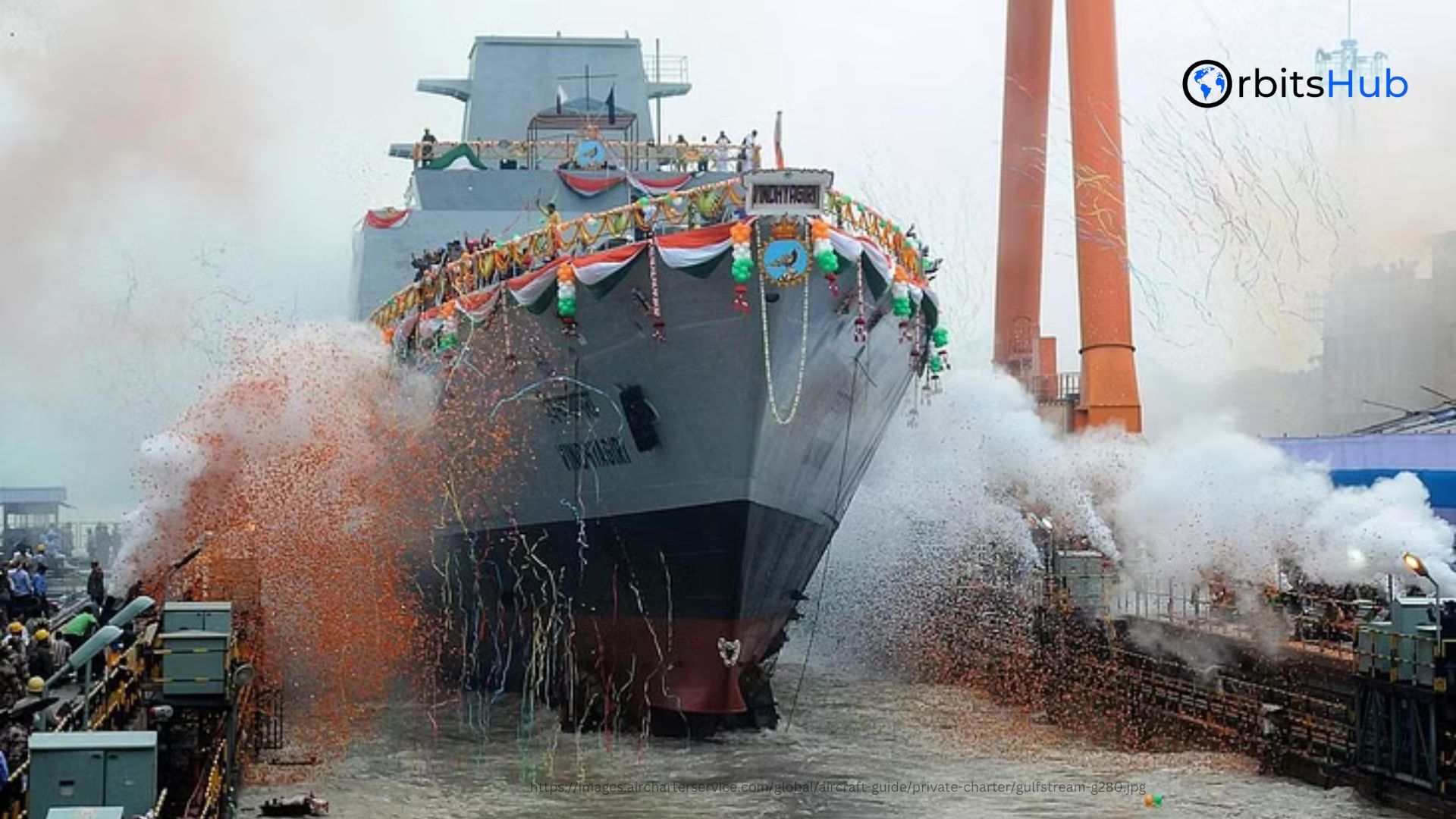
- Technological Parity: The INS Mahendragiri’s advanced features place it on par with some of the best frigates in the world. Its state-of-the-art sensors, weapons systems, and stealth capabilities are comparable to modern frigates from the U.S., Europe, and other leading naval powers.
- Indigenous Design and Production: Unlike many international frigates that rely heavily on foreign technology, the Mahendragiri is largely indigenously designed and built. This self-reliance reduces dependency on external suppliers and enhances national security.
- Cost-Effectiveness: While maintaining high technological standards, the Mahendragiri is produced at a lower cost than similar international frigates. This cost-effectiveness allows India to expand its naval capabilities without excessive expenditure.
- Operational Flexibility: The Mahendragiri’s design incorporates flexibility to accommodate future upgrades and modifications. This adaptability ensures that the ship can remain relevant and effective against evolving threats and technologies.
The Future of India’s Indigenous Warship Production
- Focus on Self-Reliance: The successful construction of the Mahendragiri highlights India’s growing capabilities in indigenous warship production. Future projects will likely continue this trend, reducing reliance on foreign technology and fostering domestic expertise.
- Expansion of Shipbuilding Infrastructure: India is investing in expanding and modernizing its shipbuilding infrastructure. This includes upgrading existing shipyards and developing new facilities to handle more complex and larger-scale projects.
- Innovation in Naval Design: Future warship projects will likely see increased innovation in design and technology, incorporating lessons learned from the Mahendragiri and other recent projects. This will include advancements in stealth, automation, and network-centric warfare capabilities.
- Strategic Partnerships and Exports: India’s growing expertise in warship production opens opportunities for strategic partnerships and exports. Collaborations with other countries could enhance technological exchange and provide economic benefits by selling indigenously produced warships.
Empowering India’s Naval Defense through Indigenous Excellence
The launch of Mahendragiri, the seventh and final warship of the Nilgiri-class frigates, is a significant achievement for India’s naval defence indigenization program. This technologically advanced stealth frigate showcases India’s progress in shipbuilding and self-reliance in defence production. With its cutting-edge features, advanced weaponry, and improved stealth capabilities, Mahendragiri will play a vital role in strengthening India’s naval forces and securing its interests in the Indian Ocean Region. The successful completion of Project-17 Alpha and the construction of the Nilgiri-class frigates highlight India’s commitment to technological advancement, national security, and the vision of an Aatmanirbhar Bharat (Self-Reliant India) in defence manufacturing.
Discover how Orbitshub, a leading maritime and aviation consultancy, can provide you with the latest insights and expert services in the industry. Dive into the world of cutting-edge technology and innovation with Orbitshub today!