A Brief History: From Construction to Renaming
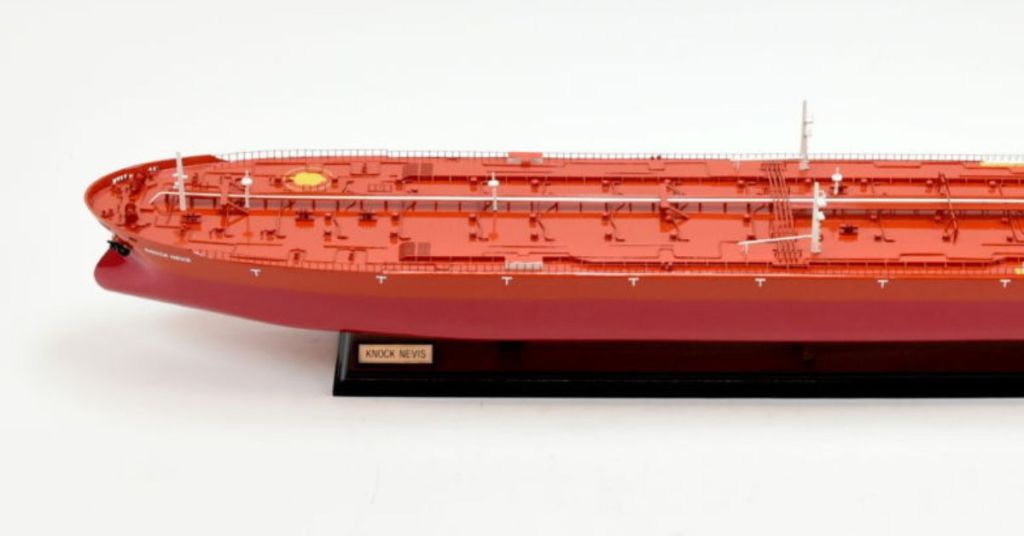
The “Knock Nevis,” formerly known as the “Seawise Giant,” was a massive supertanker and one of the largest ships ever built. It was originally constructed in 1979 by Sumitomo Heavy Industries in Japan. The ship’s name changed over the years due to various ownership changes and mergers in the shipping industry.
At its peak, the Knock Nevis had a length of about 458 meters (1,504 feet), a width of 68 meters (223 feet), and a maximum loaded draft of around 24 meters (79 feet). It had a carrying capacity of over 564,000 tons of deadweight (DWT). The vessel was primarily used for transporting crude oil.
The Knock Nevis gained attention for its sheer size and scale, as well as its role in the shipping industry. It was a part of the Ultra Large Crude Carrier (ULCC) category, designed to transport vast amounts of oil across long distances. However, changes in the oil industry, as well as concerns about the environmental impact and the challenges of maneuvering such a massive ship, led to its eventual retirement.
In 2010, the ship changed hands to a shipbreaking company, which then proceeded to dismantle and scrap it in Alang, India. The process of scrapping such a large vessel took several years to complete.
The Knock Nevis remains a notable example of the engineering feats achieved in the maritime industry and the evolution of shipping technologies.
Prepare to be astonished by the numbers – the Knock Nevis reached dimensions previously unheard of in the maritime world. Stretching an astonishing length of over 1,500 feet, it could easily eclipse well-known landmarks like the Eiffel Tower. This supertanker boasted a cargo capacity that could make your jaw drop, setting records that remain unchallenged to this day. The raw power of its engines further underlined its dominance on the high seas, making it a true leviathan of transportation.
Dimensions:
- Length: The Knock Nevis stretched an astounding 458.45 meters (1,504.10 feet) in length. This is longer than the Eiffel Tower is tall and roughly equivalent to four and a half football fields lined up end to end.
- Beam (Width): The ship’s width reached 68.86 meters (225.9 feet). This is approximately the width of a standard American football field.
- Draft (Depth Below Waterline): Fully loaded, the Knock Nevis sat 24.61 meters (80.7 feet) deep in the water. This immense draft restricted its access to certain waterways.
Capacity:
- Deadweight Tonnage (DWT): The Knock Nevis held the record for the highest deadweight tonnage ever recorded, at a staggering 564,763 tonnes. This means it could carry that much weight in cargo, fuel, ballast water, and crew.
- Cargo Capacity: The ship’s cargo tanks could hold approximately 4.1 million barrels of crude oil. To put this into perspective, that’s enough oil to fill nearly 1,500 Olympic-sized swimming pools!
Propulsion:
- Engine: The Knock Nevis was powered by a single Sumitomo Stal-Laval AP steam turbine with a maximum power output of 50,000 horsepower.
- Speed: Despite its immense size, the ship could reach a respectable speed of 16.5 knots (30.6 km/h or 19.0 mph).
An Engineering Marvel: Overcoming Challenges in Design and Operation
Behind every grand success, challenges are abound. The supertanker’s engineering team faced a myriad of obstacles during its design and operation. Due to its size, it needed unique ballast systems to maintain equilibrium in the stormy ocean. The Knock Nevis skillfully navigated the vessel through small passages and crowded ports, performing like a needle in a storm.
1. Ballast System:
- Challenge: A ship of such immense size needs careful balance to remain stable in rough seas. The Knock Nevis’ vast hull could create a top-heavy effect when not fully loaded with oil.
- Solution: A sophisticated ballast system was implemented. This involved filling various tanks within the hull with seawater to adjust the ship’s center of gravity, ensuring it remained stable and upright even in challenging weather conditions.
2. Maneuverability:
- Challenge: With a length exceeding four football fields, the Knock Nevis wasn’t exactly nimble. Tight turns and maneuvering in confined spaces posed significant difficulties.
- Solution: Powerful bow and stern thrusters were installed. These are essentially propellers mounted sideways that provide additional lateral thrust, aiding in turning and precise maneuvering. Additionally, a highly skilled crew with specialized training was essential for safely navigating the ship.
3. Limited Port Access:
- Challenge: Due to its immense size and deep draft, the Knock Nevis couldn’t enter most standard ports. This severely limited the locations where it could load and unload cargo.
- Solution: The ship often utilized offshore moorings and single-point mooring (SPM) systems. These allowed the Knock Nevis to anchor in deeper waters, where oil could be transferred via floating hoses to smaller tankers that could access standard ports.
4. Stopping Distance:
- Challenge: Bringing a ship of this size to a halt from its cruising speed required a significant distance, even with powerful engines working in reverse.
- Solution: Careful planning of routes and meticulous navigation were crucial. The crew had to anticipate stopping distances well in advance to avoid collisions and ensure safe passage.
The Life and Legacy of the Knock Nevis: A Gamechanger in Global Shipping
The Knock Nevis didn’t merely sail the seas; it reshaped the global trade industry. With its capacity to transport vast quantities of oil in a single voyage, it revolutionized the oil transportation sector. The world watched as it traversed waters, reducing the number of journeys required and cutting costs for oil companies. This floating colossus became a symbol of human achievement, representing the relentless pursuit of innovation in the face of adversity.
A Revolutionary Impact:
- Transforming Oil Transportation: The sheer size and capacity of the Knock Nevis revolutionized the way crude oil was transported. It could carry more oil in a single voyage than several smaller tankers combined, significantly reducing transportation costs and increasing efficiency.
- Economies of Scale: The Knock Nevis exemplified the concept of economies of scale in shipping. Its massive size allowed for lower operating costs per unit of oil transported, making it a cost-effective solution for long-haul oil shipments.
- Strategic Importance: During the Iran-Iraq War in the 1980s, the Knock Nevis played a strategic role in transporting oil from the Persian Gulf, highlighting its importance in global energy markets.
Legacy:
- Engineering Feat: The Knock Nevis remains a testament to human engineering capabilities. Its construction and operation pushed the boundaries of what was considered possible in shipbuilding.
- Record Holder: The ship held multiple world records, including the largest ship ever built by length and deadweight tonnage, records that still stand today.
- Cultural Icon: The Knock Nevis captured the public imagination and became a symbol of human ambition and engineering prowess. It featured in documentaries and articles, solidifying its place in maritime history.
- Impact on Ship Design: While no other ship has surpassed the Knock Nevis in size, its design and operational experiences influenced the development of subsequent generations of supertankers.
End of an Era:
- Scrapping: The Knock Nevis was sold for scrap in 2009 and dismantled in 2010. Its demise marked the end of an era of ultra-large crude carriers (ULCCs). Changes in oil transportation patterns and environmental concerns led to a shift towards smaller, more versatile tankers.
Farewell to an Icon: The Demise and Final Journey of the Knock Nevis

As time marched forward, the Knock Nevis reached the end of its illustrious career. The retirement process of such a monumental vessel was no small task. Scrapping procedures, while necessary, marked the end of an era. They dismantled the behemoth that had once ruled the seas piece by piece, leaving behind a bittersweet sentiment. Yet, its legacy endures, etched in the history books and the memories of those who marveled at its might.
Reflecting on the Remarkable Journey of the Knock Nevis
The Knock Nevis narrative showcases human ingenuity and tenacity throughout maritime history. The Seawise Giant’s rise from humble beginnings to the world’s largest supertanker illustrates our relentless pursuit of maritime dominance and promise. As we reflect on its incredible journey, we remember that ships are made of steel, but human aspiration and advancement weave their narrative.