Shanghai Waigaoqiao Shipbuilding Dry Dock (China)
Taking the top spot as the largest dry dock globally is the Shanghai Waigaoqiao Shipbuilding Dry Dock, located on the Changxing Island in China. With an awe-inspiring length of 420 meters, this colossal facility has become a symbol of China’s ambition in shipbuilding. It has the capacity to accommodate massive ships, including ultra-large container vessels, supertankers, and even aircraft carriers. The Shanghai Waigaoqiao Shipbuilding Dry Dock showcases China’s determination to lead the world in maritime infrastructure.
Geoje Shipyard Dry Dock (South Korea)
Situated on Geoje Island, South Korea, the Geoje Shipyard Dry Dock claims the second spot on our list, boasting a length of 400 meters. Operated by Samsung Heavy Industries (SHI), this dry dock has played a vital role in constructing some of the largest container ships, oil tankers, and drilling rigs in the world. It has been instrumental in South Korea’s rise as a global maritime powerhouse.
Dry Dock, Port of Suez (Egypt)
Heading to the African continent, we find the No. 4 Dry Dock at the Port of Suez, Egypt. As the largest dry dock in Africa, it stretches across an impressive length of 393 meters. This dry dock has been instrumental in supporting Egypt’s maritime industry, facilitating the maintenance and repair of various vessels, including naval ships and commercial carriers. It plays a vital (V) role in maintaining the smooth flow of goods through the Suez Canal.
Keppel Shipyard, Tuas (Singapore)
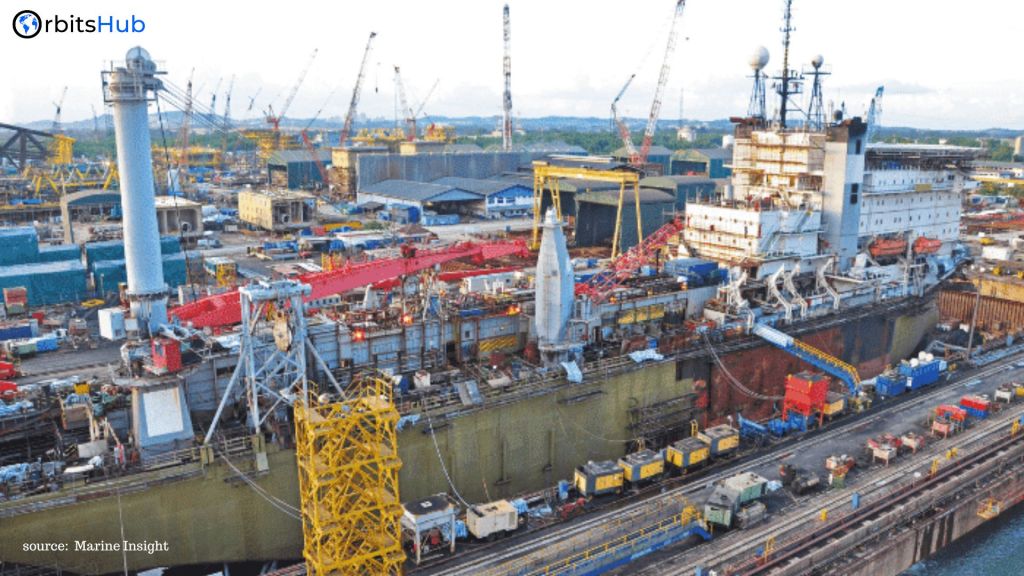
Known for its bustling maritime sector, Singapore is home to the Keppel Shipyard Dry Dock. With a length of 380 meters, it secures its place as the fourth-largest dry dock on our list. The Keppel Shipyard offers a wide range of services, including ship repair, conversion, and upgrading works. It has successfully handled numerous major projects, including the construction of floating production storage (S) and offloading vessels, solidifying Singapore’s position as a leading maritime hub.
Hefei Shipyard Dry Dock (China)
Returning to China, the Hefei Shipyard Dry Dock stands tall with a length of 380 meters. This dry dock exemplifies China’s determination to become a global shipbuilding powerhouse. Its expansive size enables the simultaneous construction and repair of multiple large vessels. The Hefei Shipyard Dry Dock is a testament to China’s commitment to innovation and technological advancement in the maritime industry.
Fincantieri Dry Dock, Palermo (Italy)
Located in Palermo, Italy, the Fincantieri Dry Dock claims the sixth spot on our list with a length of 374 meters. This dry dock exemplifies European engineering excellence and has catered to the repair and maintenance needs of various ship types, including cruise ships, container vessels, and offshore units. Fincantieri’s expertise has contributed significantly to Italy’s shipbuilding and repair capabilities.
Hyundai Heavy Industries (HHI) Dry Dock, Ulsan (South Korea)
Ulsan, South Korea, houses the Hyundai Heavy Industries Dry Dock, a vital component of HHI’s extensive shipbuilding and repair complex. With a length of 365 meters, it stands as one of the largest dry docks worldwide. This facility’s strategic location has played a significant role in South Korea’s prominence in the global maritime industry. It has been instrumental in constructing and maintaining a wide range (R) of vessels, including bulk carriers, liquefied natural gas (LNG) carriers, and offshore facilities.
Subic Dry Dock, Subic Bay (Philippines)
Nestled in Subic Bay, the Subic Dry Dock is a prominent facility in the Philippines. With a length of 350 meters, it has played a crucial role in the repair and maintenance of various vessels, including naval ships, cargo carriers, and cruise liners. The Subic Dry Dock has significantly contributed to the country’s maritime industry and the growth of its economy. It serves as a testament to the Philippines’ capabilities in ship repair and maintenance.
Lloyd Werft Dry Dock, Bremerhaven (Germany)
The Lloyd Werft Dry Dock, located in the historic port city of Bremerhaven, Germany, secures the ninth position on our list with a length of 345 meters. This dry dock has been a vital hub for the repair and refurbishment of diverse vessels, including luxury yachts, offshore structures, and even naval frigates. The Lloyd Werft Dry Dock showcases Germany’s expertise in shipbuilding and maintenance.
Norfolk Naval Shipyard Dry Dock (United States)
Rounding out our list is the Norfolk Naval Shipyard Dry Dock, situated in Portsmouth, Virginia, United States. With a length of 335 meters, this dry dock plays a crucial role in the maintenance, repair, and modernization of the United States Navy’s fleet. It has contributed significantly to the nation’s defense capabilities and maritime supremacy. The Norfolk Naval Shipyard Dry Dock exemplifies the United States’ commitment to ensuring the readiness of its naval forces.
The Role of Dry Docks in Modern Shipbuilding
- Construction of Large Vessels:
- Dry docks provide a controlled environment crucial for constructing massive ships, such as ultra-large container vessels (ULCVs) and supertankers.
- They allow for the precise assembly of hulls, installation of engines, and fitting of complex systems, ensuring structural integrity and functionality.
- Maintenance and Repair :
- Dry docks offer the space and infrastructure needed to undertake comprehensive overhauls, from hull cleaning and repainting to machinery upgrades and retrofitting.
- This maintenance is essential for meeting safety regulations, improving fuel efficiency, and ensuring vessels are seaworthy.
- Conversion Projects:
- Another essential function of dry docks is the transformation of oil tankers into FPSO units.
- These conversions require significant structural modifications, which can only be accomplished in the controlled setting of a dry dock.
- Innovation and Testing:
- As shipbuilding technology evolves, dry docks are testing grounds for new designs, materials, and construction techniques.
- They allow for the assembly and inspection of innovative ship features, such as new propulsion systems or advanced hull shapes, before they are deployed in open waters.
A Closer Look at Asia’s Dominance in Dry Dock Size
- Strategic Investments:
- Some nations, like South Korea and China, have invested much money into their maritime infrastructure, making them the go-to places for shipbuilding and repair.
- The construction of large dry docks is a strategic move to attract global shipowners seeking efficient and capable facilities.
- Capacity to Handle Giant Vessels:
- Asian dry docks are designed to accommodate the largest vessels, including ultra-large container ships and massive oil tankers.
- This capability is crucial as global trade increasingly relies on large-scale shipping for efficiency and cost-effectiveness.
- Technological Advancements:
- The region’s shipyards incorporate cutting-edge technology, enhancing their ability to undertake complex projects.
- This includes automated hull cleaning systems, advanced heavy-lifting cranes, and sophisticated water management systems.
- Skilled Workforce:
- Asia’s dominance is also attributed to a highly skilled workforce specializing in shipbuilding and maritime engineering.
- Continuous training and a strong emphasis on technical education ensure a steady supply of qualified personnel.
- Government Support:
- Supportive government policies and incentives in countries like China and South Korea encourage the growth of the shipbuilding industry.
- This support includes subsidies, tax incentives, and investment in related infrastructure, such as ports and logistics facilities.
The Significance of Dry Docks in Global Trade

- Ensuring Vessel Readiness:
- Dry docks are critical in ensuring that seaworthy vessels comply with international safety standards.
- Regular maintenance and inspections conducted in dry docks help prevent accidents and delays in global shipping routes.
- Minimizing Downtime:
- By enabling rapid and efficient repairs, dry docks minimize the downtime of vessels, which is crucial for maintaining the smooth flow of global trade.
- This efficiency helps shipping companies meet tight schedules and avoid costly delays.
- Supporting a Diverse Fleet:
- Dry docks cater to various vessels, from bulk carriers and tankers to passenger ships and specialized offshore units.
- This versatility ensures that all types of cargo, from raw materials to consumer goods, can be transported reliably.
- Economic Impact:
- The maritime industry significantly contributes to the global economy, and dry docks are vital to this ecosystem.
- They support thousands of jobs in shipbuilding, maintenance, and ancillary services, driving economic growth in port cities and beyond.
- Environmental Compliance:
- Dry docks help shipowners comply with environmental regulations, such as ballast water management and emissions control.
- This compliance is increasingly important as the global shipping industry faces stricter environmental standards.
Innovations and Future Trends in Dry Dock Technology
- Automation and Robotics:
- Integrating automation and robotics in dry docks is revolutionizing shipbuilding and maintenance processes.
- Automated systems can perform welding, painting, and hull cleaning with precision and efficiency, reducing labor costs and improving quality.
- Green Technologies:
- As the maritime industry faces pressure to reduce its environmental footprint, dry docks are adopting green technologies.
- Innovations include systems for managing hazardous waste, eco-friendly coatings, and energy-efficient lighting and machinery.
- Digitalization and Data Analytics:
- Using digital twins and advanced data analytics in dry docks enhances project planning and execution.
- These technologies allow for better monitoring of ship conditions, predictive maintenance, and optimized resource allocation.
- Modular Construction:
- Modular construction techniques are gaining traction, allowing for parts of ships to be built off-site and assembled in dry docks.
- This method speeds up construction times, reduces costs, and improves quality control.
- Adapting to New Ship Designs:
- Dry docks are evolving to accommodate new ship designs, such as those with innovative hull shapes or alternative propulsion systems like LNG or hydrogen.
- This adaptability ensures that dry docks can continue to meet the needs of the maritime industry as it evolves.
Environmental Considerations in Dry Dock Operations
- Pollution Control:
- Dry docks are implementing measures to control pollution, such as wastewater treatment systems and air filtration units.
- These systems help manage pollutants released during ship maintenance, such as paint chips, oil residues, and hazardous materials.
- Waste Management:
- Effective waste management practices are crucial in dry docks to handle the by-products of ship repair and construction.
- This includes recycling materials like metal and minimizing hazardous waste through safe disposal and treatment methods.
- Energy Efficiency:
- Energy management systems, solar panels, and LED lights are some energy-efficient technologies that dry docks often install.
- These measures reduce the carbon footprint of dry dock operations and contribute to overall sustainability goals.
- Water Usage and Conservation:
- Dry docks consume large amounts of water for various processes, including cleaning and cooling.
- Innovations like water recycling systems and closed-loop water management help reduce water consumption and protect marine ecosystems.
- Compliance with Environmental Regulations:
- As global environmental regulations become stricter, dry docks increasingly focus on compliance to avoid fines and reputational damage.
- This necessitates conformity with national and international environmental regulations, such as MARPOL (the International Convention for the Prevention of Pollution from Ships).
- Dry docks are awe-inspiring engineering achievements that play a vital role in the maritime industry. The top 10 largest dry docks in the world, including the Shanghai Waigaoqiao Shipbuilding Dry Dock and Geoje Shipyard Dry Dock, demonstrate not only their colossal size but also their impact on global trade and the maritime sector. These dry docks act as centers of excellence, enabling the construction, repair, and maintenance of the largest and most sophisticated vessels in the world. As technology advances and the demand for larger ships grows, dry docks will continue to evolve, adapting to the changing needs of the maritime industry. They represent the ingenuity and determination of nations to excel in maritime infrastructure, ultimately shaping the future of global trade and navigation.