India, a nation renowned for its military prowess and strategic capabilities, has recently made significant strides in strengthening its air power. One of the key highlights has been the deployment of the MiG-29 fighter jet, a formidable aircraft known for its exceptional performance and combat capabilities. This article delves into the fascinating world of the MiG-29 fighter jet in India, exploring its role in safeguarding national security and enhancing its strategic reach.
The Evolution of the MiG-29 Fighter Jet
The MiG-29, also known as the Mikoyan MiG-29, is a single-seat, twin-engine air superiority fighter aircraft developed by the Soviet Union. Over the years, it has earned a reputation as a highly maneuverable and versatile fighter jet, capable of engaging multiple targets simultaneously. Its inception can be traced back to the 1970s when the Soviet Union sought to counter the advanced fighter aircraft developed by Western powers.
The MiG-29, designed by the Mikoyan Design Bureau, first entered service with the Soviet Air Force in 1982. It quickly gained international recognition for its agility, speed, and advanced avionics. With a top speed exceeding Mach 2.25, the MiG-29 became a formidable adversary in air-to-air combat scenarios. Its distinct features include a high-mounted swept wing, twin vertical tailfins, and a unique intake design. Beyond its air-to-air capabilities, the MiG-29 has been adapted for various roles, including ground attack and reconnaissance, making it a versatile asset for air forces worldwide.
India’s Acquisition of the MiG-29
India acquired the MiG-29 fighter jet to bolster its defense capabilities and incorporated it into the Indian Air Force (IAF). Procuring the MiG-29s marked a significant milestone for India, strengthening the country’s air power and showcasing its commitment to national security. Putting the MiG-29s in key spots, like the Srinagar air base, has been very important for protecting India’s borders and keeping possible threats away.
Role of the MiG-29 in Safeguarding India’s Borders

A Historical Milestone: Landing on INS Vikrant
A single-engine light combat demonstrator successfully landed on India’s first indigenous aircraft carrier, INS Vikrant. This achievement proves India’s ability to independently plan, design, build, and operate aircraft carriers with its fighter aircraft. The successful completion of compatibility testing onboard INS Vikrant demonstrates the MiG-29 fighter jet‘s smooth adaptation to the aircraft carrier.
This milestone marks a significant advancement in India’s defense capabilities, showcasing the nation’s technological prowess and self-reliance in naval aviation. Integrating the MiG-29 fighter jet onto the INS Vikrant bolsters India’s maritime strength and underscores the nation’s commitment to enhancing its indigenous military capabilities. The successful landing on the aircraft carrier signifies a crucial step forward in achieving operational readiness and strategic flexibility for the Indian Navy.
Tackling Threats from Pakistan and China
The deployment of the MiG-29 fighter jets in the Srinagar air base is a strategic move by the Indian Navy to counter threats from both Pakistan and China. Srinagar’s geographical location, situated in the center of the Kashmir valley and at a higher elevation than the plains, necessitates the presence of an aircraft with a higher weight-to-thrust ratio and less response time. The MiG-29 fulfills these criteria, effectively equipping India to tackle threats on both fronts.
Enhanced Combat Capabilities
The MiG-29 fighter plane boasts numerous advantages over its predecessor, the MiG-21. Equipped with very long-range air-to-air missiles and air-to-ground weaponry, the upgraded MiG-29 is a force to be reckoned with. Its night vision capabilities, more extended range due to air-to-air refueling, and inclusion of air-to-ground armament make it a formidable asset in combat situations. The pilots selected by the Indian Air Force to fly these aircraft further enhance their capabilities and ensure optimal performance.
Response to Chinese Aggression
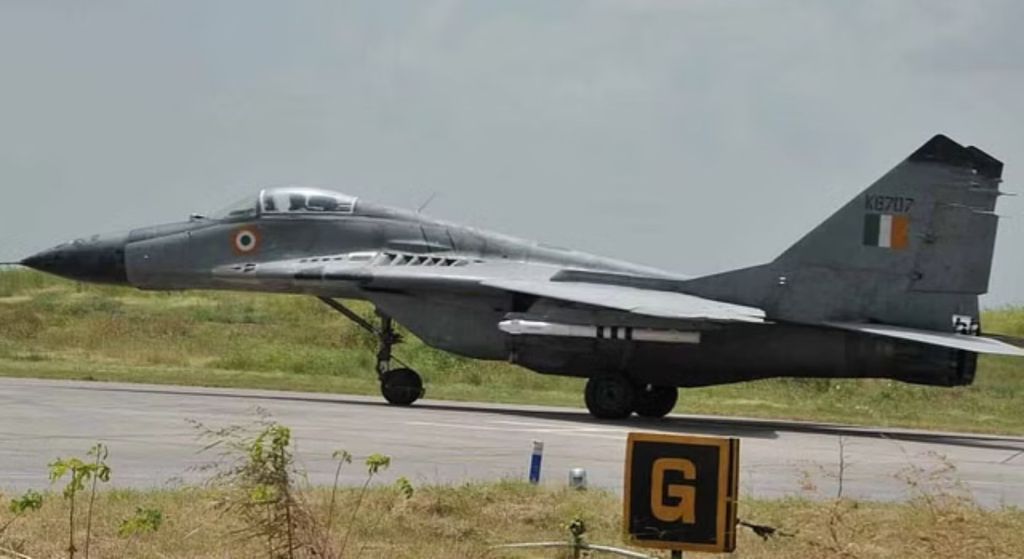
Following the Galwan clash in 2020, the MiG-29s were the first aircraft to be deployed in the Ladakh sector to counter the threat from China. Their presence has been instrumental in thwarting multiple attempts at airspace violations by the Chinese, showcasing India’s determination to protect its territorial integrity. The MiG-29s have played a vital role in maintaining stability and deterring potential aggression in the region.
Additionally, the swift deployment of the MiG-29s underscored India’s commitment to bolstering its defence capabilities in response to evolving security challenges along the Line of Actual Control (LAC). With their exceptional manoeuvrability and combat capabilities, these aircraft have bolstered India’s aerial superiority in the Ladakh region, sending a clear message of readiness to defend its sovereignty. Their presence is a visible deterrent, signalling India’s preparedness to safeguard its borders and respond decisively to provocation, thus contributing significantly to regional stability.
Future Prospects and Indigenous Development
While acquiring foreign-made fighters has been crucial in bolstering India’s defense capabilities, the country is also committed to indigenous development. The Aeronautical Development Agency, under the purview of the Defense Research and Development Organization, has been working on the development of twin-engine, deck-based fighter jets. These fighter jets, expected to enter service by 2032, will strengthen India’s naval capabilities and reduce dependence on foreign-made aircraft.
FAQ’s
1. What is the MiG-29 Fighter Jet?
The MiG-29 is a high-performance, twin-engine air superiority fighter jet developed by the Soviet Union, now known as Russia. It has cutting-edge avionics and weaponry and can perform air-to-air and air-to-ground missions.
2. Why did India choose the MiG-29?
India chose the MiG-29 due to its superior maneuverability, advanced technology, and robust combat capabilities. The aircraft has been a cornerstone of the Indian Air Force’s fleet, serving as an effective deterrent and strengthening the nation’s defense capabilities.

3. What are the key features of the MiG-29?
The MiG-29 has a powerful radar system, a wide range of guided missiles, and a top speed of Mach 2.25. Its advanced aerodynamics and thrust-vectoring engines allow for high agility and excellent dogfighting capabilities.
4. How has the MiG-29 contributed to India’s defense?
The MiG-29 has played a significant role in enhancing India’s air defense and combat capabilities. It has successfully protected the nation’s airspace in many operations.
5. Are there any upgrades planned for the MiG-29 in India?
Yes, India has been working on upgrading its fleet of MiG-29 jets. The upgrade program aims to enhance the aircraft’s avionics, radar systems, and weapons capabilities, ensuring that it remains a formidable force in the Indian Air Force for years to come.
6. Is MiG-29 better than MiG-21?
After the upgrades, the MiG-29 has been equipped with very long-range air-to-air missiles and air-to-ground weaponry. -The upgraded MiG-29 aircraft can operate at night with night vision goggles and has a more extended range due to air-to-air refueling capability.
7. Which is better, MiG-29 or Rafale?
Mig 29k is far better in range, armaments, and speed than the Chinese J10. MORAL: Mig 29k has been recently upgraded, and it can serve the needs of INDIAN NAVY. It is also cheaper than the F18 and Rafale. After all, it is a twin-engine 4++ generation all-weather multirole fighter jet.
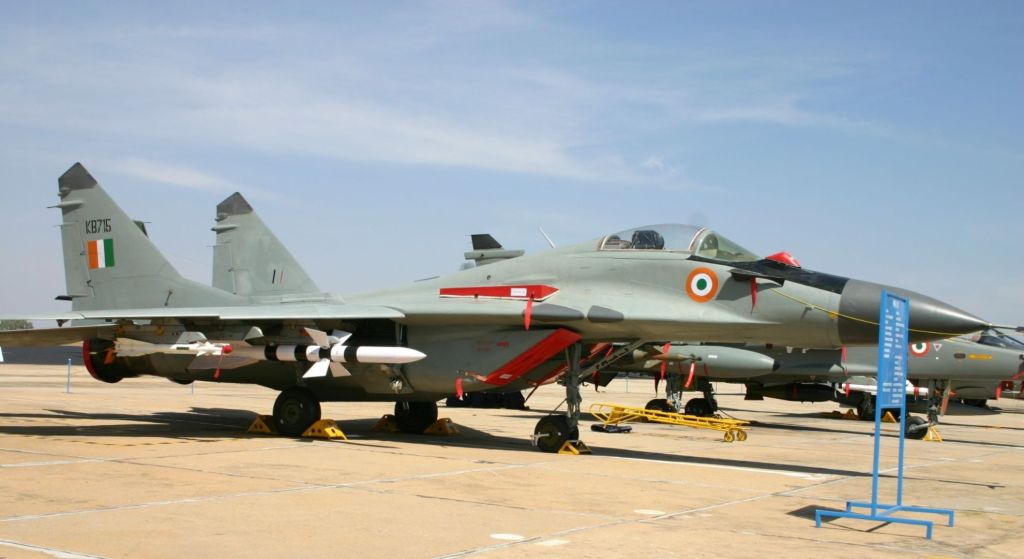
The deployment of the Mikoyan MiG-29 fighter jet in India has significantly enhanced the country’s air power and strategic reach. With its exceptional combat capabilities, the MiG-29 has played a pivotal role in safeguarding India’s borders and deterring potential threats. As India continues to invest in indigenous development and strengthen its defense capabilities, the MiG-29 will remain a symbol of power. And a testament to India’s commitment to national security.
Additional Information: India’s MiG-29 fighter jet represents its commitment to national security and defense strengthening. Its deployment in crucial sites like Srinagar air base shows India’s readiness to face Pakistan and China. Twin-engine, deck-based fighter jets developed in India demonstrate the country’s efforts to lessen its dependence on foreign aircraft. And increase its defense technology self-reliance. The MiG-29’s combat capability and Indian Air Force pilots’ competence keep it a viable defense weapon.