The Cold War era was a time of intense rivalry between the United States and the Soviet Union. This competition extended beyond politics and ideology into technological advancements in military aviation. The Soviet Union, in particular, became known for producing some of the most formidable fighter jets of the 20th century. These aircraft were not only symbols of Soviet technological prowess but also critical components in the broader strategy of maintaining a balance of power during a period of global tension. This article explores some of the most notable Soviet-era fighter jets that became icons of Cold War aviation.
The Birth of Soviet Fighter Jets
The Mig-15: A Revolutionary Jet Fighter
The Mikoyan-Gurevich MiG-15, introduced in 1949, was a game-changer in military aviation. Among the first effective jet fighters to use swept wings, it significantly improved its speed at high speeds. The MiG-15 quickly became a cornerstone of the Soviet Air Force and saw extensive combat during the Korean War, pitting it against American aircraft like the F-86 Sabre.
The MiG-15’s design was influenced by captured German technology and powered by a reverse-engineered Rolls-Royce Nene engine obtained from Britain under questionable circumstances. Its armament, including a 37mm cannon and two 23mm cannons, made it a formidable dogfighter opponent. The MiG-15’s success established the Soviet Union as a serious contender in jet aircraft technology and laid the foundation for developing more advanced fighter jets.
The MiG-17: Building on Success
Following the success of the MiG-15, the Soviet Union introduced the MiG-17 in 1952. Although it appeared similar to its predecessor, the MiG-17 was a more advanced aircraft with improved aerodynamics, better maneuverability, and a more powerful engine. It also featured an afterburner, which significantly boosted its speed and performance.
The MiG-17 saw combat in various conflicts, most notably during the Vietnam War, where North Vietnamese forces used it against American aircraft. Despite being an older design compared to the U.S. jets of the time, the MiG-17’s agility made it a formidable adversary. Its service life extended well into the late 20th century, with several countries continuing to use upgraded versions.
The Pinnacle of Soviet Fighter Jet Development
The MiG-21: The Iconic “Fishbed”
Perhaps the most iconic Soviet-era fighter jet, the Mikoyan-Gurevich MiG-21, known by its NATO codename “Fishbed,” became synonymous with the Cold War. Introduced in 1959, the MiG-21 was a lightweight, highly maneuverable interceptor designed for high-speed combat. After more than 11,000 were manufactured, it surpassed all other supersonic jet aircraft in production.
The MiG-21 was a versatile aircraft used by air forces worldwide. Its delta wing design allowed for high speeds and excellent climb rates, making it a formidable opponent in air-to-air combat. The jet was armed with a 23mm cannon and could carry a variety of air-to-air missiles, making it a lethal presence in the skies.
The MiG-21 saw action in numerous conflicts, including the Six-Day War, the Vietnam War, and various Middle Eastern conflicts. Its simplicity, reliability, and effectiveness made it a favorite among pilots and ensured its legacy as one of the most essential fighter jets of the Cold War era.
The MiG-23: A Swing-Wing Marvel
As air combat evolved, so did the demands on fighter jets. The Mikoyan-Gurevich MiG-23, introduced in the early 1970s, responded to the need for a more versatile aircraft that could perform well in both high-speed interception and ground attack roles. The MiG-23 featured variable-sweep wings, allowing it to adjust its wing configuration for optimal performance in different flight conditions.
The MiG-23 was equipped with advanced avionics for its time, including powerful radar and beyond-visual-range (BVR) missile capabilities. Its primary armament included a 23mm cannon and a range of air-to-air and air-to-ground missiles. The swing-wing design made the MiG-23 highly adaptable, able to take off from short runways and achieve high speeds in combat.
The MiG-23 saw service with numerous Soviet allies and was involved in various conflicts throughout the 1970s and 1980s. While it was eventually overshadowed by more advanced aircraft, the MiG-23’s innovative design and versatility secured its place in the history of Soviet aviation.
The Su-27: A New Generation of Air Superiority
The Sukhoi Su-27, introduced in the 1980s, represented a significant leap forward in Soviet fighter jet design. Developed as a direct response to the American F-15 Eagle, the Su-27 was designed to achieve air superiority through superior maneuverability, speed, and firepower. It featured a twin-engine design, advanced avionics, and a large payload capacity.
The Su-27’s agility was one of its most notable features, with its ability to perform advanced aerial maneuvers such as the “Pugachev’s Cobra,” a dramatic maneuver that showcased the aircraft’s exceptional pitch control. The Su-27 was armed with a 30mm cannon and could carry a wide array of air-to-air missiles, making it a deadly dogfighter opponent.
The Su-27’s development marked a shift in Soviet aviation strategy, focusing on producing aircraft that could match and potentially exceed Western counterparts’ capabilities. The Su-27’s design was the foundation for a family of aircraft, including the Su-30, Su-33, and Su-35, all of which remain critical components of Russia’s air force today.
The Legacy of Soviet Era Fighter Jets
Influence on Global Aviation
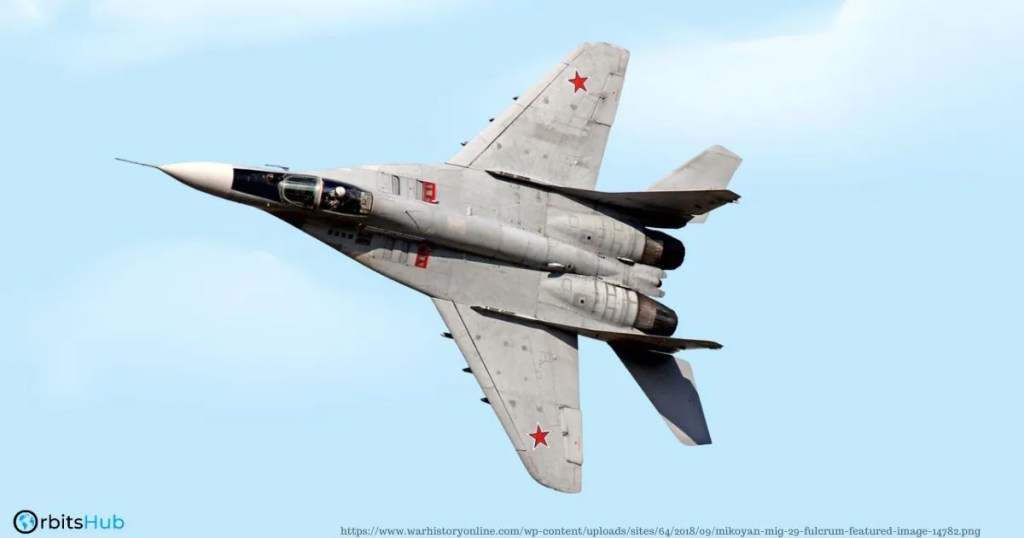
Soviet-era fighter jets profoundly impacted global aviation, shaping the design and development of military aircraft worldwide. The innovations introduced by these jets, such as swept wings, delta wings, and variable-sweep wings, influenced aircraft design far beyond the Soviet Union. Soviet fighter jets were widely deployed in regional battles and wars of independence across Asia, Africa, and the Middle East. Many countries in the region adopted these planes.
The widespread use of Soviet jets also led to the development of countermeasures and tactics by Western forces, resulting in an ongoing technological arms race. This period of aviation history highlights the significant role that Soviet-era fighter jets played in maintaining the balance of power during the Cold War.
Continued Use and Modernization
Many Soviet-era fighter jets remain in service today, either in their original form or upgraded versions. Countries with limited defense budgets have continued to operate and modernize these jets, taking advantage of their robust design and relatively low cost. The MiG-21, for example, is still in use by several air forces, with modernized avionics and weapon systems.
The legacy of these aircraft is preserved in museums. They serve as a reminder of the technological advancements and geopolitical tensions of the Cold War era in airshows. Their continued use and modernization underscore their enduring relevance in military aviation.
The Soviet Union’s contribution to military aviation during the Cold War era was extraordinary. The Soviet Era fighter jets produced during this time were not only technological marvels but also symbols of a superpower’s determination to maintain its influence on the global stage. From the revolutionary MiG-15 to the advanced Su-27, these aircraft played a pivotal role in shaping military aviation history.
As we reflect on the legacy of Soviet-era fighter jets, It is clear that their impact extends far beyond their time. They continue to influence modern aircraft design and remain a significant part of the military aviation landscape. For those interested in exploring these iconic jets’ fascinating history and technology, Orbitshub offers comprehensive maritime services that delve into the details of Cold War aviation and beyond.