The Journey of the Port of Belledune
In 1968, the Port of Belledune was established to cater to the shipping needs of the Noranda Smelter (now known as Glencore). Over the years, the port has grown from a singular terminal facility to a four-terminal port, enhancing its role in the region’s economy.
The Port of Belledune has undertaken three pivotal expansions in 1995, 1998, and 2010, each opening new avenues for port operations and organizational structure. The second expansion, in particular, introduced Terminal III, a state-of-the-art infrastructure designed to handle a broad spectrum of general cargo, thus sparking diversification of port operations.
The Belledune Port Authority (BPA)
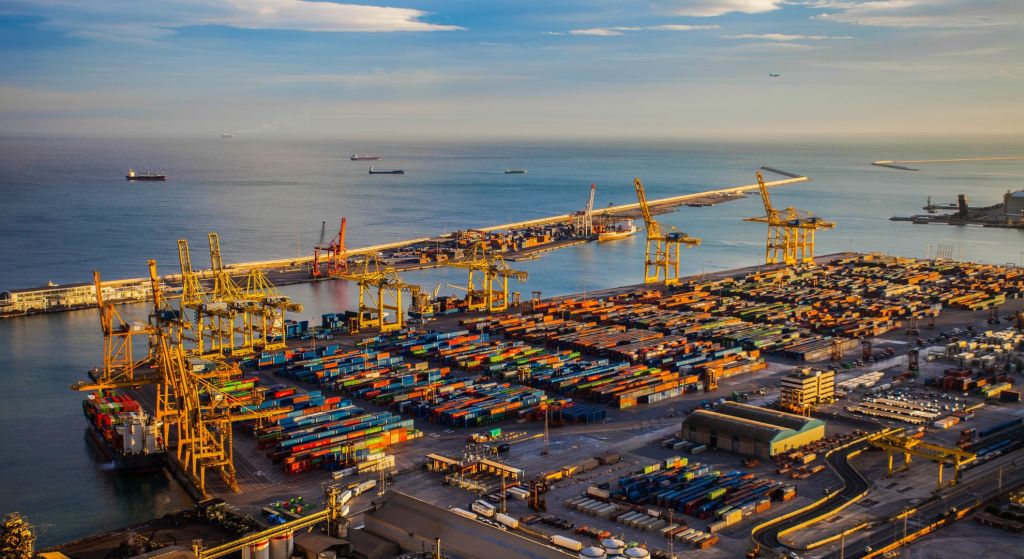
The establishment of the Belledune Port Authority (BPA) in the year 2000 was a watershed moment in the port’s history. The BPA, led by a local Board of Directors and management team, took over all operations at the Port of Belledune. This local control allowed for quicker, merit-based decision-making, dramatically impacting port operations.
The BPA identified the port’s competitive edge, including its ultramodern facilities, strategic location for accessing large North American markets, and some of the shortest shipping routes between Europe and North America. This recognition paved the way for business diversification at the port, attracting a diverse range of cargo and increasing business.
The Green Energy Hub Initiative
Building a Green Energy Hub is one of BPA’s loftiest goals; it will serve as an attraction for environmentally conscious businesses that use renewable energy sources. This initiative is part of BPA’s Master Development Plan, a 30-year roadmap created in collaboration with industry partners, communities, and Indigenous rights holders to transition the Port of Belledune to a more dynamic and sustainable future.
A more diverse, expanding, and environmentally conscious company is our goal, and we are changing to get there. In addition to directing our efforts toward greening our present operations, this Master Development Plan bolsters our long-term goal of constructing a Green Energy Hub to entice clean industry. – The Belledune Port Authority’s President and Chief Executive Officer, Denis Caron.
The Pursuit of Green Hydrogen

Cross River Infrastructure Partners and BPA came to an agreement in August 2022 to build a green hydrogen factory at the port. Clean energy is the future, and this development is in line with that. It’s a national, international, and even global goal. The production of green hydrogen, which requires no emissions whatsoever, results in the release of only water.
International Collaborations
To promote the movement of dry and liquid bulk commodities, and manufactured products, BPA signed Memorandums of Understanding (MOUs) with two German ports, the Port of Hamburg and Niedersachsen Ports GmbH & Co. KG Wilhelmshaven. By forming an energy partnership, these alliances strengthen the Canada-Germany Memorandum of Understanding (MOU), which aims to achieve zero emissions by 2050.
Community Engagement and Environmental Stewardship
BPA has established a framework with First Nations to determine the potential impacts of projects on federal lands. It has also formed a Community Liaison Committee comprising members of the provincial government, First Nations, and the Port of Belledune leadership team. The committee meets regularly to address concerns about new technology, new proponents, and the impacts future planning has on the lands and people in the community.
Future Aspirations

As the Port of Belledune continues its journey towards sustainable transformation, it aims to significantly improve the province’s energy portfolio, providing a beacon of hope for the region’s communities seeking a return to environmentally sound industry, a more stable economy, and sustainable career opportunities.
The future success of the Green Energy Hub will rely on collaboration and support from all levels of government, including Federal, Provincial, Municipal, and First Nations. Once commissioned, the Hub will carry future generations of New Brunswickers to prosperity while leaving an indelible mark on the world stage.
The Port of Long Beach has a long and illustrious history of providing the local community with heavy industry. Our audacious goal is to respond to the worldwide call for more sustainable and ecologically friendly companies by attracting and developing a clean and green industry in Northern New Brunswick. No less than Hermel Vienneau, BPA Board Chair.
The Port of Belledune’s journey is a testament to the power of strategic planning, diversification, and commitment to sustainable development. It is a symbol of change that attracts new investors, makes renewable energy production possible, and rallies the area to provide global solutions to pressing environmental problems. As it continues to evolve, the Port of Belledune is set to play an increasingly pivotal role in regional economic development and the global shift towards a greener future.