The Q400 aircraft is an innovative and versatile turboprop, revolutionizing the aviation industry. It’s a product of technological advancements, operational efficiency, and a commitment to passenger comfort. This post will examine the Q400 plane, its specs, and everything it has brought to the aviation industry.
An Overview of the Q400 Aircraft
The Q400 aircraft is a product of Bombardier, a global leader in transportation manufacturing with a reputation for blending efficiency, sustainability, and comfort in its products. The Q400 is a testament to Bombardier’s innovative prowess and commitment to improving mobility worldwide. But what exactly sets the Q400 apart in the crowded commercial aviation field?
Key Features of the Q400 Aircraft
The Q400 aircraft has earned its place in the aviation industry due to a combination of unique features. It has been optimize for short-haul operations and can seat up to 86 passengers. The aircraft offers a balance of passenger comfort, performance, and operational flexibility, proving to be the most fuel-efficient and fast aircraft in the short-haul regional market.
Speed Flexibility

One of the most notable features of the Q400 is its unique speed flexibility. It can be profitably deploy in medium-haul jet markets thanks to its jet-like speed. This speed flexibility significantly drives higher scheduling efficiency, making the Q400 a preferred choice for high-demand turboprop markets.
Versatility
The Q400 aircraft is also known for its versatility. It is available in optional dual class, extra capacity, and passenger-cargo combi configurations. This flexibility positions it to reshape the turboprop market through profitable growth.
The Q400’s renowned efficiency and reliability make it a top choice for regional airlines seeking to optimize their fleet operations. Thanks to its easy configuration transitions, the Q400 provides operators with the flexibility to accommodate changing market demands while staying cost-effective. Its versatility enhances passenger comfort and opens up new avenues for cargo transportation, further solidifying its position as a game-changer in the turboprop segment.
Comfort and Efficiency
Moreover, the Q400 does not compromise on passenger comfort. Despite its operational capabilities and speed, it remains a quiet aircraft, allowing passengers to enjoy a peaceful and comfortable journey. The aircraft’s design and features demonstrate a solid commitment to efficiency, sustainability, and enjoyment in transportation.
Environmental Sustainability Initiatives
This section can delve into the eco-friendly features of the Q400 aircraft, such as its reduced fuel consumption and emissions compared to jet aircraft. It can also discuss Bombardier’s efforts toward sustainability in aviation and how the Q400 contributes to a greener future for air travel.
Technological Advancements and Future Innovations
Here, you can explore the technological innovations that make the Q400 stand out, such as its advanced avionics, efficient engines, and potential future upgrades. You can also touch upon upcoming developments or enhancements in the Q400 program, highlighting Bombardier’s ongoing commitment to improving the aircraft’s capabilities.
The Evolution of the Q400 Aircraft
Bombardier’s continuous improvement program has led to several enhancements in the Q400 aircraft. One such improvement is the introduction of a 90-passenger configuration, a first in the world for in-production commercial turboprops. This development has increased the profitability potential for airlines by offering a 15% lower cost per seat compared to the previous standard Q400.
Along with an increase of 2,000 pounds in payload capacity, another improvement is now under development: the A-Check and C-Check intervals will be expand from 600/6,000 to 800/8,000 flying hours.
The Q400 Aircraft in Operation: Case Studies
Several airlines worldwide have recognized the benefits of the Q400 aircraft and incorporated it into their fleet. Two such airlines are Horizon Air Industries and Aurora Airlines.
Horizon Air Industries and Aurora Airlines are among the global carriers that have embraced the Q400 aircraft for their exceptional fuel efficiency, versatility, and comfortable passenger experience. The Q400, manufactured by Bombardier, has proven to be a reliable and cost-effective choice for regional operations, allowing these airlines to enhance their route networks and provide passengers with efficient and enjoyable travel options.
Horizon Air Industries and the Q400 Aircraft
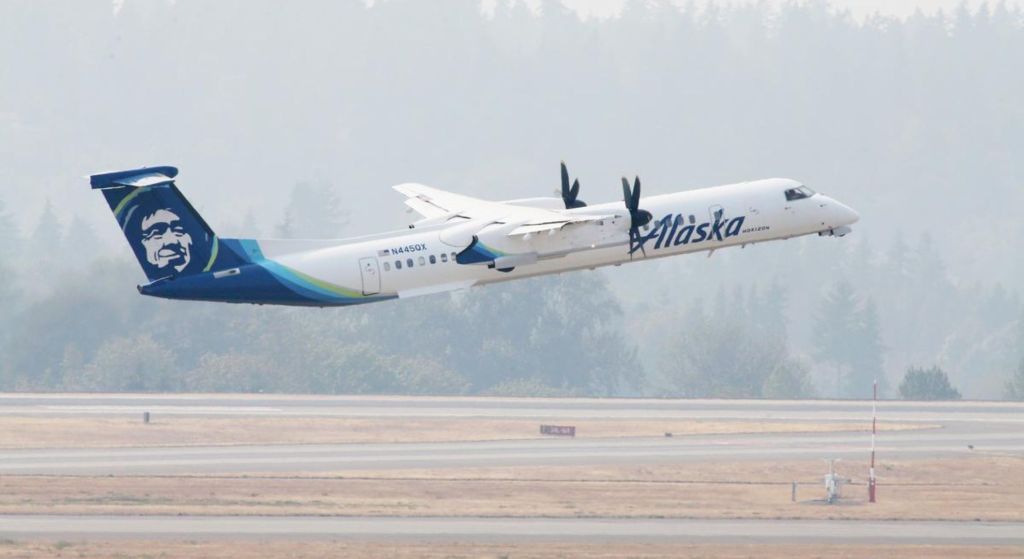
Horizon Air Industries, a Seattle-based company, is the largest operator of the Q400 aircraft. The airline has a fleet of 52 Q400 aircraft serving 43 cities in the western United States, Canada, and Mexico. Horizon Air Industries has a long-standing relationship with Bombardier, having signed a firm purchase agreement for one Bombardier Q400 NextGen turboprop airliner. Furthermore, the airline also confirmed a five-year heavy maintenance agreement with Bombardier to maintain its fleet.
Aurora Airlines and the Q400 Aircraft
Aurora Airlines, a Russian carrier, operates the longest Q400 route in the world. The airline’s service from Khabarovsk to Beijing covers 1,119 miles with a block time of 4 hours and 20 minutes, a feat made possible by the Q400’s powerful engines and high speed.
Future of the Q400 Aircraft
With its efficiency, versatility, and speed, the Q400 aircraft is poised to reshape the future of the aviation industry. It is set to enhance economic connectivity between smaller towns and major hubs, thanks to its ability to serve high-demand turboprop markets.

As of now, Bombardier has recorded firm orders for 499 Q400 and Q400 NextGen aircraft. Fifty customers and operators from forty countries across five continents comprise the Q400 program.
FAQ’s
1. What is the Q400 aircraft?
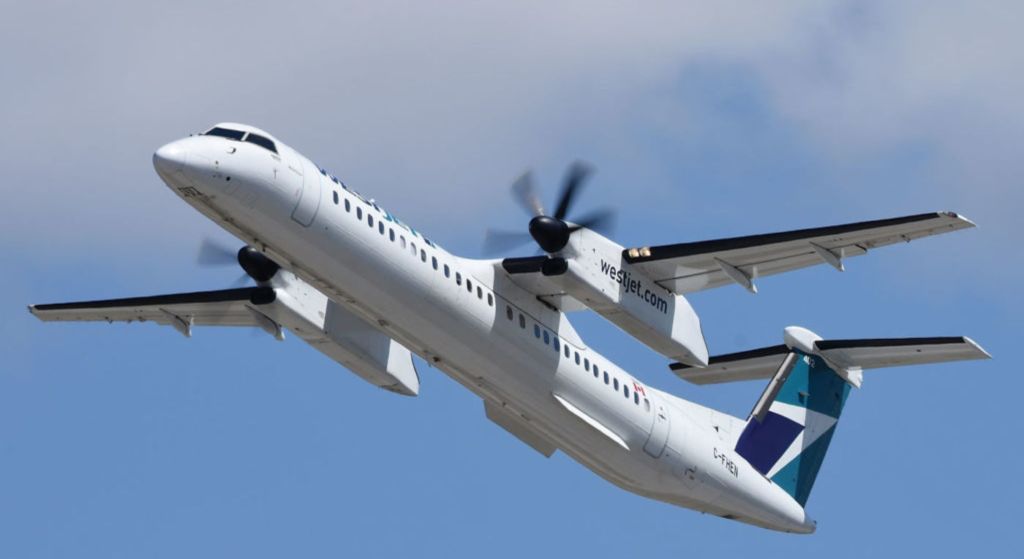
The Q400 aircraft, also known as the Dash 8 Q400, is a twin-engine, medium-range turboprop airliner designed by Bombardier Aerospace. It’s known for its high speed and efficiency compare to other turboprops.
2. How many passengers can the Q400 aircraft carry?
The Q400 can typically accommodate 74 to 90 passengers, depending on the configuration set by the airline.
3. What is the range of the Q400 aircraft?
The Q400 has a maximum range of approximately 1,100 nautical miles (2,040 kilometers), making it suitable for regional routes.
4. How fast can the Q400 aircraft fly?
The Q400 can outrun most turboprops with its top speed of 360 knots, or 667 km/h.
5. Is the Q400 aircraft still in production?
As of my knowledge cutoff in early 2023, the Q400 was no longer in production after Bombardier sold the program to De Havilland Canada, and they subsequently paused production.
6. What is the operational ceiling of the Q400 aircraft?
The Q400 has a service ceiling of 25,000 feet (7,620 meters), the maximum altitude at which the aircraft can fly efficiently.
7. What kind of engines do the Q400 aircraft use?
The Q400 is power by two Pratt & Whitney Canada PW150A turboprop engines known for their reliability and performance.
8. How does the Q400 performance compare to jet aircraft?
Although jets are generally faster, the Q400’s performance is competitive on short to medium-haul flights due to its quick turnaround times and ability to operate on shorter runways.
9. What are the main advantages of the Q400 ?
The main advantages of the Q400 include its fuel efficiency, lower operational costs, short takeoff and landing capabilities, and passenger comfort for a turboprop.
10. Can the Q400 aircraft operate on unpaved runways?
The Q400 is primarily design for pave runways. Still, its robust landing gear and high-wing design can handle some unpaved surfaces, depending on the operator’s configuration and the specific conditions of the airstrip.
The Q400 aircraft embodies modern technological advancements in aviation. It reflects Bombardier’s commitment to the evolution of the program and its dedication to improving mobility worldwide. Its exceptional speed, efficiency, and adaptability combination sets it apart in the commercial aviation industry. As Bombardier continues to innovate and enhance the aircraft, it is set to play a pivotal role in the future of the aviation industry.