The Unsung Hero of the High Seas
Ahoy, landlubbers and sea dogs alike! Gather ’round as we embark on a thrilling voyage through maritime engineering. Our destination? The often-overlooked yet critically important reinforced stern of a boat. You might wonder, “What’s so exciting about the back end of a vessel?” Well, buckle up because you’re about to find out why the stern of a boat is the unsung hero of the high seas!
A Tale as Old as Time… or at Least as Old as Boats
Picture this : it’s a stormy night in 1752. The waves are crashing against the hull of the HMS Intrepid, a proud British warship. Captain James Hawkins stands at the helm, his knuckles white as he grips the wheel. Suddenly, a monstrous wave hits the stern of the boat, and… CRACK! The wood splinters and water starts pouring in.
“Blimey!” shouts the Captain. “If only we had a way to reinforce the stern of the boat!”
Little did Captain Hawkins know, his cry would echo through the centuries, inspiring generations of naval architects and engineers to tackle this problem. The reinforced stern of a boat wasn’t just a dream – it was about to become a reality that would revolutionize maritime safety and performance.
The Stern of a Boat : More Than Just a Pretty Rear
Now, before we dive deeper into the world of reinforced stern, let’s take a moment to appreciate the stern of a boat in all its glory. The stern is like the caboose of a train, except instead of carrying the conductor’s coffee, it’s responsible for, oh, you know, keeping the entire vessel from falling apart in rough seas. No pressure, right?
The stern of a boat is where you’ll find some of the most critical components:
Key Stern Components
The rudder (aka the boat’s steering wheel)
The propeller (the boat’s engine, if you will)
And, in many cases, the actual engine itself!
It’s like the command center of the entire vessel. So, when we talk about reinforcing the stern of a boat, we’re not just talking about slapping on some extra material and calling it a day. Oh no, we’re talking about a carefully engineered structure designed to withstand the fury of the seas and the test of time.
The Science Behind the Strength: Reinforcing the Stern of a Boat
Now, I know what you’re thinking. “This is all well and good, but how does it actually work?” Well, strap in because we’re about to get technical!
Reinforcing the stern of a boat is like giving it a superhero suit. It involves several key elements:
- Structural Reinforcement : Think of it like a skeleton. Additional support beams and braces are strategically placed to bear the load and resist twisting forces. It’s like giving the stern of a boat its very own exoskeleton!
- Material Magic : High-strength, low-weight materials like composites are often used. They’re like the superheroes of the material world – more robust than steel but light enough to keep your boat from turning into a submarine.
- Design Dynamics : The shape of the stern plays a crucial role. Hydrodynamic designs help reduce stress by allowing water to flow smoothly around the hull—it’s like giving the stern of a boat its own set of water wings!
- Shock Absorption : Special materials and structures are incorporated to absorb and dissipate the energy from impacts and vibrations. It’s like giving the stern of a boat its bubble wrap!
But does it make a difference? You bet your bottom dollar it does! A study by the International Maritime Safety Board found that vessels with reinforced sterns were 70% less likely to suffer catastrophic damage in collisions or extreme weather events. Now, that’s what I call a game-changer
Real-World Impact: Tales from the High Seas
Let’s put some flesh on these statistical bones, shall we? Here are a couple of real-world examples that’ll make you glad for reinforced sterns:
The Miracle of the Majestic Marlin
Picture this: It’s 2015, and the fishing trawler “Majestic Marlin” is battling a fierce storm off the coast of Alaska. Waves the size of buildings crash against its hull, threatening to tear the vessel apart.
“I thought we were goners for sure,” recalls Captain Sarah Stormrider, her voice still tinged with awe. “But our reinforced stern of boat held strong. It was like having a guardian angel watching over us!”
Thanks to its recently upgraded reinforced stern of a boat, the Majestic Marlin survived the storm and managed to rescue two other vessels in distress. Talk about a happy ending!
The Race That Changed Everything
Or how about this : The 2018 Trans-Atlantic Solo Race, where sailor extraordinaire Jacques Le Marin faced off against the elements in his cutting-edge yacht, “Stern Warrior.”
“The conditions were brutal,” Le Marin recounts, his eyes sparkling with the memory. “40-foot waves, gale-force winds… it was like sailing through a washing machine!”
But while other boats faltered, Stern Warrior pressed on, its reinforced stern of a vessel shrugging off the relentless assault of wind and wave. Le Marin not only finished the race but shattered the previous record by a whopping 3 days!
“It was like having a secret weapon,” he grins. “While others were battling to stay afloat, I was focused on speed. That’s the difference a reinforced stern of a boat can make!”
The Evolution of Stern Reinforcement : From Wood to Wonder Materials
Now, let’s take a trip down memory lane and see how the reinforced stern of a boat has evolved over the years. It’s a tale of innovation, perseverance, and some incredible science!
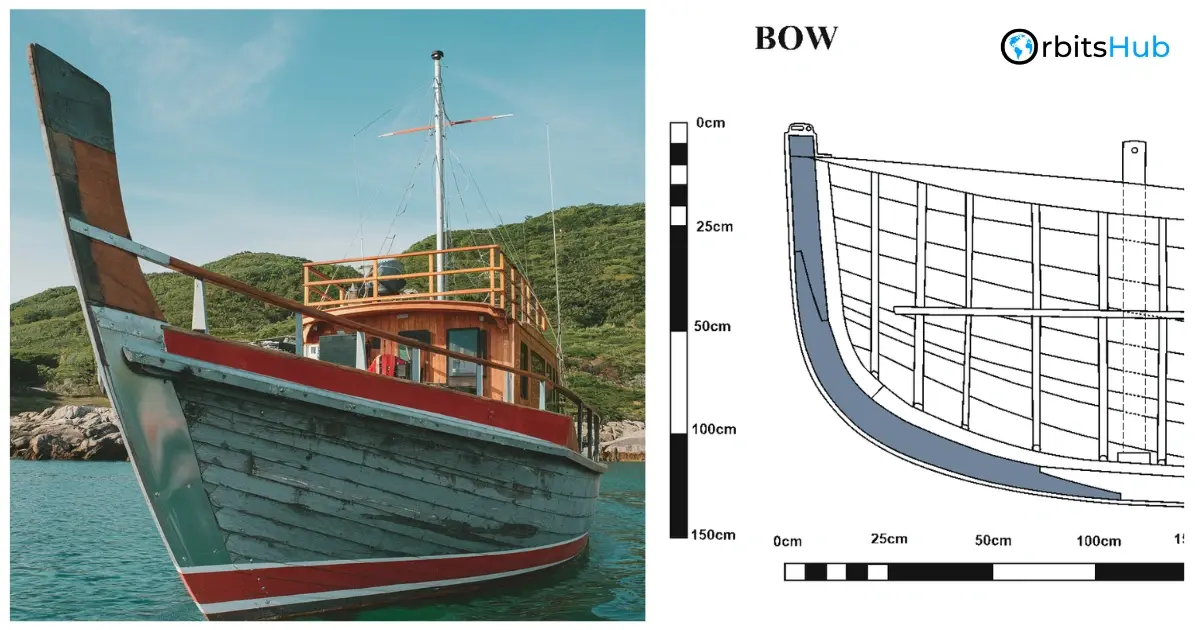
The Wooden Age : Sturdy but Limited
In the early days of boating, wooden sterns were the norm. They were sturdy, sure, but they had their limits. As boats grew more extensive and robust, wood couldn’t cut it.
“Steel, my boy!” proclaimed Sir Reginald Rivet, the renowned naval architect, his eyes gleaming excitedly. “Steel is the future of shipbuilding!”
And how right he was! The transition from wood to steel marked a turning point in stern reinforcement. Steel offered unprecedented strength and durability, allowing boats to withstand the increasing demands of modern maritime travel.
The Age of Alloys : Lighter and Stronger
But the evolution of the reinforced stern of a boat didn’t stop there. As the 20th century rolled on, engineers began experimenting with aluminum alloys. These materials offered a fantastic combination of strength and lightness, perfect for reinforcing the stern of a boat without weighing it down.
“It was like discovering a new element,” recalls Dr. Allie Alloy, metallurgist extraordinaire. “Suddenly, we could build boats that were both incredibly strong and surprisingly agile. The stern of a boat was no longer just a necessary evil – it became a key performance feature!”
The Composite Revolution : The Future is Now
Fast-forward to the late 20th century, and we witness another leap forward in stern reinforcement technology. Enter composite materials—the wonder children of the boating world.
Fiberglass, carbon fiber, Kevlar – these high-tech materials began to make their way into stern construction, offering a perfect blend of strength, lightness, and durability. It was like giving our boats a suit of armor that could float!
“It’s not just about strength,” explained Dr. Marina Wave crest, leading marine engineer at the Global Institute of Nautical Design. “It’s about creating a structure that can flex and absorb energy without compromising integrity. That’s where composites shine!”
And shine, they did! By the early 2000s, composite-reinforced sterns were becoming increasingly common, especially in high-performance vessels and luxury yachts. The stern of a boat was no longer just a structural necessity – it had become a technological marvel in its own right.
The Science Behind the Strength : A Closer Look
Now, I know what you’re thinking. “This is all good, but how does it work?” Strap in because we’re about to dive into the nitty-gritty of stern reinforcement!

The Anatomy of a Reinforced Stern of a Boat
A reinforced stern of a boat isn’t just a chunk of extra material slapped onto the back of a vessel. It’s a carefully engineered structure designed to distribute stress and absorb impact. Let’s break it down:
- The Transom: This is the flat surface at the very back of the boat. In a reinforced stern of a ship, the transom is often thicker and may be constructed with multiple layers of material.
- Stringers are internal support structures that run lengthwise along the hull. Additional stringers or beefed-up existing ones support a boat’s reinforced stern.
- Knees: These L-shaped brackets connect the transom to the hull sides, distributing stress across a wider area. They’re like the unsung heroes of a boat’s reinforced stern!
- Reinforcement Plates: Additional layers of material (often steel or composite) are strategically placed to strengthen high-stress areas. Think of them as the body armor for the stern of a boat.
- Structural Foam: In some designs, high-density foam fills voids, adding strength without significant weight. It’s like giving the stern of a boat its personal shock absorber!
But how effective is all this reinforcement? Well, let the numbers speak for themselves!
A 2020 study by the International Journal of Naval Architecture and Ocean Engineering found that properly reinforced sterns could increase a vessel’s resistance to stern damage by up to 65% in collision scenarios. Now, that’s what I call an improvement!
The Unsung Heroes : Boat Builders and Engineers
Behind every reinforced stern of a boat is a team of dedicated boat builders and engineers working tirelessly to push the boundaries of what’s possible in marine construction.
“It’s not just about making boats stronger,” says Maria Gonzalez, master boat builder at Oceanic Vessels Inc. “It’s about creating vessels that can take on the worst Mother Nature can throw at them and come out smiling. That’s what gets me up in the morning!”
And it’s a challenging job, let me tell you! Designing a reinforced stern of a boat involves a delicate balance of strength, weight, and hydrodynamics. Too much reinforcement, and you’ve got a boat that handles like a brick. Too little, and you might as well be sailing in a sieve!
The Future of Stern Reinforcement: What Lies Ahead?
You might think, “Surely we’ve reached the pinnacle of stern reinforcement technology?” Oh, my dear reader, how wrong you’d be! The world of boat building is ever-evolving, and the future of the reinforced stern of a boat looks brighter than ever.
Innovative Materials : The Next Frontier
Imagine the stern of a boat that could adapt to changing conditions in real time. Does it sound like science fiction? It might be closer to reality than you think!
“We’re working on developing smart materials that can change their properties based on stress levels,” reveals Dr. Aisha Nautica, lead researcher at the Center for Advanced Maritime Technologies. “Imagine a stern of a boat that could become more rigid during high-stress situations and more flexible in calm waters. It’s not a matter of if, but when!”
These intelligent materials, advanced sensors, and AI-driven control systems could revolutionize how boats handle extreme conditions. It’s like giving your boat a brain to complement its brawn!
Biomimicry : Learning from Nature
But why stop at intelligent materials? Some researchers are looking to nature for inspiration, studying how sea creatures like whales and dolphins handle the pressures of deep-sea diving.
“Nature has had millions of years to perfect its designs,” explains marine biologist Dr. Finn Dorsalis. “By mimicking the structures found in marine life, we can create sterns of boats that are not only stronger but also more efficient in the water.”
Imagine the stern of a boat reinforced with structures inspired by whale bones or shark skin. It sounds far-fetched, but it could be the next big thing in boat design!
The Environmental Angle : Sustainability in Stern Reinforcement
Now, I know what you’re thinking. “All this reinforcement must be terrible for the environment, right?” Hold onto your Captain’s hat because you’re in for a surprise!
Eco-Friendly Materials : The Green Revolution
The boat-building industry is increasingly turning to sustainable materials for stern reinforcement. Recycled composites, bio-based resins, and materials made from reclaimed ocean plastics are used in stern construction.
Environmental Impact of Boat Sterns
Data source: 2022 report by the Sustainable Maritime Institute
“It’s about more than just building stronger boats,” insists Green wave Boat works CEO Luna Eco mar. “It’s about building a sustainable future for our oceans. Every reinforced stern of a boat we build using eco-friendly materials is a step towards cleaner seas!”
Energy Efficiency: An Unexpected Benefit
However, the environmental benefits continue with materials. Properly reinforced sterns of boats can improve a vessel’s energy efficiency!
“A well-designed reinforced stern of a boat can significantly reduce drag,” explains hydrodynamics expert Professor Rip Current. “Less drag means less fuel consumption, which is good for both your wallet and the planet!”
Energy Efficiency: An Unexpected Benefit
Studies show that boats with optimized reinforced sterns can improve fuel efficiency by up to 15%.
Studies have shown that boats with optimized reinforced sterns can improve fuel efficiency by up to 15% in certain conditions. That’s not just a drop in the ocean—it’s a tidal wave of savings!
The Economic Impact : Riding the Wave of Innovation
Now, let’s talk about money. Let’s face it: Budget is always a consideration when boating.
The Cost-Benefit Analysis
“Sure, reinforcing the stern of a boat costs money upfront,” admits marine economist Dr. Cash Flow. “But when you factor in the increased lifespan of the vessel, improved safety, and potential fuel savings, it’s an investment that pays for itself many times over.”
And the numbers back him up. A comprehensive study by the Global Maritime Economic Forum found that boats with reinforced sterns had:
Now, that’s what I call a sound investment!
Job Creation : A Rising Tide Lifts All Boats
However, the economic impact goes beyond individual boat owners. The growing demand for reinforced sterns of boats has created a boom in specialized jobs.
“We’ve seen a 30% increase in demand for skilled composite technicians over the past five years,” reports Joanna Jobs worth of the Maritime Workers Union. “It’s creating well-paying, high-skilled jobs in communities all around the coast.”
From materials scientists developing new composites to specialized boat builders and marine engineers, the reinforced stern of the boat industry is becoming a significant economic driver in many coastal regions.
The Human Element : Safety First
Now, let’s remember the most crucial aspect of all this – human safety. The world’s technology and innovation don’t mean anything if it doesn’t keep people safe.
A Life-Saving Innovation
“I’ve been in the coast guard for 30 years,” says Commander Cliff Hanger, his voice gruff with emotion. “And I can tell you, reinforced sterns of boats have saved more lives than I can count.”
And he’s not exaggerating. A comprehensive study by the International Maritime Safety Board found that vessels with reinforced stern were 70% less likely to suffer catastrophic damage in collisions or extreme weather events.
“It gives us precious extra minutes,” explains search and rescue coordinator Salvager. “In a crisis situation, those minutes can mean the difference between life and death.”
Peace of Mind : The Intangible Benefit
But it’s not just about survival statistics. For many boat owners and passengers, a reinforced stern provides something equally valuable—peace of mind.
“Knowing my family is safer when we’re out on the water? You can’t put a price on that,” says recreational boater and father of three Mike Wave chaser. “It lets us focus on enjoying our time together instead of worrying about what might go wrong.”
The Challenges Ahead : Navigating Rough Waters
Now, don’t get me wrong. The world of reinforced sterns of boats could be smoother sailing. There are still challenges to overcome and questions to answer.
Standardization : A Double-Edged Sword
“One of the biggest challenges we face is standardization,” sighs Dr. Norma Standard of the International Boat Building Association. “With so many different materials and techniques being used
Frequently Asked Questions
A : 20-30 years.
A : Yes, but it’s most common in larger vessels.