In the bustling heart of Shenzhen, where the Pearl River Delta meets the South China Sea, lies a testament to China’s economic prowess and global ambitions—Shekou Port. This vital maritime hub has not only transformed the landscape of international trade but also serves as a microcosm of China’s rapid development over the past four decades.
The Birth of a Maritime Giant
In 1979, China chose Shekou, a sleepy fishing village, as the site for its first special economic zone. At that time, few could have imagined the monumental changes that would sweep through this coastal region. However, visionaries like China Merchants Group (CMG) saw immense potential in Shekou’s strategic location.
As the first rays of sunlight kissed the calm waters of the Pearl River Delta on a crisp morning in 1979, construction crews descended upon Shekou. Their mission? Their goal was to construct a port that would serve as the foundation for China’s global economic expansion. Little did they know that their efforts would lay the foundation for a maritime powerhouse that would handle millions of containers annually in the decades to come.
From Vision to Reality: The Port-Park-City Model
CMG’s ambitious “Port-Park City” (PPC) model became the blueprint for Shekou’s transformation. This innovative approach integrated port operations with industrial development and urban planning, creating a symbiotic ecosystem that fueled exponential growth.

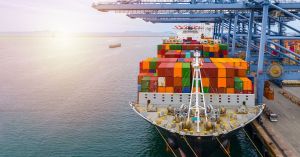
Shekou Port quickly transformed into a bustling hub of activity as cranes rose against the skyline and container ships started to dock at newly constructed berths. By the mid-1980s, the port was handling over 100,000 TEUs (Twenty-foot Equivalent Units) annually—a figure that would seem quaint compared to future volumes but was impressive for its time.
The success of the PPC model in Shekou didn’t go unnoticed. Soon, delegations from across China and beyond were flocking to Shenzhen to witness this economic miracle firsthand. The port’s influence extended far beyond its physical boundaries, inspiring similar developments along China’s coastline and, eventually, across the globe.
Riding the Waves of Global Trade
Shekou Port experienced significant growth as China’s economy soared in the 1990s and 2000s. The port’s container throughput grew at an astonishing rate, mirroring China’s rise as the “world’s factory.” By 2010, Shekou Port, along with its sister ports in the Shenzhen Port Group, was handling over 22 million TEUs annually—a staggering 220-fold increase from its early days.
Shekou Port Container Throughput Growth (1990-2010)
However, statistics alone do not provide a complete picture. Behind these statistics are tales of countless workers, from stevedores to logistics experts, who worked tirelessly to keep the port running smoothly. Take, for instance, Li Wei, a crane operator who has been with the port since 1995. “When I first started,” Li reminisces, “we were excited to unload 100 containers in a day. Now, our advanced gantry cranes can handle that in a couple of hours.”
Innovation at the Helm
Shekou Port’s success isn’t just about scale; it’s also a story of continuous innovation. In 2017, the port embarked on an ambitious automation project, introducing state-of-the-art automated guided vehicles (AGVs) and remote-controlled cranes. This leap into future port operations increased efficiency by 30% and reduced labor costs by a significant margin.
The port’s commitment to innovation extends to environmental sustainability as well. In 2019, Shekou Port became one of the first in China to implement a shore power system, allowing docked ships to use clean electricity instead of burning fuel. This initiative alone has reduced carbon emissions by an estimated 3,500 tonnes annually.
Weathering Storms: Resilience in the Face of Challenges

Like any great undertaking, Shekou Port has faced its share of challenges. The 2008 global financial crisis had a significant impact on international trade, including Shekou. Container throughput dipped by 14% in 2009—the first decline in the port’s history. However, the port’s diverse operations and strategic importance helped it bounce back quickly.
More recently, the COVID-19 pandemic presented unprecedented challenges to global supply chains. Yet, Shekou Port demonstrated remarkable resilience. While many ports worldwide struggled with congestion and delays, Shekou implemented stringent health protocols and leveraged its automated systems to maintain operations. In fact, the port saw a 3.5% increase in container throughput in 2020, handling over 27 million TEUs amidst a global crisis.
Beyond Borders: Shekou’s Global Influence
Today, Shekou Port’s influence extends far beyond the shores of China. The success of the PPC model has inspired similar developments across the globe, particularly in Africa. CMG has exported this model to ports in Djibouti, Togo, and Nigeria, among others.
Take the case of Djibouti, where CMG has invested heavily in port infrastructure. In 2017, CMG completed the $590 million Doraleh Multipurpose Port, exemplifying the Shekou model in action. This development has not only modernized Djibouti’s maritime capabilities but also spurred greater economic growth in the region.
The Human Face of a Global Hub
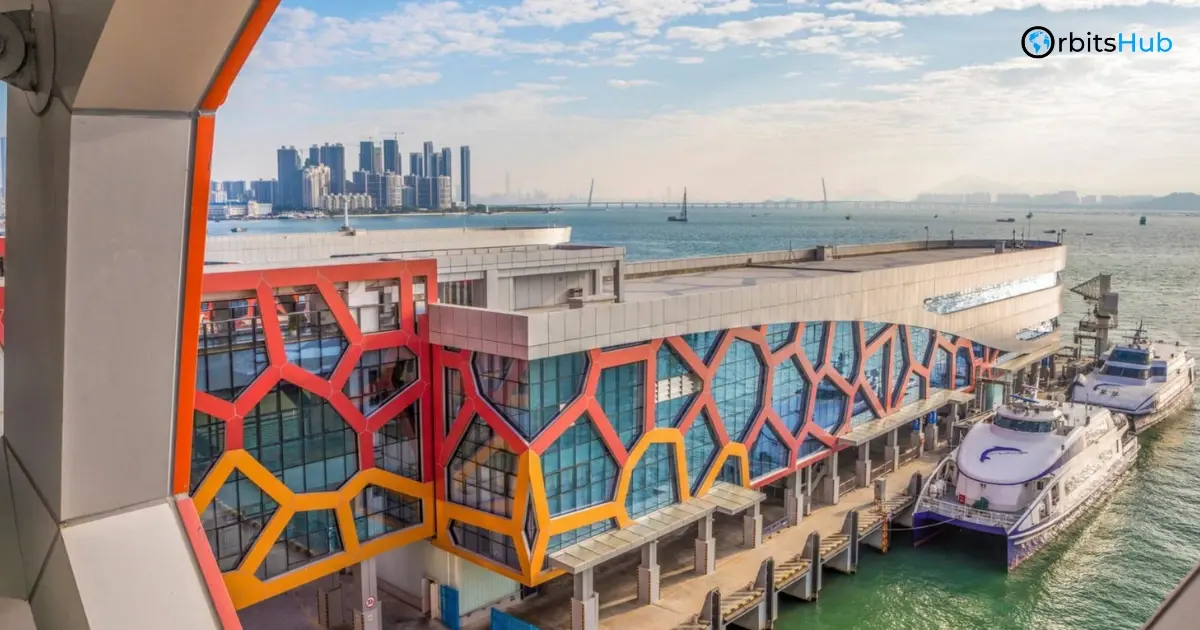
While the statistics are impressive—Shekou Port now handles over 27 million TEUs annually and contributes significantly to Shenzhen’s $400 billion GDP—it’s the human stories that truly bring the port to life.
Consider the story of Zhang Mei, a local entrepreneur who started a small logistics company in Shekou in the early 2000s. “When I began, I had just one truck and a dream,” Zhang says. “Today, thanks to the opportunities created by the port, my company employs over 200 people and handles shipments to 50 countries.”
Or take the case of the port’s community outreach programs. Every year, Shekou Port sponsors educational initiatives that benefit over 10,000 students in the surrounding areas, nurturing the next generation of maritime professionals and global traders.
Shekou Port Annual TEU Throughput
Looking to the Horizon
As Shekou Port sails into the future, it continues to evolve and adapt. Plans are underway to further expand the port’s capacity to 35 million TEUs by 2025. Additionally, the port is investing heavily in digital technologies, including blockchain and artificial intelligence, to streamline operations and enhance security.
The story of Shekou Port is far from over. As global trade patterns shift and new challenges emerge, this dynamic hub stands ready to adapt and innovate, just as it has done for over four decades. From a small fishing village to a global maritime powerhouse, Shekou Port remains a shining example of China’s economic transformation and its growing influence on the world stage.
Frequently Asked Questions
According to the latest available data, Shekou Port, as part of the Shenzhen Port Group, handles over 27 million TEUs (twenty-foot equivalent units) annually.
How has the COVID-19 pandemic affected Shekou Port’s operations?
Despite global challenges, Shekou Port demonstrated resilience during the COVID-19 pandemic. The port implemented stringent health protocols and leveraged its automated systems to maintain operations, even seeing a 3.5% increase in container throughput in 2020.