Defining the Ship Turning Circle

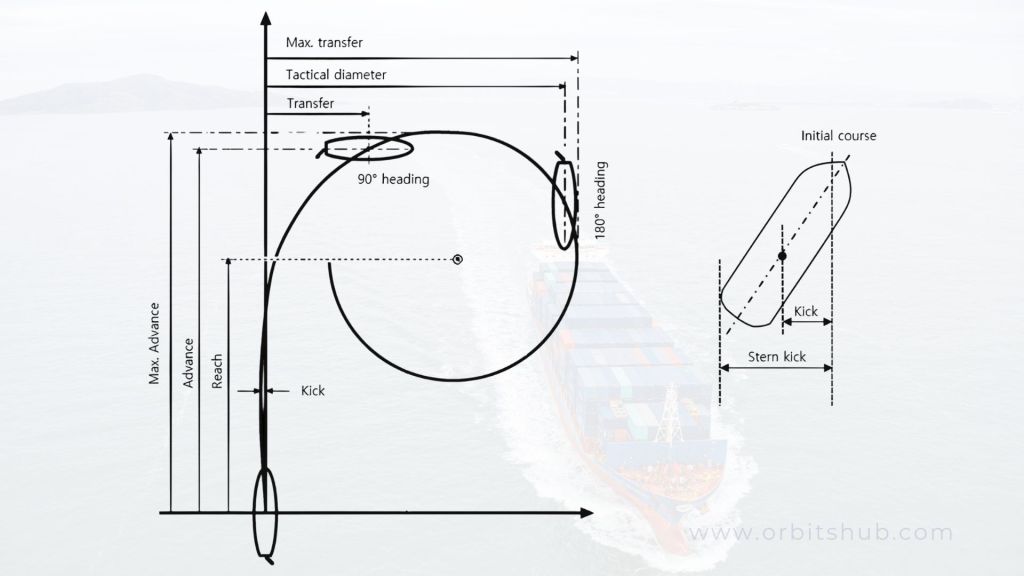
Picture this: you’re at the helm of a colossal container ship, and you need to execute a 360-degree turn. The path your ship traces forms what mariners call the “turning circle.” It’s the maritime equivalent of a car’s turning radius, but on a much grander scale. This circle represents the minimum space required for a ship to complete a full rotation under specific conditions.
Key Components Influencing Turn Radius
Several factors come into play when determining a ship’s turning circle. The vessel’s length, beam, draft, and hull shape all contribute to its turning characteristics. But that’s not all – the rudder design, propeller arrangement, and even the loading condition significantly impact how tightly a ship can turn.
The Physics Behind Ship Turning
Forces at Play During a Turn
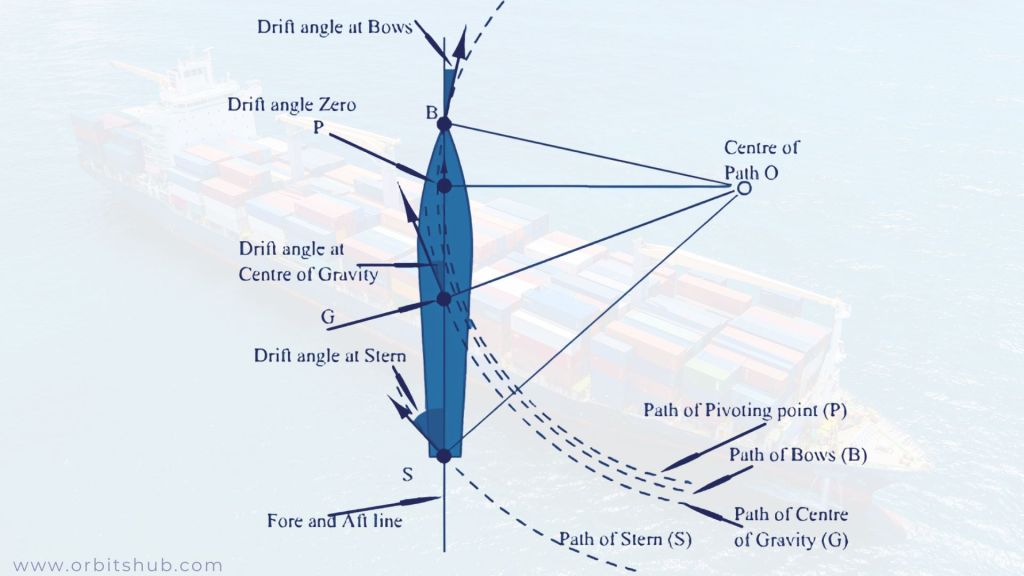
Turning a ship involves a complex interplay of forces. As the rudder deflects, it creates a lateral force that pushes the stern in the opposite direction. This action initiates a rotation around the ship’s center of gravity. Simultaneously, the forward motion of the vessel combines with this rotational force, resulting in a curved path through the water.
The Role of Rudder Angle
The rudder angle directly affects the tightness of the turn. A larger rudder angle generally produces a smaller turning circle, allowing for more agile maneuvering. However, increasing the rudder angle also increases drag, potentially slowing the ship. It’s a delicate balance that skilled navigators must master.
Measuring and Analyzing Turning Circles
Standard Turning Circle Test Procedures
Determining a ship’s turning circle isn’t guesswork – it’s a precise science. Standardized tests involve steering the vessel at a constant speed and then applying a predetermined rudder angle. The ship’s path is carefully tracked and measured, providing crucial data on its maneuvering capabilities.
Interpreting Turning Circle Data
The data collected from turning circle tests yields valuable insights. Key measurements include the advance (distance traveled forward before turning 90 degrees), transfer (lateral distance from the original course when the ship has turned 90 degrees), and tactical diameter (distance between the original course and the ship’s position after a 180-degree turn).
Factors Affecting Ship Turning Performance
Hull Design and Its Impact
A ship’s hull shape significantly influences its turning ability. Vessels with fuller hulls typically have larger turning circles, while those with sleeker designs can execute tighter turns. The location of the pivot point – the spot around which the ship rotates – also plays a crucial role in determining turning characteristics.
Propulsion Systems and Their Influence
The type and arrangement of a ship’s propulsion system can dramatically affect its turning circle. Single-screw vessels often have larger turning circles compared to twin-screw ships. The direction of propeller rotation also impacts turning performance, with outward-turning screws generally providing better maneuverability.
Environmental Considerations
External factors such as wind, currents, and water depth can significantly alter a ship’s turning circle. Shallow water, for instance, can increase the turning circle diameter due to increased hydrodynamic forces acting on the hull.
Practical Applications of Turning Circle Knowledge
Navigation in Confined Waters
Understanding a ship’s turning circle becomes critical when navigating through narrow channels, crowded harbors, or when performing intricate docking maneuvers. Captains and pilots must intimately know their vessel’s maneuvering capabilities to ensure safe passage in these challenging environments.
Emergency Maneuvers and Collision Avoidance
In high-stakes situations where quick action is necessary to avoid collisions, a thorough grasp of the ship’s turning characteristics can mean the difference between safety and disaster. Skilled mariners use this knowledge to execute precise evasive maneuvers when seconds count.
Advanced Technologies Enhancing Turn Capabilities
Azimuth Thrusters and Their Advantages
Modern ships often employ azimuth thrusters – propulsion units that can rotate 360 degrees. These innovative systems allow for much tighter turning circles and even enable a ship to move sideways, revolutionizing maneuverability in confined spaces.
Dynamic Positioning Systems
For vessels that need to maintain a fixed position or follow a precise path, dynamic positioning systems use a combination of thrusters and propellers to automatically control the ship’s movement. This technology has transformed operations in offshore industries and specialized maritime sectors.
The Future of Ship Maneuverability

Emerging Technologies and Innovations
The maritime industry continues to push the boundaries of ship maneuverability. Innovations like podded propulsion systems, advanced hull coatings to reduce drag, and AI-assisted navigation promise to further enhance turning capabilities and overall vessel control.
Mastering Ship Turning: A Crucial Skill
Ship turning circles remain a fundamental aspect of maritime operations. From massive container ships navigating busy ports to agile naval vessels executing tactical maneuvers, the ability to control a ship’s turn with precision is paramount. As technology advances and environmental concerns grow, the importance of efficient and effective ship maneuvering will only increase.
For maritime professionals, a deep understanding of turning circles and the factors that influence them is not just academic knowledge – it’s a critical skill that ensures the safety of crew, cargo, and the marine environment. By mastering the art and science of ship turning, mariners contribute to the smooth flow of global commerce and the ongoing evolution of maritime capabilities.
The next time you witness a large vessel gracefully pivoting in a harbor or executing a tight turn in a narrow strait, you’ll appreciate the complex calculations, advanced technology, and skilled seamanship at work. Ship turning circles may seem like a simple concept, but they encapsulate the essence of maritime mastery – the ability to control these magnificent machines with finesse and precision in the vast, ever-changing canvas of the world’s oceans.