On January 29, 2025, a tragic accident took place in South Sudan when a small aircraft carrying oil industry personnel crashed shortly after takeoff from the Unity State oil fields. The plane, chartered by the Greater Pioneer Operating Company (GPOC), which includes China National Petroleum Corporation and Nile Petroleum Corporation, was headed towards the capital, Juba. Among the 21 individuals on board, 20 lost their lives, and only one survived, albeit critically injured. This unfortunate incident has brought renewed attention to the aviation safety standards in South Sudan. In this country, infrastructure remains underdeveloped, particularly in aviation.
The crash near the oil fields of Unity State has left a lasting impact on the families of the victims, as well as the country’s oil sector. As authorities continue their investigations into the cause of the crash, it is vital to explore the details surrounding the event, its potential causes, and the broader implications for aviation safety in South Sudan.
The Incident
The aircraft involved in this tragic crash was a Beechcraft 1900D, a twin-engine turboprop aircraft commonly used for regional flights. It was operated by Light Air Services Aviation Company, which was contracted to transport workers to and from oil fields in South Sudan. The crash occurred near an oil facility in the Unity State region, known for its oil-rich deposits, which are a major contributor to South Sudan’s economy.
Witnesses reported hearing a loud noise before the aircraft descended rapidly. Within moments, the plane crashed, leading to an intense fireball that could be seen from miles away. The aftermath left a scene of devastation, with the plane’s wreckage scattered across the rural landscape. When first rescuers got to the scene of the accident, most of the passengers were already dead.
Among the 21 people on board were 16 South Sudanese nationals, one Indian national, and two Chinese nationals, all of whom were employees or associated with the oil industry. The only person who survived, a South Sudanese engineer, was taken to a nearby hospital with serious injuries. A few days later, he was said to be in good condition.
Aircraft Details
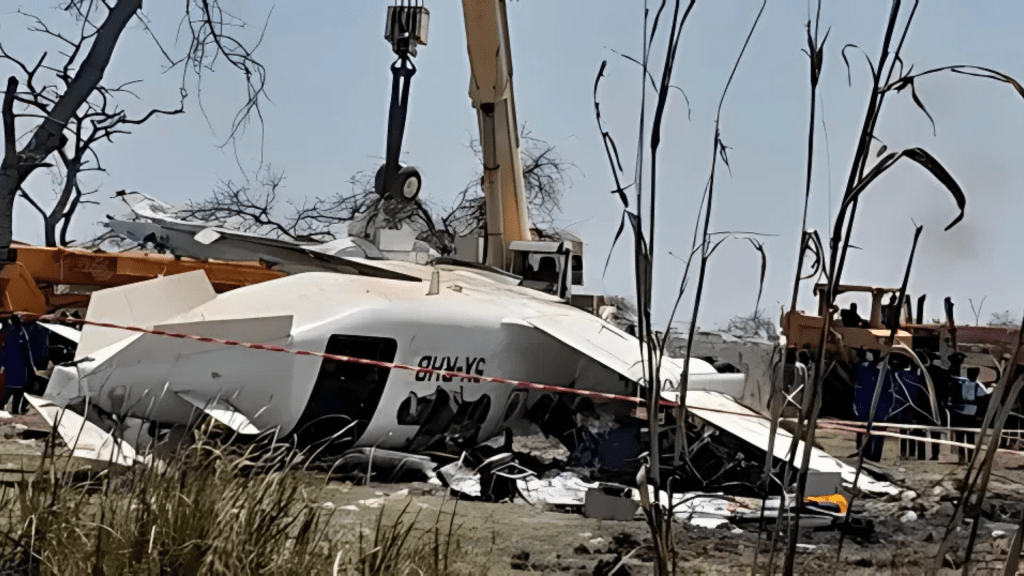
The Beechcraft 1900D involved in this crash is a well-known regional aircraft that has been in service since the 1990s. Designed for short regional routes, it typically seats 19 passengers and is known for its durability and ability to operate in harsh conditions. The aircraft is commonly used by smaller airlines and private operators, particularly in regions where larger commercial planes cannot operate due to infrastructure limitations.
While the Beechcraft 1900D is considered reliable for many regional flights, accidents involving this model have occurred in the past, especially in remote areas with limited air traffic control resources. The safety rules for flying in South Sudan and the standards for maintaining the planes are called into question by this accident.
The plane had been in service with various operators before being leased to Light Air Services for use on domestic routes within South Sudan. Like many aircraft in developing nations, the aircraft’s maintenance history and its readiness for service remain subjects of scrutiny, particularly in light of this disaster.
Investigation and Response
Following the crash, the South Sudanese government, led by President Salva Kiir, quickly called for a full investigation to find out what went wrong. The South Sudan Civil Aviation Authority (SSCAA) dispatched an investigation team to the site, and an official inquiry was launched. Investigators are focusing on a potential mechanical failure as the cause of the crash, as the plane was relatively new and had no previous history of serious malfunctions.
The investigation will involve examining the flight data recorder (black box) and the plane’s maintenance logs, as well as interviewing witnesses, including the surviving engineer. In addition to investigating mechanical failure, the SSCAA is also looking into possible weather conditions that could have played a role in the crash.
Global aviation groups, like the International Civil Aviation Organization (ICAO), have been asked to help the South Sudanese government make sure that the review is thorough and open. It is hoped that the findings from the inquiry will shed light on the specific causes and help in improving future safety measures for aviation in South Sudan.
Historical Context
This plane crash adds to the growing list of aviation tragedies that have taken place in South Sudan over the past few years. With limited infrastructure, South Sudan has faced challenges in maintaining high aviation safety standards. Overloading, mechanical issues and poor weather conditions have been identified as significant contributors to previous accidents.
For instance, in 2018, a cargo plane crash near Juba International Airport killed 36 people. Investigations revealed that the aircraft had been overloaded, which led to its crash shortly after takeoff. Similarly, in 2015, an Antonov An-12 cargo plane crashed, killing 41 people. These accidents highlight the inherent risks of air travel in regions with underdeveloped aviation systems and the critical need for improving safety measures.
The South Sudanese aviation industry continues to grapple with challenges, such as a lack of proper regulations, ageing aircraft, and inadequate pilot training. For the nation to move forward and reduce such incidents, stronger enforcement of aviation safety standards is essential.
Impact on the Oil Industry
South Sudan’s oil industry, which accounts for the vast majority of the country’s revenue, is heavily reliant on air transportation due to the remote locations of many oil fields. People who work in this field, especially those who fly to get to oil sites, are worried about their safety after the crash.
The tragedy highlights the need for better safety practices in the oil and gas industry, especially in a country where both the oil industry and aviation are critical to the national economy. GPOC, the oil consortium involved in the crash, has pledged to support the families of the victims and is cooperating fully with authorities to ensure that future operations are conducted safely.
The loss of skilled personnel and engineers is also a setback for South Sudan’s oil production. It could potentially delay projects and lead to labour shortages in key areas of the industry, further disrupting the already fragile economy. To prevent such incidents in the future, there is a need for more rigorous safety standards and a stronger commitment to the well-being of oil workers.
Safety Concerns and Recommendations
In the wake of this tragic incident, it is clear that there is an urgent need for improvements in aviation safety in South Sudan. To reduce the risk of future accidents, the following measures should be considered:
- Enhanced Aircraft Maintenance: Aircraft operating in South Sudan should undergo regular and thorough maintenance checks to ensure that they are in optimal condition. Delaying maintenance due to financial or logistical constraints must not be an option.
- Pilot and Crew Training: The training and certification of pilots and crew members must meet international safety standards. This includes providing training for handling adverse weather conditions, mechanical failures, and emergency landings.
- Stronger Regulatory Oversight: The South Sudan Civil Aviation Authority must take a more active role in regulating and overseeing the aviation industry. This includes implementing stricter safety protocols, conducting surprise inspections, and holding operators accountable for safety lapses.
- Public Safety Campaigns: It is also essential to raise public awareness about aviation safety, particularly in remote areas where air travel is common. A big part of teaching people how important safety is can be done by community leaders and the media.
Community and International Reactions
The crash has not only devastated the families of the victims but also garnered a global outpouring of sympathy. Many countries, including the United States, China, and India, have expressed their condolences and offered support to South Sudan. International organizations, including the United Nations, have called for a transparent and thorough investigation, with the hope that such incidents can be prevented in the future.
At the local level, South Sudanese citizens have rallied around the affected families, organizing memorial services and fundraising efforts to support the victims. These community-driven initiatives demonstrate the resilience and solidarity of the South Sudanese people during such a trying time.
Final Thoughts
The crash of the Beechcraft 1900D in Unity State serves as a tragic reminder of the ongoing challenges that South Sudan faces in improving aviation safety. While the investigation continues, the incident has highlighted the need for stronger safety regulations, better maintenance practices, and enhanced training for aviation personnel.
The oil sector, which relies heavily on air transport, is also feeling the effects of the tragedy. If South Sudan is to reduce the likelihood of such incidents in the future, it must prioritize safety and take decisive action to improve both its aviation infrastructure and regulatory framework.
With collective efforts from both the government and international organizations, South Sudan can build a safer and more reliable aviation system for the future.