

The Avro Vulcan, a name that evokes a sense of awe and nostalgia, was a fighter jet powered delta-wing bomber that served as a cornerstone of British aerial defence throughout the Cold War. This magnificent aircraft wasn’t just a machine; it was a symbol of national pride and a testament to ingenious British engineering.
A Delta-Winged Marvel: Avro Vulcan Aircraft
Designed by A.V. Roe and Company (Avro), the Vulcan took its first flight in 1952. It was a revolutionary aircraft for its time, boasting a radical delta-wing design that offered superior performance to conventional bombers. The delta wing provided exceptional high-speed handling and stability, crucial for missions that often demanded exceeding the speed of sound.
The Vulcan wasn’t just about aesthetics; it was a powerhouse. Four mighty Bristol Olympus turbojet engines propelled it to a staggering top speed of over 1,038 kilometres per hour (around 645 miles per hour). This impressive speed and high operational altitude made the Vulcan a formidable deterrent during heightened global tension.
A Multifaceted Role: Avro Vulcan Aircraft
While the Avro Vulcan’s primary purpose was nuclear deterrence, it proved to be a versatile aircraft capable of adapting to various needs. Here’s a glimpse into its diverse roles:
- Nuclear Deterrent: During the Cold War, the Vulcan formed a crucial part of the Royal Air Force’s (RAF) “V bomber” fleet, tasked with delivering Britain’s nuclear deterrent. The Vulcan’s ability to carry nuclear bombs and penetrate enemy airspace made it a vital element of the country’s defence strategy.

- Black Buck Missions: The Falklands War 1982 witnessed the Vulcan’s incredible adaptability. In a daring operation codenamed “Black Buck,” specially modified Vulcans undertook the longest bombing raids in history, flying over 14,000 kilometres (around 8,700 miles) from Ascension Island in the South Atlantic to attack Argentine positions in the Falkland Islands. These missions showcased the Vulcan’s exceptional range and the unwavering spirit of the RAF crews.
- Reconnaissance and Refueling: Later in its service life, some Vulcan variants were modified for maritime surveillance and aerial refuelling roles. This adaptability further solidified the Vulcan’s reputation as a genuinely multifaceted aircraft.
The End of an Era: Avro Vulcan Aircraft
Despite its remarkable capabilities, the Avro Vulcan was eventually retire from active service in 1984. Defence tactics changed due to the development of SLBMs and the introduction of ICBMs. However, the Vulcan’s legacy continues to inspire awe.
A Legacy of Innovation
The Avro Vulcan’s impact transcends its military service. It pioneered delta wings in jet aircraft, paving the way for future generations of high-performance planes. The success of the Vulcan program not only bolstered British aviation but also served as a testament to the nation’s unwavering spirit during a tumultuous period.
Keeping the Legend Alive
As a tribute to their illustrious history, a small number of Avro Vulcans are now housed in museums and private collectors. Enthusiasts continue to maintain and operate the last airworthy Vulcan, XH558, for airshow displays, ensuring that the awe-inspiring sound of its engines continues to thrill audiences worldwide.
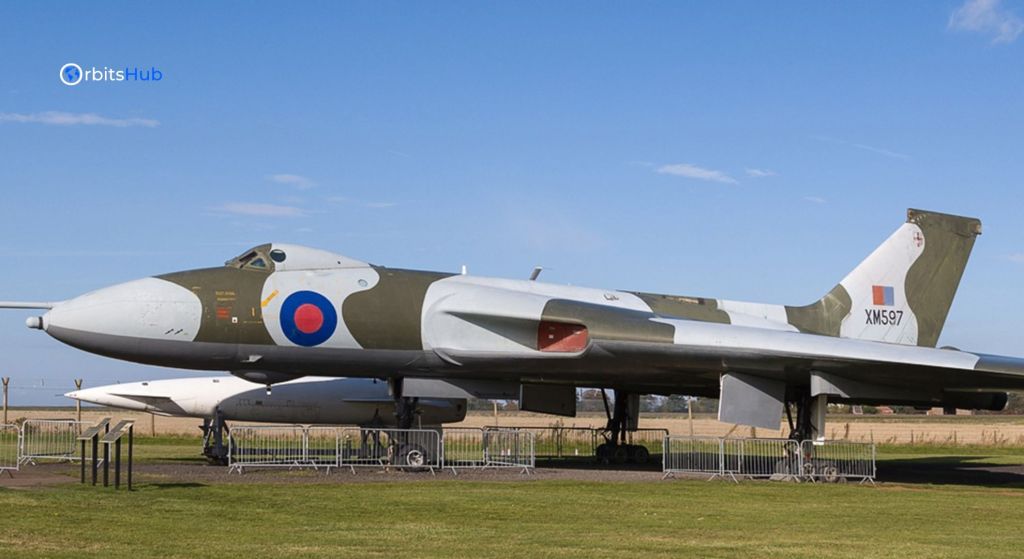
Facing the Challenges – The Vulcan’s Development and Operational Risks
The Avro Vulcan’s journey from design concept to operational aircraft was challenging. Here’s a peek into some of the hurdles it faced:
- Technical Innovation: While offering superior performance, the delta-wing design was a relatively new concept in the 1950s. Avro engineers had to overcome significant technical hurdles to ensure the aircraft’s structural integrity and flight characteristics met expectations. Extensive wind tunnel testing and construction of several smaller test aircraft, called Avro 707s, were crucial in refining the design before committing to the full-scale Vulcan.
- Pushing the Envelope: Because of its incredible speed, the Vulcan had to be built using cutting-edge technology and materials. Keeping the weight down while maintaining structural strength was a constant battle. Additionally, the powerful Olympus engines generated immense heat, requiring the development of sophisticated cooling systems to prevent damage.
- Operational Challenges: The Vulcan’s sheer size and high-speed flight presented challenges for ground crew handling and pilot training. The safe and effective operation of this complicated aircraft required the development of new processes and techniques. Furthermore, the long-range missions undertaken by the Vulcan, particularly during the Black Buck raids, demanded meticulous planning and in-air refuelling capabilities to overcome the vast distances involved.
The Avro Vulcan – More Than Just a Bomber
The Avro Vulcan aircraft was more than just a bomber; it symbolised British innovation, resilience, and national pride. Its delta-wing design, awe-inspiring speed, and adaptability continue to capture the imagination.
Are you interested in learning more about the fascinating world of maritime and aviation industries? its OrbitsHub, a leading consultancy services company, can provide expert insights and solutions. Check out its OrbitsHub for an extensive list of offerings.


