

The Chinook helicopter, known for its distinctive tandem rotor design and unparalleled versatility, stands as a symbol of air power across military and civilian operations. This article delves into the history, design, capabilities, and significant contributions of the Chinook helicopter, emphasizing its role in modern aviation. By exploring the various facets of this remarkable aircraft, we aim to comprehensively understand why the Chinook helicopter is an iconic figure in aviation.
The Evolution of the Chinook Helicopter
Early Development and Introduction
The origins of the Chinook helicopter can be traced back to the late 1950s when the United States Army identified the need for a new, heavy-lift helicopter. The Vertol Aircraft Corporation, which later became part of Boeing, was awarded the contract to develop this new aircraft. The result was the CH-47 Chinook, which made its first flight in 1961.
The initial Chinook models were primarily designed for military use, focusing on transporting troops and equipment. The tandem rotor design, featuring two oversized horizontal rotors mounted one in front of the other, provided exceptional lift and stability. This design also allowed the Chinook to carry heavy loads internally or externally, making it a versatile asset on the battlefield.
Advancements and Upgrades
Much work has been done to improve Chinook’s performance and capabilities. Key advancements include:
- CH-47D: Introduced in the 1980s, this model featured upgraded avionics, more powerful engines, and improved cargo handling capabilities.
- CH-47F: The most recent version, introduced in the 2000s, boasts advanced digital avionics, a redesigned airframe, and enhanced survivability features.
These upgrades have ensured that the Chinook remains a cutting-edge aircraft capable of meeting the demands of modern military operations.
Key Features and Capabilities: Helicopter Chinook

Tandem Rotor Design
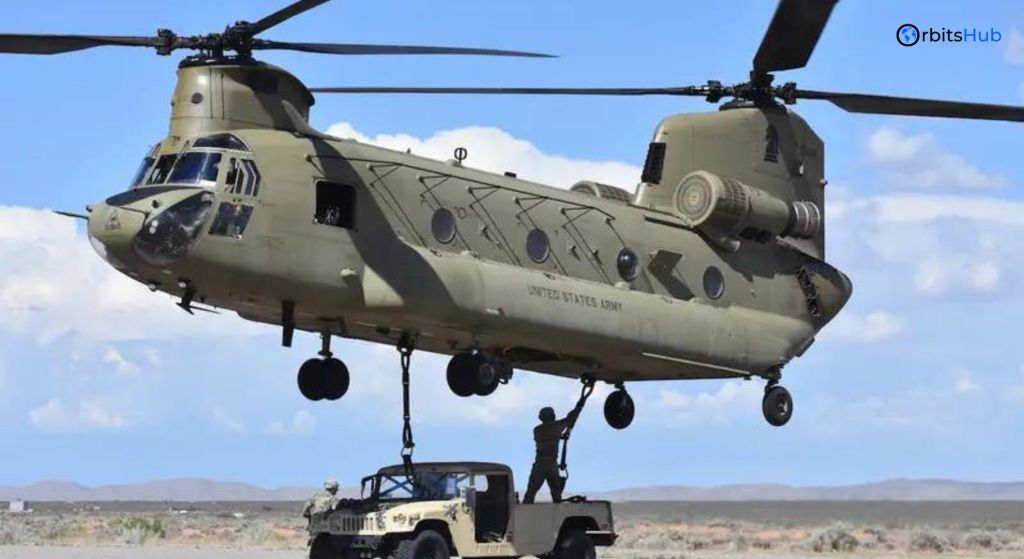
The Chinook’s tandem rotor design is one of its most distinctive features. This configuration offers several advantages over traditional single-rotor helicopters:
- Increased Lift Capacity: The two rotors provide more excellent lift, allowing the Chinook to carry heavy loads.
- Improved Stability: The tandem design enhances stability, making it easier to hover and perform precise manoeuvres.
- Reduced Vibration: The counter-rotating rotors cancel out each other’s torque, resulting in a smoother flight.
Heavy-Lift Capabilities
One of the primary roles of the Chinook is heavy-lift operations. A variety of payloads are within the helicopter’s capability to transport, such as:
- Troops: The Chinook can transport up to 55 soldiers, making it ideal for rapid deployment and evacuation missions.
- Equipment: The helicopter can lift and transport heavy equipment, such as artillery, vehicles, and construction materials.
- Supplies: The Chinook often delivers critical supplies to remote or inaccessible locations.
Versatility in Missions
The versatility of the Chinook helicopter is unmatched. It is capable of carrying out numerous tasks, such as:
- Combat Support: Transporting troops, equipment, and supplies to and from the battlefield.
- Medical Evacuation: Rapidly evacuating wounded personnel from combat zones.
- Humanitarian Aid: Delivering aid and relief supplies during natural disasters and humanitarian crises.
- Search and Rescue: Conducting search and rescue operations in challenging environments.
Significant Contributions to Military Operations: Indian Chinook Helicopter
Vietnam War
The Chinook played a crucial role in the Vietnam War, providing essential support for American and allied forces. Its ability to transport large troops and equipment over rugged terrain made it a vital asset in the conflict. The Chinook’s performance during the war established its reputation as a reliable and effective heavy-lift helicopter.
Afghanistan and Iraq
In more recent conflicts, such as those in Afghanistan and Iraq, the Chinook has continued to demonstrate its value. Its heavy-lift capabilities have been critical for moving troops and supplies in and out of remote locations. Additionally, the Chinook has been used for medical evacuation and humanitarian aid missions, highlighting its versatility and importance in modern warfare.
Humanitarian and Disaster Relief
Beyond its military applications, the Chinook has also been instrumental in humanitarian and disaster relief efforts. Its ability to carry large payloads and operate in challenging conditions makes it ideal for delivering aid to disaster-stricken areas. Notable examples include:
- Hurricane Katrina: The Chinook was used extensively to deliver supplies and assist in rescue operations following the devastating hurricane of 2005.
- Earthquake in Nepal: In 2015, aid and support were provided in the aftermath of a major earthquake in Nepal by Chinook helicopters.
The Future of the Chinook Helicopter
Continued Upgrades and Modernization
The Chinook helicopter continues to evolve with ongoing upgrades and modernization efforts. Boeing is working on new technologies and enhancements to ensure the Chinook remains a state-of-the-art aircraft. Future upgrades may include:
- Advanced Avionics: Incorporating cutting-edge avionics systems to improve navigation, communication, and mission capabilities.
- Improved Engines: Developing more powerful and fuel-efficient engines to enhance performance and reduce operational costs.
- Enhanced Survivability: Implementing advanced defensive systems to protect the helicopter and its crew in hostile environments.
Expanded Civilian Applications
People mostly know the Chinook for its military uses, but more and more people want to use it for civilian reasons as well. Potential civilian applications include:
- Firefighting: Using the Chinook’s heavy-lift capabilities to transport water and firefighting equipment to combat wildfires.
- Construction: Assisting in constructing large infrastructure projects by lifting and transporting heavy materials.
- Search and Rescue: Enhancing search and rescue operations in remote or challenging environments.
International Collaborations
As the Chinook proves its value, international collaborations and partnerships will likely increase. Countries worldwide are investing in Chinook helicopters for their military and civilian needs. These collaborations will help further develop and enhance the Chinook’s capabilities, ensuring its continued relevance and effectiveness globally.
The Chinook helicopter is a testament to the power of innovation and engineering in aviation. Its distinctive design, heavy-lift capabilities, and versatility have made it an indispensable asset in military and civilian operations. From its early days in the Vietnam War to its ongoing contributions to modern conflicts and humanitarian missions, the Chinook has repeatedly proven it is a symbol of air power.
As we look to the future, the Chinook helicopter will continue to evolve, incorporating new technologies and expanding its applications. The Chinook will always be an indispensable weapon for those who depend on its unparalleled capabilities, whether flying over a battlefield or providing help to areas devastated by natural disasters.
Visit the OrbitsHub website to explore the fascinating world of aviation and maritime operations. Discover the latest advancements, insights, and expert analysis to stay informed and inspired.



Comment(01)