
Ancient Origins and Periander’s Vision
A canal across the Isthmus of Corinth has been considered since antiquity. The original thinker behind the concept was Periander, a member of the Seven Sages and king of Corinth in the seventh century BCE. However, his ambitious plan was abandoned due to superstition and the belief that it would incur the wrath of the gods.
The Diolkos: A Stone-Paved Road
Instead of a canal, Periander constructed the Diolkos, a stone-paved road that allowed ships to be transported on wheeled platforms. This ingenious system enabled ships to switch from the Gulf of Corinth to the Saronic Gulf, sparing them the dangerous journey around the Peloponnese. Remnants of the Diolkos can still be seen today, serving as a testament to ancient engineering prowess.
Failed Attempts by Emperors and Rulers
Throughout history, various rulers and emperors, including Julius Caesar, Caligula, and Hadrian, toyed with the idea of constructing the Corinth Canal. However, these attempts were thwarted by technical challenges and the belief that such a canal would disrupt the natural balance of the seas. It wasn’t until the reign of Nero, the fifth emperor of Rome, that actual work on the canal began.
Nero’s Ambitious Project

In 67 CE, Emperor Nero initiated the construction of the Corinth Canal. With a group of 6,000 slaves, Nero started excavating the land, marking the beginning of the ambitious project. The workers carved trenches and drilled deep shafts to assess the rock quality. However, Nero’s assassination and the lack of financial resources halted the construction, leaving only a fraction of the canal completed.
Revival of the Idea and Construction
The idea of the Corinth Canal resurfaced in the 19th century after the Greek War of Independence. In 1869, work on the canal recommenced, with the Greek government authorizing a private company to undertake the project. In 1882, work started on the project, which required the removal of 12 million cubic meters of dirt. Finally, on October 28, 1893, the Corinth Canal was completed and opened for navigation.
Engineering Marvel and Key Features
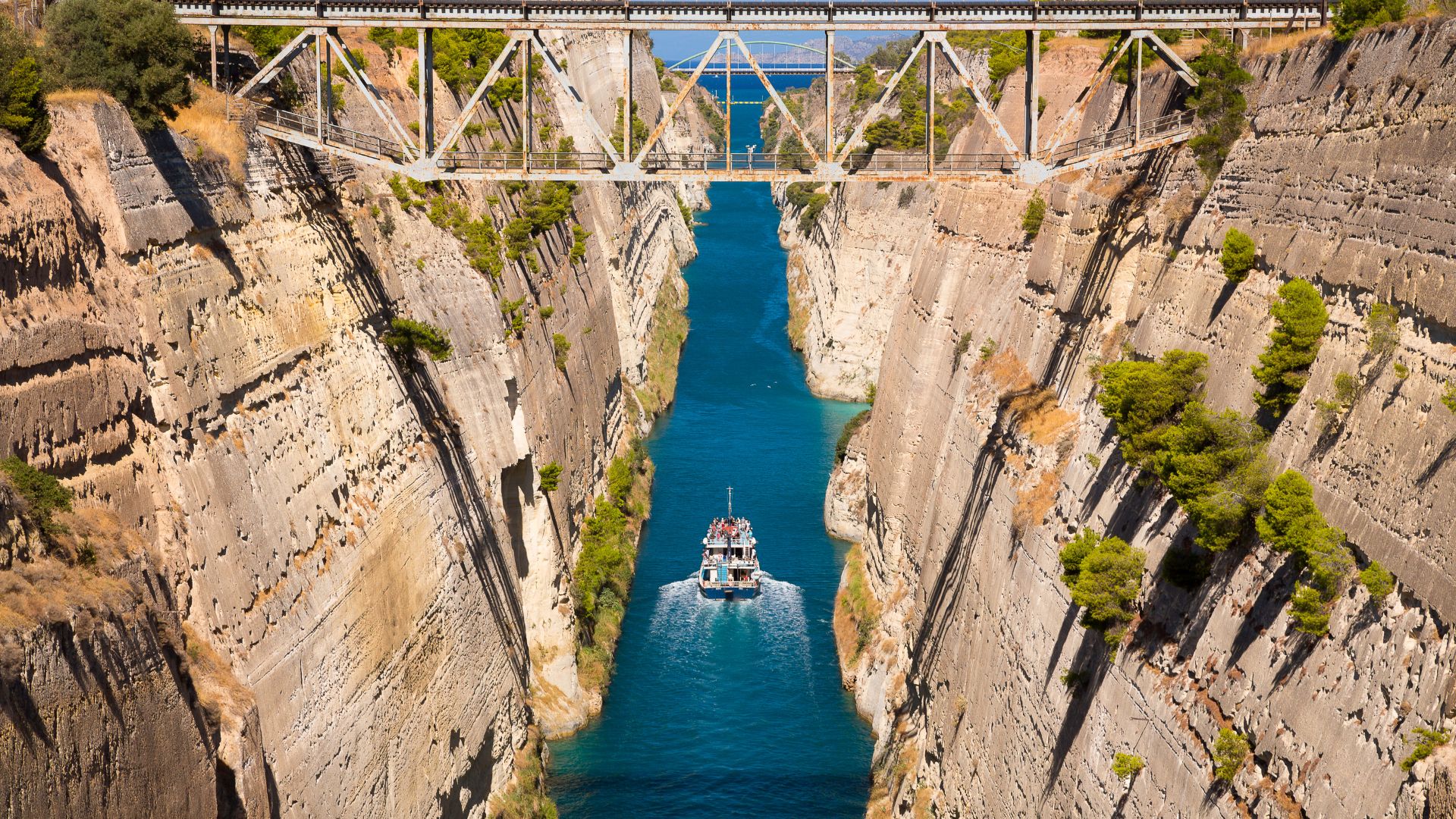
The Corinth Canal is a remarkable engineering achievement of its time. The canal connects the Gulf of Corinth to the Saronic Gulf; it is 6.4 km (4 mi) long and cuts through the narrow isthmus. On land, its width is at least 21 meters (69 feet), and in the water, it reaches a maximum of 25 meters (82 feet). The water depth reaches 8 meters (26 feet), allowing smaller ships and vessels to pass through.
Economic Significance and Navigation Challenges
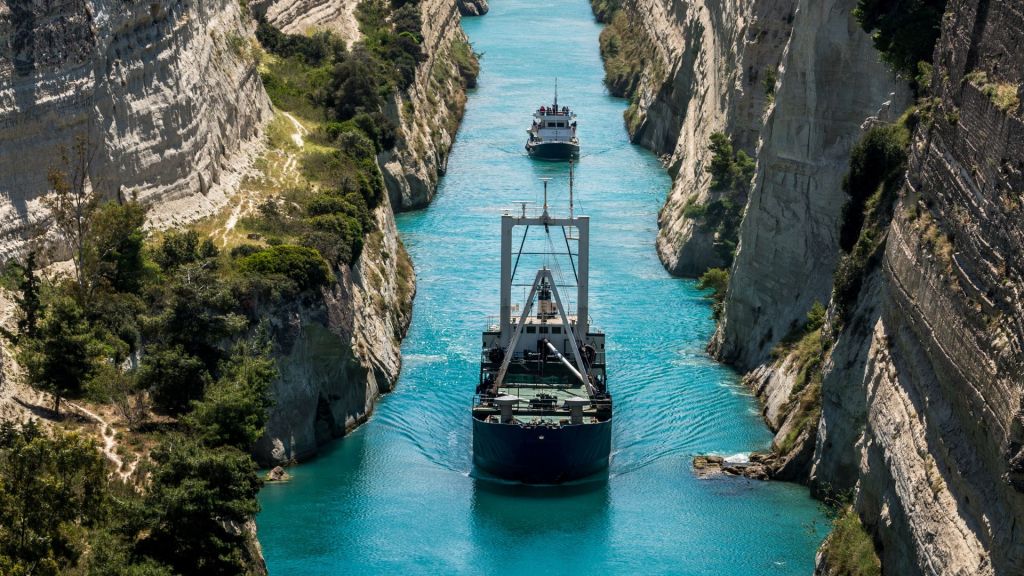
The Corinth Canal once served as a crucial navigational route, saving ships from the arduous journey around the Peloponnese. It facilitated faster and safer passage between the Adriatic Sea, the Ionian Sea, and the eastern Mediterranean. However, due to its narrow width and limited depth, the canal can no longer accommodate modern, larger vessels. As a result, its economic importance has diminished over time, although smaller cargo ships and cruise ships still traverse the canal.
Maintenance and Restoration
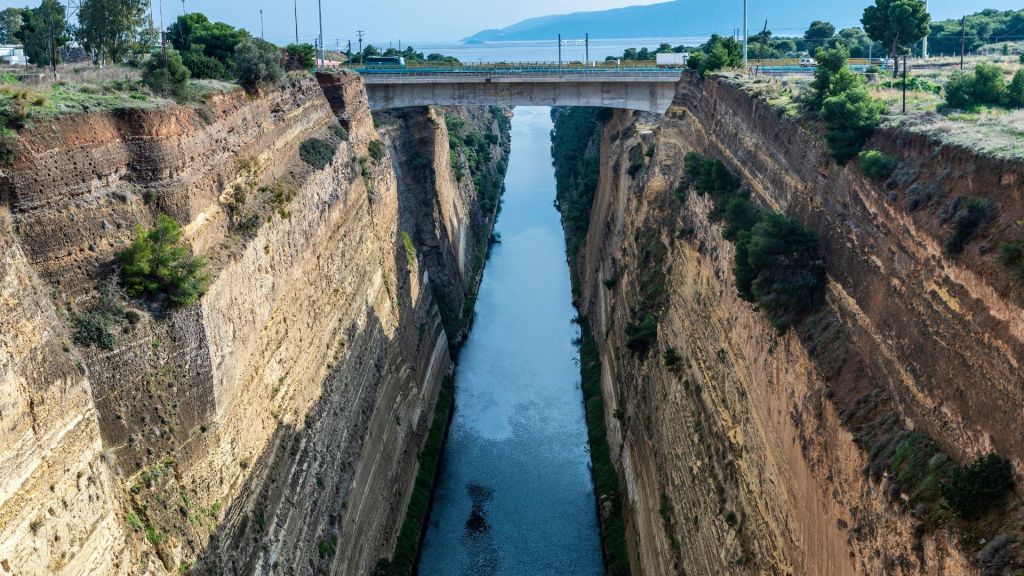
The Corinth Canal requires regular closures to allow for maintenance and repairs. Landslides, erosion, and channeled winds pose challenges to navigation. In recent years, restoration projects have been undertaken to ensure the canal’s longevity and safety. In 2021, a €32 million ($32 million) restoration project was initiated to address landslides. The canal reopened in 2022 after 18 months of closure, recording its most successful performance in 20 years.
Tourism and Thrilling Experiences
The Corinth Canal has become a popular tourist attraction, drawing visitors from around the world. Tourists can witness the awe-inspiring sight of ships navigating through the narrow waterway. Additionally, the bridge that crosses the canal provides a platform for adrenaline seekers to experience bungee jumping from a height of approximately 80 meters (262 feet) above sea level.
Future Plans and Cultural Significance

Efforts are underway to improve tourism infrastructure around the Corinth Canal.The complex and lengthy history of the canal will be showcased through artifacts that will be housed in a museum and hosted online. These exhibits will feature historical photographs, artworks, documents, and machinery associated with the construction and operation of the canal. The aim is to highlight the cultural and historical value of the canal, connecting it to its ancient roots.
An example of human resourcefulness and determination is the Corinth Canal. From the visionary ideas of ancient rulers to the modern-day engineering marvel, this narrow man-made shipping canal has shaped maritime navigation in southern Europe. While its economic significance has diminished, the Corinth Canal continues to captivate visitors with its rich history and breathtaking views. It remains an enduring symbol of human ambition and the triumph of engineering over nature.