The Birth of Competitive Sailing

Ancient Origins
Sailing for sport dates back centuries, with evidence of competitive sailing in ancient civilizations. The Egyptians, Greeks, and Romans all engaged in forms of boat racing, laying the foundation for what would become a global phenomenon.
The Rise of Yacht Clubs
The organized yacht racing era began in the 17th and 18th centuries.The organized yacht racing era began in the 17th and 18th centuries. The first yacht club, the Water Club of Cork, was established in Ireland in 1720. This marked the beginning of a new era in sailing, where gentlemen sailors could compete in friendly rivalries. Can you imagine the excitement as these early enthusiasts gathered to test their skills and vessels against one another?
Early Racing Sailboat Designs
The Gaff-Rigged Era
Early racing sailboats predominantly featured gaff rigs, characterized by a four-sided mainsail. These boats, with their wooden hulls and hemp sails, relied heavily on the skill of the crew to harness the wind effectively. The gaff rig dominated racing until the early 20th century, producing some of the most iconic sailing vessels in history.
Revolutionary Bermuda Rig
The introduction of the Bermuda rig in the late 19th century revolutionized sailboat design. This triangular sail configuration proved more efficient, especially when sailing upwind. It quickly gained popularity in racing circles, offering improved performance and maneuverability. The Bermuda rig remains the standard for most modern sailboats, a testament to its enduring effectiveness.
The America’s Cup: Catalyst for Innovation
J-Class Yachts: Epitome of Elegance
The America’s Cup, sailing’s most prestigious trophy, has driven innovation since its inception in 1851. The J-Class yachts of the 1930s epitomized the golden age of sailing. These majestic vessels, often over 100 feet long, combined cutting-edge technology with breathtaking beauty. Imagine the sight of these giants slicing through the waves, their massive sails catching the wind like enormous wings!
The 12-Meter Rule: Standardizing Competition
Post-World War II, the America’s Cup adopted the 12-Meter rule, standardizing yacht design for fairer competition. This era saw intense focus on hull shape, keel design, and sail plans. The 12-Meter yachts, while smaller than their J-Class predecessors, pushed the boundaries of sailing technology and tactics.
Materials Revolution
From Wood to Fiberglass
The shift from wood to fiberglass in the 1960s marked a turning point in racing sailboat construction. Fiberglass offered numerous advantages: it was lighter, more durable, and allowed for more precise hull shapes. This material revolution democratized sailing, making high-performance boats more accessible and easier to maintain.
Carbon Fiber: The Game-Changer
Racing sailboats entered a new era in the 1980s when carbon fiber was introduced. This incredibly strong yet lightweight material allowed designers to create stiffer, lighter hulls and masts. Carbon fiber’s impact on racing cannot be overstated – it’s the secret ingredient in today’s record-breaking speed machines.
Hull Designs: Pushing the Envelope

Displacement to Planing Hulls
Traditional displacement hulls gave way to planing designs as sailors sought ever-greater speeds. Planing hulls allow boats to ride on top of the water rather than pushing through it, dramatically reducing drag. This shift fundamentally changed sailing tactics and boat handling techniques. Have you ever witnessed a sailboat seemingly defying physics as it skims across the water’s surface?
Multihull Revolution
The rise of multihull designs – catamarans and trimarans – in racing circles challenged conventional wisdom. These boats offer incredible stability and speed, capable of outpacing traditional monohulls in many conditions. The America’s Cup’s adoption of foiling catamarans in 2013 showcased the potential of multihull racing on the world stage.
Sail Technology Advancements
The Science of Sailcloth
Modern racing sails bear little resemblance to their canvas ancestors. Today’s sails are marvels of materials science, utilizing advanced synthetic fibers and laminates. These high-tech sails maintain their shape better, last longer, and provide superior performance across a wider range of wind conditions.
Innovative Sail Shapes and Designs
Computer-aided design and wind tunnel testing have led to increasingly sophisticated sail shapes. Wing sails, popularized in the America’s Cup, represent the cutting edge of sail technology. These rigid or semi-rigid airfoils generate lift more efficiently than traditional soft sails, enabling boats to sail closer to the wind and achieve higher speeds.
Foiling: Defying Gravity
The Physics of Hydrofoils
Hydrofoils have revolutionized sailing, allowing boats to literally fly above the water. As the boat gains speed, these underwater wings generate enough lift to raise the hull out of the water, dramatically reducing drag. The result? Unprecedented speeds and a sailing experience that seems to defy the laws of nature.
Foiling Classes and Records
Foiling technology has spawned new racing classes and shattered speed records. The Moth class, a single-handed dinghy, pioneered affordable foiling for amateur racers. At the other end of the spectrum, the SailGP series features high-performance foiling catamarans capable of speeds over 50 knots. How long until we see a sailboat break the 60-knot barrier?
High-Tech Navigation and Tactics
GPS and Electronic Charts
Gone are the days of navigation by sextant and paper charts. Modern racing sailboats utilize GPS and electronic charting systems for precise positioning and routing. These technologies allow sailors to optimize their course with unprecedented accuracy, shaving crucial seconds off race times.
Weather Routing and Prediction
Advanced weather modeling and routing software have transformed race strategy. Sailors can now predict wind patterns and sea conditions with remarkable accuracy, allowing them to plot the fastest course through complex weather systems. This marriage of meteorology and sailing has elevated tactical decision-making to an art form.
The Future of Racing Sailboats
Autonomous Sailing Vessels
The future of sailing may include autonomous vessels, guided by artificial intelligence and advanced sensors. While human skill will always be at the heart of competitive sailing, AI could play a significant role in optimizing performance and safety.
Sustainable Technologies in Racing
As environmental concerns take center stage, racing sailboats are embracing sustainable technologies. Solar panels, hydrogenerators, and even hydrogen fuel cells are finding their way onto racing yachts. These developments not only lessen sailing’s negative environmental effects but also present fresh chances for competitive advantage and design problems.
The Timeless Appeal of Sailboat Racing
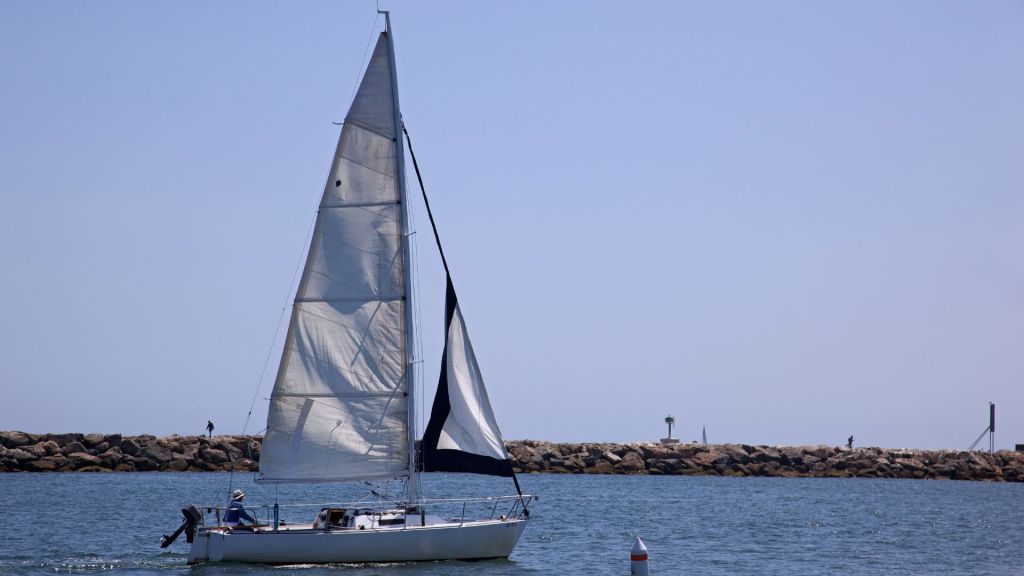
Despite the technological leaps, the fundamental allure of sailboat racing remains unchanged. It’s a sport that pits human skill and ingenuity against the raw power of nature. From weekend warriors in local regattas to professional teams battling for international glory, sailboat racing continues to captivate and inspire.
The evolution of racing sailboats stands as a testament to human innovation and our enduring relationship with the sea. Each advance in design, materials, and technology has pushed the boundaries of what’s possible, yet the essence of the sport – the thrill of harnessing the wind to propel a boat across the water – remains timeless.
As we look to the future, one thing is certain: the spirit of innovation that has driven sailing forward for centuries shows no signs of slowing. What marvels will the next generation of racing sailboats bring? Only time will tell, but one thing’s for sure – it’s going to be an exciting ride.
So, the next time you see a sleek racing sailboat slicing through the waves or flying above them on hydrofoils, take a moment to appreciate the centuries of innovation, the countless hours of design and engineering, and the indomitable human spirit that have gone into creating these magnificent machines. The evolution of racing sailboats is far from over – it’s an ongoing journey of discovery, pushing the limits of what’s possible on the water. And that, perhaps, is the most exciting prospect of all.