

The F-111 Aardvark, an iconic aircraft in aviation history, was developed by General Dynamics in the 1960s. Renowned for its versatility, the F-111 was a strategic bomber, reconnaissance plane, and electronic warfare aircraft. This delves into the history, design, and impact of the F-111 Aardvark, shedding light on why it remains a significant milestone in military aviation.
History of the F-111 Aardvark
The Genesis
The F-111 Aardvark’s development began in the early 1960s as part of the Tactical Fighter Experimental (TFX) program. The U.S. Air Force and Navy needed an aircraft to perform air superiority and deep strike missions. The challenge was to create a versatile plane that met the divergent needs of both branches.
Development and First Flight
The F-111’s first flight took place on December 21, 1964. The aircraft featured groundbreaking technologies, including variable-sweep wings and after-burning turbofan engines. These innovations allowed the F-111 to achieve exceptional speed and range, making it a formidable force in the skies.
Operational History
The F-111 saw extensive action in various conflicts, including the Vietnam War, where it earned a reputation for its precision bombing capabilities. Its versatility made it invaluable for mission profiles, from night interdiction to strategic bombing. The aircraft also played a crucial role in Operation Desert Storm in the early 1990s, showcasing its enduring relevance in modern warfare.
Design and Features of Aardvark f-111

Variable-Sweep Wings
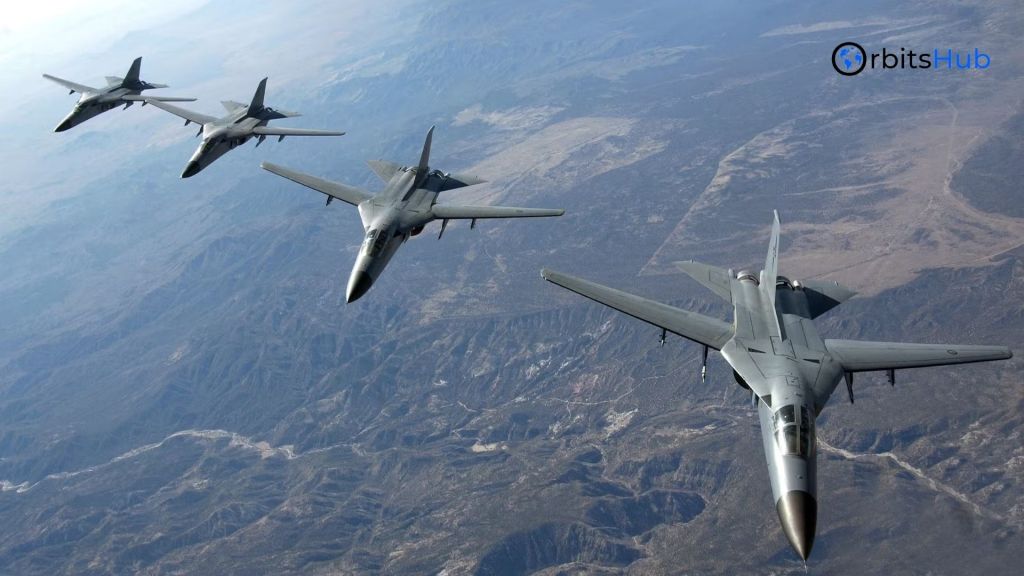
Variable-sweep wings distinguish the F-111 Aardvark. This design optimized performance for varied speeds and mission profiles by adjusting the wings in flight. Wings can be swept back for high-speed flight or extended for takeoff and landing lift.
Engines and Performance
The F-111 was powered by two Pratt & Whitney TF30 afterburning turbofan engines, providing exceptional speed and range. The aircraft could reach speeds of over Mach 2.5 and had a combat radius of approximately 1,200 nautical miles. This combination of speed and range made the F-111 a versatile asset for the U.S. military.
Avionics and Weaponry
The F-111 was equipped with advanced avionics systems, including terrain-following radar, which allowed it to fly at low altitudes to avoid enemy radar detection. Artillery, ranging from conventional bombs to nuclear weapons, may be carried by the aircraft. It allowed for a great deal of manoeuvrability in mission preparation and execution because of its internal weapon bay and outside hard points.
Crew Comfort and Safety
The F-111 featured a unique crew escape module, which could be ejected in an emergency, protecting the pilot and weapons systems officer. This system significantly improved crew safety, ensuring that both personnel could survive and escape from a potentially catastrophic situation.
The Impact of the F-111 Aardvark
Strategic Importance
The F-111 Aardvark was crucial in maintaining air superiority and providing strategic bombing capabilities during the Cold War. Its ability to deliver conventional and nuclear ordnance made it a vital component of the U.S. military’s deterrent strategy.
Influence on Future Aircraft
The F-111’s design and technological advancements influenced the development of future aircraft, including the F-14 Tomcat and the B-1 Lancer. The concept of variable-sweep wings, in particular, demonstrated the potential for combining high-speed performance with versatility in mission profiles.
Legacy and Retirement
The F-111 was retired from U.S. Air Force service in 1998, but its legacy lives on. The aircraft’s impact on military aviation and its role in various conflicts has cemented its place in history. Museums and enthusiasts continue celebrating the F-111’s contributions to aviation technology and military strategy.
Variants of the F-111 Aardvark

F-111A
The initial production version, the F-111A, was the foundation for subsequent variants. It was primarily used for testing and evaluation, paving the way for improvements in later models.
F-111B
The F-111B was developed for the U.S. Navy as a carrier-based fighter. However, the variant faced numerous challenges and was ultimately cancelled due to weight and performance issues.
F-111C
The F-111C variant was developed for the Royal Australian Air Force (RAAF). It featured longer wings and strengthened landing gear, making it suitable for Australia’s unique operational requirements.
F-111D
The F-111D variant introduced advanced avionics and navigation systems, improving the aircraft’s overall performance. It was a significant upgrade over the earlier F-111A model.
F-111E
The F-111E variant included improved radar and electronic countermeasures, enhancing the aircraft’s survivability in combat situations.
F-111F
The F-111F was the most advanced version of the Aardvark, featuring state-of-the-art avionics and weapon systems. It played a crucial role in Operation Desert Storm, showcasing its precision strike capabilities.
EF-111A Raven
The EF-111A Raven was an electronic warfare variant equipped with advanced jamming equipment to disrupt enemy radar and communication systems. It played a vital role in suppressing enemy air defences.
The Technological Innovations of the F-111 Aardvark
Terrain-Following Radar
The F-111’s terrain-following radar (TFR) was a pioneering technology that allowed the aircraft to fly at low altitudes, following the contours of the terrain. This capability enabled the F-111 to evade enemy radar and deliver precision strikes.
Swing-Wing Design
The variable-sweep wing, or swing-wing design, was a significant innovation that provided the F-111 with unmatched versatility. This feature allowed the aircraft to adjust its wing configuration in flight, optimizing performance for various speeds and mission profiles.
Crew Escape Module
A significant step forward in pilot safety came with the F-111’s crew escape module. Compared to conventional ejection seats, the crew would have a better chance of survival if the complete cockpit module could be evacuated in an emergency.
The Operational Role of the F-111 Aardvark
Strategic Bombing
A strategic bomber that could carry nuclear and conventional weapons, the F-111 was built to be versatile. Its rapid speed and incredible range made it an excellent tool for deep-strike operations.
Reconnaissance
The RF-111 variant was equipped with advanced reconnaissance equipment to gather critical intelligence during missions. This capability was invaluable for strategic planning and battlefield awareness.
Electronic Warfare
The EF-111A Raven variant was crucial in electronic warfare, disrupting enemy radar and communication systems. Its jamming capabilities significantly aided in suppressing enemy air defences and protecting allied aircraft.
Precision Strike
The F-111’s advanced avionics and weapon systems enabled it to conduct precision strikes with high accuracy. This capability was demonstrated during Operation Desert Storm, where the F-111 was crucial in turning off key targets with minimal collateral damage.
The F-111 Aardvark in Popular Culture
Media Appearances
The F-111 Aardvark has been featured in various films, television shows, and video games, highlighting its iconic status in military aviation. Its distinctive design and capabilities have made it a popular subject in popular culture.
Legacy in Museums
Several F-111 aircraft are preserved in aviation museums worldwide, allowing enthusiasts to appreciate the aircraft’s design and historical significance. These exhibits provide valuable insights into the F-111’s technological advancements and operational history.
The F-111 Aardvark remains a significant milestone in the history of military aviation. Its innovative design, technological advancements, and operational versatility have left an indelible mark on aerospace engineering. From its development in the 1960s to its retirement in the late 1990s, the F-111 Aardvark played a crucial role in modern air warfare.
As we reflect on the F-111’s legacy, it is clear that its impact extends beyond its years of active service. Explore more about aviation and maritime innovations on our website Orbitshub. Dive into detailed articles, expert analyses, and the latest updates in the field.


Comment(01)